

Building A Business Infrastructure That's Prepared For Anything
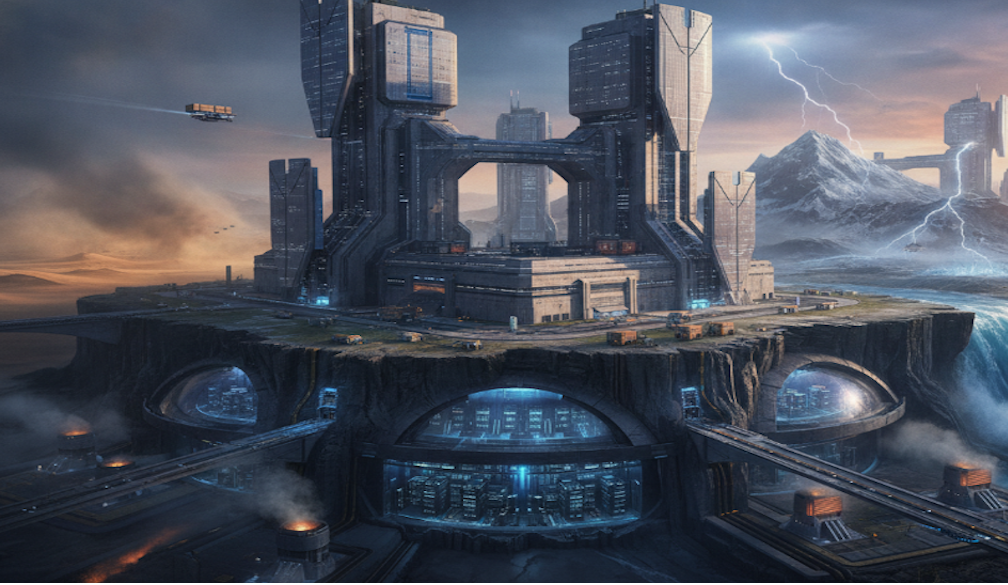
Every business owner imagines growth, expansion, and long-term success. What fewer prepare for is the full range of disruptions that can derail even the most promising enterprise — power outages, supply chain failures, cyberattacks, natural disasters, and sudden shifts in market demand. Building a business infrastructure that can withstand these threats is no longer optional. It is a fundamental requirement for survival in today's volatile commercial environment.
Why Resilience Must Be Built In From The Start
Many businesses treat resilience as an afterthought — something to address after a crisis has already exposed the gaps. This approach is costly. According to FEMA, roughly 40% of small businesses never reopen following a major disaster, and another 25% fail within a year of the event. These numbers reflect not just the physical toll of disruption, but the operational and reputational damage that compounds when businesses have no contingency architecture in place.
The most durable businesses approach resilience the way engineers approach structural design: they account for stress before it arrives. That means evaluating your infrastructure across every layer — physical, technological, logistical, and human — and identifying the single points of failure that, if broken, could bring operations to a halt.
Power Continuity Is A Non-Negotiable Foundation
Among the most overlooked vulnerabilities in business infrastructure is power dependency. Virtually every modern operation — from retail point-of-sale systems to hospital equipment to data centers — relies entirely on a stable electricity supply. Yet power outages in the United States alone cost businesses an estimated $150 billion annually, according to the Department of Energy.
Businesses that take power continuity seriously invest in backup generation systems. Industrial and commercial-grade generator suppliers, such as AandA Power Generators, among many others, provide scalable solutions that allow businesses to maintain operations during grid failures without relying on municipal power restoration timelines that may span days or weeks. A well-specified backup generator ensures that critical systems — HVAC, servers, lighting, security, refrigeration — remain functional regardless of external conditions. The upfront investment is almost always dwarfed by the cost of even a single prolonged outage.
Redundancy Across Supply Chains And Technology
A resilient business infrastructure doesn't rely on a single supplier, a single server, or a single communication channel. Supply chain disruptions became a defining business challenge in recent years, with the COVID-19 pandemic exposing how deeply concentrated global supply networks had become. McKinsey research found that companies typically face supply chain disruptions lasting a month or longer every 3.7 years on average — a frequency that demands systemic planning rather than reactive improvisation.
Diversifying suppliers, maintaining safety stock for critical materials, and establishing backup vendor relationships all contribute to supply chain resilience. On the technology side, businesses should adopt redundant cloud storage, failover systems, and distributed network architecture to prevent any single technical failure from cascading into full operational downtime.
Cybersecurity As Infrastructure, Not An Add-On
In an era where data is one of the most valuable assets a business holds, cybersecurity must be treated as core infrastructure rather than a departmental concern. The average cost of a data breach reached $4.45 million globally in 2023, according to IBM's annual Cost of a Data Breach Report. For small and mid-sized businesses, the damage often proves fatal — a significant percentage of small businesses that experience a serious cyberattack close within six months.
Building cyber resilience means investing in multi-factor authentication, endpoint protection, regular penetration testing, employee training, and incident response planning. It also means ensuring that data backups are encrypted, offsite, and tested regularly so that ransomware attacks or system failures don't permanently destroy years of operational records.
People And Processes Are Infrastructure Too
Physical and digital systems only hold if the people operating them know what to do when those systems are tested. Many businesses invest heavily in hardware and software while neglecting the organizational infrastructure that makes it usable under pressure. Business continuity planning — including clearly documented emergency protocols, cross-trained staff, and defined decision-making hierarchies — is just as critical as any piece of equipment.
Research from the Business Continuity Institute consistently shows that organizations with documented and rehearsed continuity plans recover from disruptions significantly faster and with lower financial impact than those without. Regular simulation exercises, updated contact trees, and clear communication chains can mean the difference between a manageable disruption and an organizational crisis.
Integrating Resilience Into Long-Term Strategy
Preparedness is not a one-time project. Business environments evolve, threats change, and the infrastructure that protected a company five years ago may be wholly inadequate today. Resilient organizations treat infrastructure review as an ongoing strategic function — auditing vulnerabilities annually, upgrading systems proactively, and aligning continuity planning with broader growth objectives.
The businesses that endure are rarely the ones that avoided every disruption. They are the ones that built the architecture to absorb disruption, adapt quickly, and emerge operationally intact. In a world where the unexpected is virtually guaranteed, preparation is the only reliable competitive advantage.






