

Plan to become a 'cryptoassets hub' may just be the UK government hedging its bets
- Written by: Matthew Shillito, Lecturer in Law, University of Liverpool
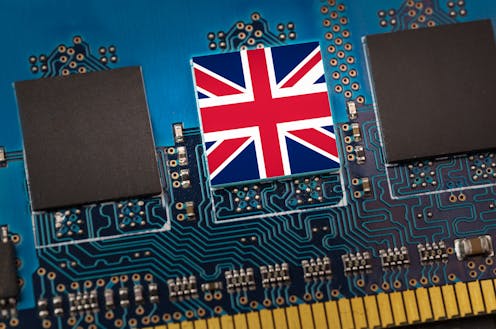
In a busy start[1] to April 2022 for the British chancellor, Rishi Sunak announced his intention[2] to make the UK a “global hub for cryptoassets technology”. Put simply, this means he wants the country to be an attractive place for cryptocurrency companies to operate.
For the government, this requires a delicate regulatory balance between preventing financial crime and protecting consumers, and allowing cryptocurrencies to flourish. If all goes to plan, greater engagement with the sector could result in a welcome boost to the UK economy.
It’s early days of course, and many central banks and economists remain unsure of the role cryptocurrencies should play in a nation’s financial makeup. But Sunak’s plans featured some eye-catching proposals, including removing tax barriers, and developing a non-fungible token (NFT)[3] with the Royal Mint.
But the key element was a proposal to bring a particular element of cryptocurrencies, “stablecoins”, within the scope of existing UK banking regulation. Stablecoins are widely considered to be at the safer end of the sector, where the notorious volatility of other cryptocurrencies like Bitcoin is replaced with something more reliable.
So where Bitcoin’s value is derived purely from levels of confidence and demand, stablecoins are backed by other assets. Usually this means traditional currencies (usually the US dollar), but some are attached to commodities like gold. Either way, the aim is the same – to keep their value as close to constant as possible, making stablecoins more useful as a reliable medium of exchange.
Stablecoins may also have attracted the UK government because they offer fast transactions, at low cost and without borders. This allows users to make speedy global transactions with individuals and businesses, without the need to exchange currencies into a local tender.
Other appealing factors of stablecoins include their transparency, in that every single transaction is recorded and publicly visible. They are also (largely speaking) under centralised control, in the same way that traditional banks have control over customers’ accounts.
It makes sense then, that as the UK dips its toe into cryptocurrencies, it is stablecoins which have most appeal. An alternative approach would be to introduce a central bank digital currency, as China is doing[4], but this is time consuming and expensive. A well-regulated stablecoin space will at least get the UK involved in the sector while the Bank of England decides[5] whether or not to commit to a digital currency of its own.
But the lack of detail around the UK proposals – what regulation will look like and what it hopes to gain – remains a concern. So too is its recent lack of progress in dealing with a huge part of the modern financial world.
For example, there have been promises since 2015 about regulating of cryptoassets[6], with little beyond tax issues[7] and preventing money laundering[8] being forthcoming – and both have had a restrictive impact on the sector.
The UK’s financial services regulator meanwhile, has indicated recently that it is more focused on preventing risk than helping crypto technology to flourish[10]. Perhaps then, the UK is not as welcoming to innovation and crypto technology as it makes out.
Nor has the treasury provided any clear detail about what stablecoin regulation would actually involve. Yet to encourage wider use of stablecoins it would at least need to bring in some kind of registration system and a mechanism for consumer compensation should the stablecoin ever fail. Without this, a stablecoin could indeed fail, causing major damage to the economy, the wider crypto sector and to individual investors.
It is also questionable to what extent the UK can become a global crypto leader, as the most successful stablecoins all peg, to some degree, to the US dollar. (Although this could change as the US[11] and EU[12] adopt tougher stances on cryptocurrencies.)
The UK may well hope to gain a greater foothold in the relatively safe (and controllable) world of stablecoins and enjoy the potential benefits for the pound as an underpinning currency. But in reality, it will take much more than the measures announced so far to make any meaningful progress. They sound instead like a vague attempt not to be left behind by other countries, without committing too much in the way of investment and resources.
References
- ^ busy start (theconversation.com)
- ^ announced his intention (www.gov.uk)
- ^ non-fungible token (NFT) (www.investopedia.com)
- ^ China is doing (economictimes.indiatimes.com)
- ^ Bank of England decides (www.bankofengland.co.uk)
- ^ regulating of cryptoassets (assets.publishing.service.gov.uk)
- ^ tax issues (www.gov.uk)
- ^ preventing money laundering (www.fca.org.uk)
- ^ Shutterstock/insta_photos (www.shutterstock.com)
- ^ to flourish (www.fca.org.uk)
- ^ the US (www.sec.gov)
- ^ and EU (www.europarl.europa.eu)






