Why Choosing the Right Commercial Electrician Is One of the Most Important Decisions You'll Make for Your Business Premises
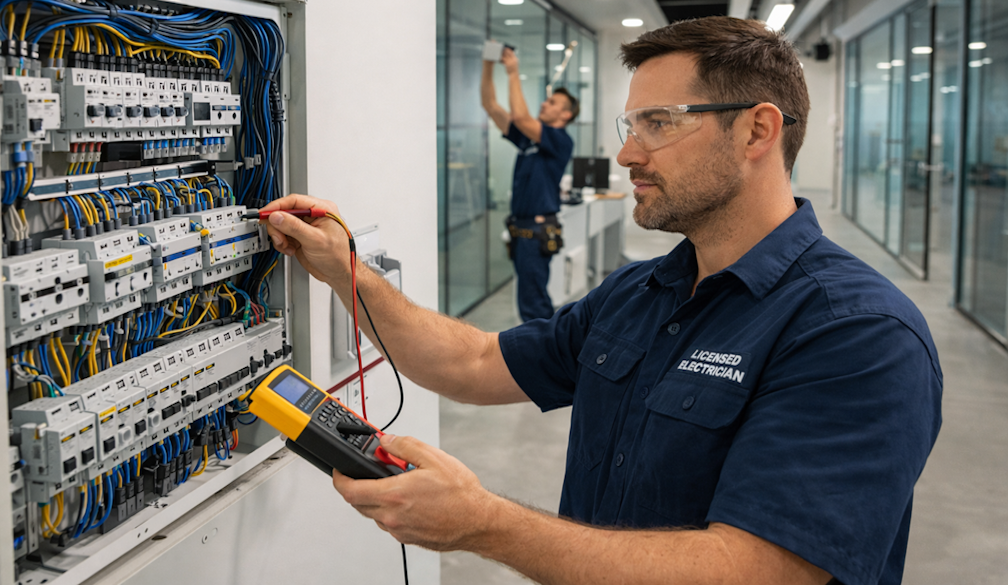
When something goes wrong with the electrical systems in a commercial property, the consequences extend well beyond inconvenience. A tripped switchboard in a busy retail store means lost trading time. A wiring fault in a commercial kitchen creates a genuine fire and safety risk. An ageing electrical infrastructure that can't support modern equipment loads becomes a serious liability for any growing business. And in a city like Perth, where commercial development is active and business owners are increasingly focused on energy costs, having the right electrical contractor in your corner matters more than many people realise.
The difference between a reliable commercial electrician and the wrong choice can be measured in downtime, compliance exposure, insurance complications, and in the worst cases, serious safety incidents. This guide is designed to help business owners and property managers in Perth understand what commercial electrical work actually involves, what to look for when choosing a contractor, and how to build a proactive approach to electrical maintenance that protects both your premises and your bottom line.
Commercial Electrical Work Is a Different Animal
There's a tendency to think of electrical work as electrical work — a licensed electrician is a licensed electrician, whether they're working on a house or a commercial building. In practice, the differences are substantial, and they matter for anyone managing or operating a commercial premises.
Scale and Complexity
Commercial electrical systems operate at a different scale to residential ones. Three-phase power, heavy-duty switchboards, complex distribution boards, emergency and essential services lighting, building management system (BMS) integration, high-load circuits for industrial equipment — these are standard features of commercial electrical infrastructure that most residential electricians rarely encounter. Working on these systems safely and correctly requires specific experience, not just a general licence.
Regulatory Requirements
Commercial electrical installations are subject to a more complex regulatory framework than residential work. The Wiring Rules (AS/NZS 3000) apply across all electrical installations, but commercial properties also need to comply with requirements under the National Construction Code (NCC), Australian Standards for specific types of equipment, and in some cases, industry-specific regulations — for example, the food safety and equipment requirements applicable to commercial kitchens, or the specific electrical requirements for medical and healthcare facilities.
Compliance certificates, test and inspection reports, and proper documentation of all electrical work are standard requirements for commercial properties — particularly during changes of tenancy, property sales, insurance renewals, and development applications. A commercial electrician who understands this documentation landscape will save you significant headaches down the line.
Business Continuity
For business owners, electrical downtime has a direct cost. A residential homeowner can usually tolerate an electrical fault being addressed over a day or two. A business operating retail, hospitality, healthcare, or professional services generally cannot. Commercial electricians who work in this sector understand the imperative of minimising disruption — scheduling work outside trading hours, providing adequate temporary supply where necessary, and responding promptly to emergency faults are all part of the service expectation in commercial electrical contracting.
What a Commercial Electrician Actually Does
The scope of commercial electrical work is broad. Understanding what falls within the remit of a qualified commercial electrician helps business owners and property managers identify when to engage one — and what to expect from the engagement.
New Installations and Fitouts
Commercial tenancy fitouts are one of the most common scenarios requiring a commercial electrician. When a business moves into a new premises — or when a landlord prepares a tenancy for a new occupant — the electrical infrastructure often needs to be upgraded, reconfigured, or extended to suit the incoming business's requirements.
This might involve installing additional power circuits for workstations or equipment, running dedicated circuits for high-draw appliances, installing data and communications cabling infrastructure, fitting out a commercial kitchen with the required electrical provisions, or installing lighting designed to support the specific function of the space. A skilled commercial electrician will work from the architect's or designer's plans and coordinate with other trades to deliver the electrical component of the fitout efficiently and to specification.
Switchboard and Distribution Board Upgrades
Many commercial properties in Perth — particularly those in older buildings — are running on electrical infrastructure that was designed for a very different era of technology and power demand. The proliferation of computer workstations, air conditioning systems, commercial-grade appliances, EV charging infrastructure, and energy management systems has placed significantly greater demands on commercial switchboards than they were originally designed to handle.
Switchboard upgrades are one of the most common and most impactful commercial electrical projects. A properly designed and installed modern switchboard provides adequate capacity for current and projected loads, incorporates modern safety devices including residual current devices (RCDs) and arc fault detection devices (AFDDs) where required, and is properly documented and labelled for ongoing maintenance and emergency response.
Lighting Design and Installation
Commercial lighting serves multiple purposes — functional illumination, safety compliance, energy efficiency, and in retail or hospitality environments, the creation of ambience that directly influences customer experience. A commercial electrician with experience in lighting design and installation will assess the space, specify appropriate luminaires and control systems, and install a lighting solution that meets the functional requirements of the business while minimising ongoing energy costs.
For Perth businesses looking to reduce energy overheads, LED lighting upgrades remain one of the most straightforward and financially rewarding electrical investments available. Many commercial properties are still running fluorescent or metal halide systems that consume considerably more power than equivalent LED alternatives.
Emergency and Essential Services
Commercial buildings are required under the NCC and Australian Standards to maintain emergency lighting and exit sign systems that function independently of the mains power supply. These systems must be tested and maintained on a regular schedule — typically six-monthly inspections and annual duration testing — and records must be kept for compliance purposes.
Emergency and essential services electrical work requires specific knowledge of the applicable standards and testing requirements. For property managers, ensuring this work is carried out by a competent commercial electrician and documented correctly is a key compliance obligation — one that becomes particularly significant in the event of a fire or emergency evacuation.
Fault Finding and Repairs
Electrical faults in commercial premises range from nuisance issues — a single circuit tripping repeatedly — to serious safety hazards that require immediate attention. Commercial electricians with strong diagnostic skills can identify the root cause of electrical faults efficiently and resolve them with minimal disruption to business operations.
For business owners and property managers, having a trusted commercial electrical contractor on call for fault response is one of the most practical risk management decisions you can make. Knowing that a qualified, responsive electrician experienced in commercial electrical work will turn up quickly when something goes wrong is worth a great deal when trading hours are at stake.
What to Look for When Choosing a Commercial Electrician in Perth
Perth's commercial electrical contracting market is competitive, and the quality of providers varies significantly. When evaluating commercial electricians for your business or property, these are the criteria that matter most:
Licensing and Insurance
This is non-negotiable. In Western Australia, all electrical work must be carried out by a licensed electrical contractor. The Electrical Licensing Board (ELB) maintains a public register of licensed contractors that anyone can check. Verify that your electrician holds a current electrical contractor's licence — not just an electrician's licence — and confirm that they carry adequate public liability and professional indemnity insurance for commercial work.
Commercial Experience
Ask specifically about the contractor's commercial project experience. Have they worked on projects similar in scale and type to yours? Do they have experience with the specific requirements of your industry — retail, hospitality, healthcare, professional services, or industrial? References from comparable commercial clients are a reasonable thing to request, and a responsible contractor will be happy to provide them.
Compliance Knowledge
A competent commercial electrician will be able to speak knowledgeably about the compliance requirements applicable to your premises and project. They should understand the documentation and certification requirements for commercial electrical work in Western Australia, be familiar with the relevant Australian Standards, and be able to advise you proactively about compliance matters — not just execute the work.
Capacity and Responsiveness
For ongoing maintenance and emergency response, a contractor's capacity to respond promptly matters enormously. A sole trader with a full workload may not be able to attend an emergency fault quickly. Established commercial electrical contractors with a team of qualified electricians have the capacity to prioritise urgent work and maintain service levels across their client base.
Transparent Pricing
Commercial electrical work should be quoted clearly, with a defined scope and price. Be cautious of contractors who are vague about pricing or who provide verbal-only quotes for significant work. A written scope and quote protect both parties and provide a clear reference point if the scope changes during the project.
Building a Proactive Electrical Maintenance Programme
Reactive maintenance — fixing things when they break — is the most expensive and disruptive way to manage a commercial property's electrical infrastructure. Business owners and property managers who take a proactive approach to electrical maintenance consistently experience fewer unexpected faults, lower overall maintenance costs, and better compliance outcomes.
A proactive electrical maintenance programme for a commercial property typically includes:
- Annual thermographic (infrared) scanning of switchboards and distribution boards to identify hot spots before they become faults or fires
- Regular testing and inspection of RCDs and safety switches — quarterly testing is recommended for commercial properties
- Six-monthly inspection and annual duration testing of emergency lighting and exit sign systems, as required under AS 2293
- Periodic inspection of all fixed electrical equipment and wiring for signs of deterioration, damage, or non-compliance
- Scheduled testing and tagging of portable electrical appliances in accordance with AS/NZS 3760
- Energy auditing to identify opportunities for efficiency improvements and cost reduction
A good commercial electrician will work with you to develop a maintenance schedule appropriate for your premises, keep records of all work carried out, and flag any issues identified during maintenance visits that require attention.
Perth's Commercial Property Market: Why Electrical Infrastructure Matters More Than Ever
Perth's commercial property market has seen significant activity in recent years, with strong demand across industrial, retail, and office sectors. For property owners and managers, the condition and capacity of a building's electrical infrastructure has become an increasingly important factor in tenancy attraction and retention.
Businesses considering new premises are asking harder questions about electrical capacity — particularly as EV charging infrastructure, solar and battery storage systems, and high-density workstation environments become standard requirements for modern tenants. A commercial building with outdated or under-capacity electrical infrastructure will struggle to compete for quality tenants against properties that have invested in modernisation.
For business owners signing commercial leases, understanding the electrical provisions of a premises before signing — and negotiating appropriate fit-out contributions or electrical upgrade allowances where necessary — can prevent high costs and operational headaches down the track. Engaging a commercial electrician in Perth to conduct a pre-lease electrical assessment is a prudent step that is often overlooked in the excitement of securing new premises.
The Bottom Line: Don't Treat Commercial Electrical as an Afterthought
The electrical systems in a commercial property are the backbone of everything the business does. They power the equipment, light the space, maintain safety compliance, and in an increasing number of cases, feed back into the grid through solar generation. Treating commercial electrical work as a commodity — choosing on price alone, using whoever is available, or deferring maintenance until something goes wrong — is a false economy that costs more in the long run than a considered, proactive approach.
Whether you're fitting out a new tenancy, upgrading ageing infrastructure, managing compliance obligations across a property portfolio, or simply looking for a reliable contractor to keep your commercial premises running safely, the right commercial electrician is a genuine business asset — not just a tradesperson you call when the lights go out.
Take the time to find a contractor with the right experience, the right credentials, and the right approach to service. The investment in that relationship will pay dividends across the life of your business and your property.


 Business Daily Media