

Fraud Prevention and security crucial as identity crime hits record highs in Australia
- Written by: Business Daily Media
In a radically transformed risk landscape where the scale and speed of financial fraud have reached unprecedented levels, Australian businesses are facing a new frontier of vulnerability.
This is no longer just a technology challenge, but a full-spectrum business imperative.
Latest data from the Australian Institute of Criminology shows identity crime now affects one in five Australians (21.9%) with the threat shifting beyond traditional hacking to a systemic infiltration of the corporate interior.
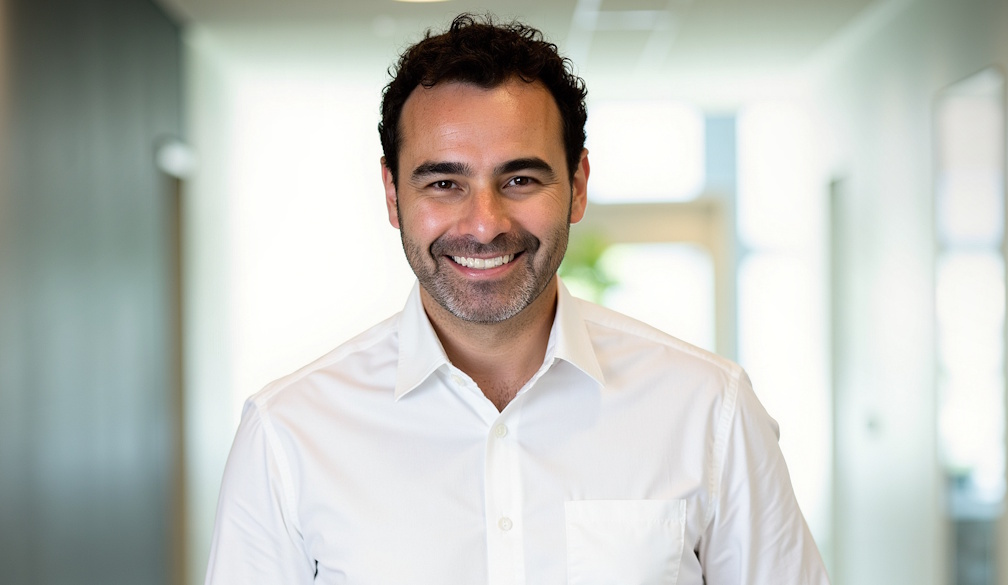
Richard Valente, Vice President Customer Experience Strategy at TP in Australia, said there’s a new and growing threat coming from organised crime gangs infiltrating companies directly.
“It’s becoming apparent that criminal syndicates are deliberately targeting sectors that hold large volumes of personal data, including banking, telecommunications, airlines, and logistics operations,” Valente said.
According to the Australian Cyber Security Centre, a cybercrime is now reported in Australia roughly every six minutes, with businesses among the most frequently targeted and insider-enabled breaches becoming an increasing concern.
“Organised crime isn’t just trying to break into systems anymore, they’re strategically putting people inside organisations because information is power and has enormous value,” Valente said.
“These crime networks are planting or recruiting insiders within an organisation to access sensitive data, reflecting a major shift in how criminal syndicates operate. We must follow a 'zero trust' posture, assuming we’re going to get hacked and that fraud will inevitably be attempted.”
“We’ve seen cases where groups attempt to place staff into businesses specifically to access personal data. Once they have that information, it can be used for identity fraud, extortion, and a wide range of serious criminal activities.”
This risk shift requires companies to move from old, static security rules to "adaptive intelligence."
“Instead of just reacting to fraud after it happens, businesses must learn to anticipate it by analysing data like digital biometrics and transaction patterns in real-time. The goal is to flag unusual behaviour and risks as it occurs, rather than just looking for known past threats,” Valente said.
To bridge this gap, TP has implemented a multi-layered security framework that combines AI-driven behavioural analysis with real-time intervention.
“At TP, we offer Security as a Service where we protect sensitive customer data and ensure early risk detection to elevate fraud prevention. .”
Valente said TP, a global leader in providing outsourced digital business services, moved quickly to bolster security against this new threat with heightened protections and advanced technological interventions like Fraud Data Analytics, Threat Intelligence Support and Security Architecture Consultation.
“Our integrated security approach delivers measurable and repeatable value across industries and operational geographies. While results vary by environment, as per our internal data, it is estimated that TP has helped companies avert more than $5 million annually in potential risk exposure, while reducing the impact of security incidents by up to 50%.” By designing for trust at scale, TP ensures that fraud prevention acts as a strategic growth lever, protecting brand equity in a digital-first world.”
In this ‘trust economy’, every transaction serves as a reputational signal. Fraud, therefore, is not merely a security failure; it is a trust failure.
Valente said technology and strict operational policies must work in tandem to reduce risk exposure.
“TP operates in 100+ countries serving 1500+ clients globally on a strict clean-desk policy, whether employees are in an office or working remotely. Our systems are designed to automatically trigger a desktop lockout if an unauthorised device or additional viewer is detected.”
Valente further emphasised that minimising human exposure to sensitive data is also critical.
“In many cases, agents never see sensitive information at all. For example, payment details can be routed through secure third-party technologies, so they’re never directly exposed to the employee.”
While insider threats remain difficult to detect, Valente said ongoing training and organisational culture play a key role in mitigation.
“Human beings are unfortunately the weakest link in cyber security, which is why continuous training, certification, and strong governance are essential alongside technology.”
“Every large organisation must accept the reality of persistent threats and face attempts at fraud. The key is investing heavily in prevention, detection and response. It’s about making security a continuous priority rather than a one-off exercise.”
About TP in Australia
Teleperformance in Australia is part of the TP Group, a global leader in digital business services which consistently seeks to blend the best of advanced technology with human empathy to deliver enhanced customer care that is simpler, faster, and safer for the world’s biggest brands and their customers. The Group’s comprehensive, AI-powered service portfolio ranges from front office customer care to back-office functions, including operations consulting and high-value digital transformation services. It also offers a range of specialized services such as collections, interpreting and localization, visa and consular services, and recruitment process outsourcing services. The teams of multilingual, inspired, and passionate experts and advisors, spread in close to 100 countries, as well as the Group’s local presence allows it to be a force of good in supporting communities, clients, and the environment.
For more information: www.tp.com.






