Why electricity costs so much in the UK (it’s not all about the weather)
- Written by: Renaud Foucart, Senior Lecturer in Economics, Lancaster University Management School, Lancaster University
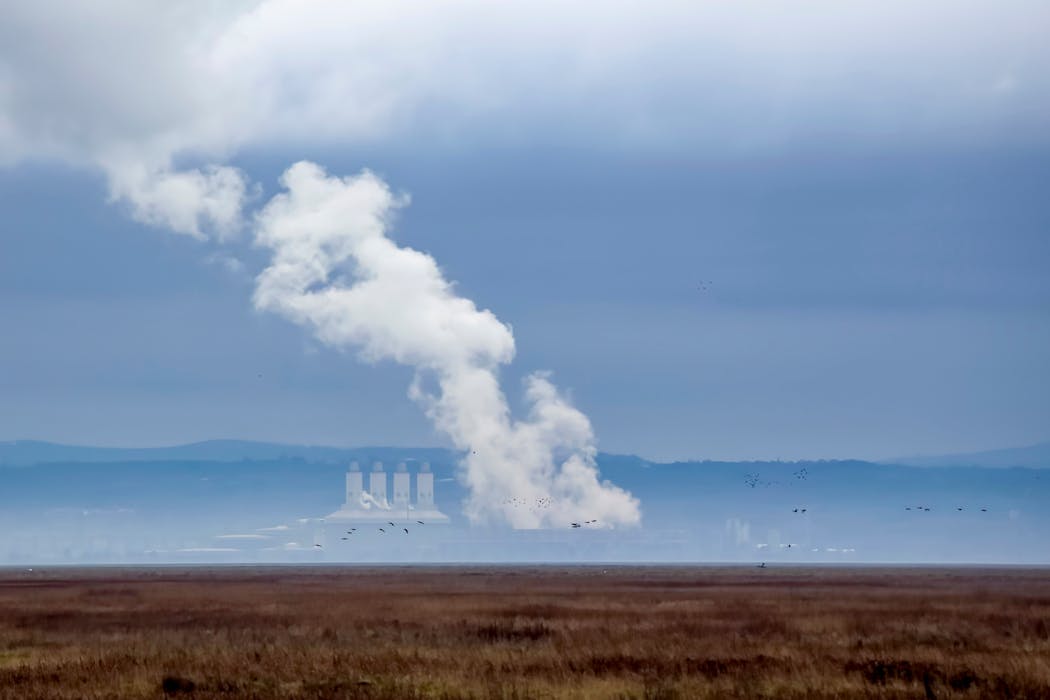
The UK government is reportedly considering abandoning its goal of removing fossil fuels from the country’s electricity supply by 2030 in an attempt to keep energy bills down.
This is understandable given that the UK is already one of the most expensive places in Europe to use electricity, something that – despite plenty of investment in relatively cheap renewable energy[1] – is unlikely to change any time soon. In fact, bills remain high even when wind farms are spinning at full capacity[2].
However, neither a drive to decarbonise the grid – which is needed for other reasons – nor abandoning this target is going to make energy significantly cheaper. The reason for this lies in how electricity markets work, and in the geography and policies that shape the UK’s energy system.
To begin with, wholesale electricity prices are determined in a way[3] that essentially means that everyone has to pay for the most expensive source of electricity used at a given time, which in the UK is mostly gas power plants.
The gas which is burned to power the UK’s lights and kettles has to be liquefied, shipped from the US or Qatar amid global bidding wars[4], and then converted back into its original state. High gas prices drive high wholesale prices, which directly translate into high electricity bills.
Cheaper renewable energy sources (the cost of producing solar, wind or nuclear electricity is very low) have little effect. This is partly because while the operating cost of renewable electricity is very low, the cost of setting it up is not.
To encourage companies to build new generation capacity, the government must offer them[5] a guaranteed price for the electricity[6] they produce, to compensate for their costs. For a wind farm, this would include money for planning applications, as well as buying and installing turbines and electrical equipment.
Bringing different sources of electricity to consumers also requires expensive infrastructure investment. In the UK for example, grid capacity[7] is not where it needs to be after decades of low investment[8].
Nearly 40% of the electricity produced by Scottish wind farms has been wasted so far this year[9], because the grid was not able to move it to other parts of the UK or store it.
Overall then, consumers’ bills will be high[10], both now and in the future, because of the combined costs of imported gas, infrastructure and the guaranteed prices for producers.
Most calls to decrease these bills effectively come down to suggesting moving some of these costs[11] on to taxpayers[12] – so effectively from one bill to another. This is what happened in France, where “cheap”[13] nuclear electricity is the result of vast amounts of government spending[14] in the past. The French may not see UK-level energy bills, but they do have higher taxes and public debt[15].
Despite these challenges, successive[16] UK governments[17] have committed to continuing investment in new technologies, because dependence on imported, polluting and volatile fossil fuels is deemed too risky. Postponing the full transition to renewables, as reported in the Guardian[18], is effectively a bet that gas prices will decrease in the short term, and that the UK will be able to commission cheaper renewables later on.
But cheaper renewables present their own problems, because they play different roles[19]. Solar and wind are cheaper, but intermittent. Nuclear is the most expensive but works all the time.
This all presents a challenging situation for UK consumers. New nuclear faces very long safety and planning procedures[20] and the national grid needs to be modernised. The decision to cancel an ambitious project[21] to get solar electricity from Morocco may be regretted.
But the main factor is simply geography and timing. Partly due to its location, the UK has become a world leader in wind power, a renewable technology that seems to be taking a less important global role than solar[22]. And while the cost of solar production[23] is decreasing steeply, the learning curve is slower for wind[24].
And there is no obvious way to increase the number of sunny hours in England[25]. A country like Spain[26], with both a lot of sun and wind, has a much easier job transitioning to cheap renewables than the UK.
So for all the frustration over high bills, the UK’s options are limited. Geography gives us wind, not sunshine. Policy has delivered world-class renewables, but also a grid struggling to carry their power.
The future will depend on whether new technologies, including cheaper batteries, tidal power[28] and small modular nuclear reactors[29] can fill the gaps left by weather and planning delays.
None of this will be easy or cheap. But the alternative – continued dependence on imported, volatile fossil fuels that make bills hostage to global crises – is worse. UK consumers face a future where electricity remains more expensive than much of Europe, not only because of policy choices, but because it lacks the sunshine that’s driving costs down elsewhere. Betting on emerging technologies is the only way to close that gap.
References
- ^ renewable energy (theconversation.com)
- ^ spinning at full capacity (www.ft.com)
- ^ in a way (www.sustainabilitybynumbers.com)
- ^ global bidding wars (www.ft.com)
- ^ must offer them (www.sciencedirect.com)
- ^ price for the electricity (www.gov.uk)
- ^ grid capacity (www.theguardian.com)
- ^ decades of low investment (theconversation.com)
- ^ wasted so far this year (www.ft.com)
- ^ will be high (commonslibrary.parliament.uk)
- ^ some of these costs (www.theguardian.com)
- ^ taxpayers (www.ft.com)
- ^ “cheap” (www.lemonde.fr)
- ^ vast amounts of government spending (theconversation.com)
- ^ higher taxes and public debt (apnews.com)
- ^ successive (www.gov.uk)
- ^ UK governments (www.bbc.co.uk)
- ^ reported in the Guardian (www.theguardian.com)
- ^ different roles (www.sciencedirect.com)
- ^ very long safety and planning procedures (www.samdumitriu.com)
- ^ cancel an ambitious project (www.bbc.co.uk)
- ^ global role than solar (www.iea.org)
- ^ cost of solar production (ourworldindata.org)
- ^ slower for wind (ourworldindata.org)
- ^ the number of sunny hours in England (globalsolaratlas.info)
- ^ A country like Spain (ember-energy.org)
- ^ Neil Bussey/Shutterstock (www.shutterstock.com)
- ^ tidal power (www.theguardian.com)
- ^ small modular nuclear reactors (www.theguardian.com)
&media=https://businessdailymedia.com/https://images.theconversation.com/files/698131/original/file-20251023-56-zitp6r.jpg?ixlib=rb-4.1.0&rect=1237%2C539%2C3807%2C2538&q=45&auto=format&w=1050&h=700&fit=crop&description=Why%20electricity%20costs%20so%20much%20in%20the%20UK%20(it’s%20not%20all%20about%20the%20weather) "Pin It")