On Zero Discrimination Day, UNAIDS urges Asia Pacific countries to decriminalise to save lives
BANGKOK, THAILAND - Media OutReach - 28 February 2023 - On Zero Discrimination Day, commemorated on March 1, UNAIDS highlights the need to remove laws that criminalise people living with HIV and key populations.
(Key populations are communities at higher risk of HIV infection including gay men and other men who have sex with men, people who use drugs, sex workers, transgender people and people in prisons and other closed settings.) The 2023 theme, "Save lives: Decriminalise", points to the positive impact on health and life outcomes when discriminatory and punitive laws are removed.
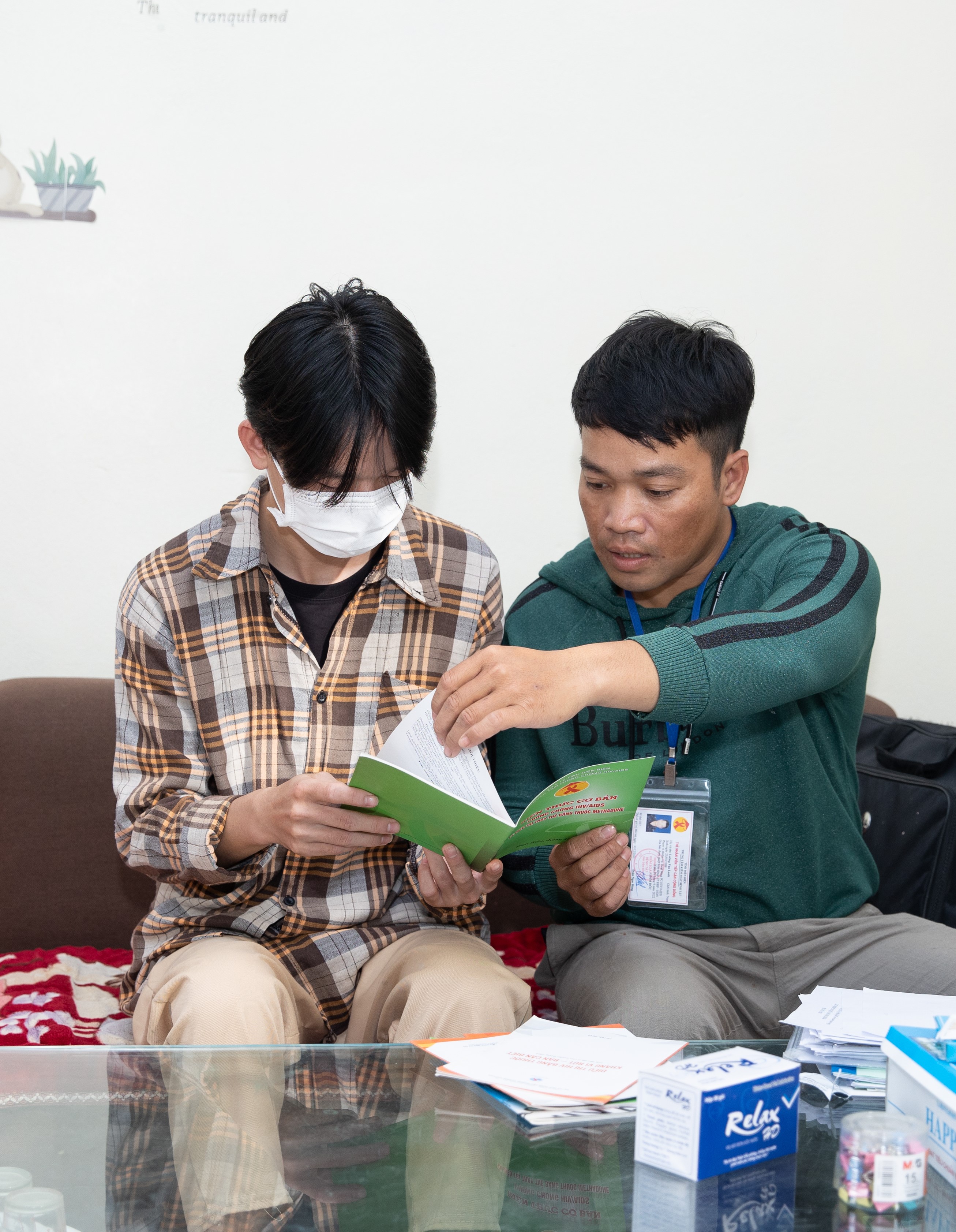
Community worker providing counseling on the use of condoms and lubricant for harm reduction in Dien Bien province, Viet Nam on 24 October 2022 Credit: VAAC (Vietnam Administration of HIV/AIDS Control)/UNAIDS/LHSS (Local Health System Sustainability Project)
"Criminal laws targeting key populations and people living with HIV violate human rights, deepen the stigma people face and put them in danger by creating barriers to the support and services they need," said UNAIDS Regional Director for Asia and the Pacific, Eamonn Murphy. "Decriminalisation is an essential step toward building a supportive legal and policy environment that addresses the social determinants of health."
UNAIDS is sharing the stories of people in Asia and the Pacific who have experienced reduced access to healthcare, justice and other human rights due to criminal laws and the prejudice they perpetuate.
"The war on drugs has created a lot of stigma and a culture that views people who use drugs as criminals. When we access healthcare, we get treated as bad people. Many choose not to go even if they know they are unwell or at-risk," said Tedjo, a paralegal and past drug-user.
Ikka explained that during her former life as a sex worker she and her colleagues never reported customers who physically or sexually assaulted them or did not pay. She said: "If someone called the police, they would arrest the sex worker and not the client. The police wouldn't take your report. They think they have more important cases than you."
In 2021, the world set ambitious targets to remove criminal laws that are undermining the AIDS response through the political declaration on HIV and AIDS. UN member states made a commitment that by 2025 less than 10% of countries would have punitive legal and policy environments that affect the HIV response. Despite some promising reforms, the world and region are far from achieving this target.
The Asia Pacific situation
"States have a moral and legal obligation to remove discriminatory laws and enact laws that protect people from discrimination," said Harry Prabowo, Programme Manager of the Asia Pacific Network of People living with HIV and AIDS (APN+). "The meaningful engagement of people living with HIV and key populations is critical to ensure countries develop effective laws that do not have negative, unintended consequences."
Analysis by UNAIDS and UNDP reveals that just ten of 38 countries in the Asia Pacific region explicitly prohibit discrimination against people living with HIV. On the other hand, 17 countries have either HIV-specific penal laws or public health laws which criminalise HIV transmission, exposure or non-disclosure. Five countries retain formal HIV-related travel and migration restrictions while 12 have mandatory HIV test requirements relating to entry, stay and residence. Legislation, policies and practices that further stigmatise people living with HIV are not in the interest of public health.
Fourteen countries in the region retain corporal or capital punishment penalties for drug possession. There are compulsory centres or similar systems for people who use drugs in 21 nations. In 2012 and 2020 United Nations agencies called for the permanent closure of compulsory facilities for people who use drugs citing lack of due process, forced labour, inadequate nutrition, and denial or limited access to healthcare. Progress to end compulsory treatment for people who use drugs in East and Southeast Asia has largely stalled according to a 2022 report. The United Nations Office on Drugs and Crime (UNODC) and UNAIDS are supporting countries to transition to evidence-informed and human-rights based services.
Eighteen Asian and Pacific countries either fully or partially criminalise consenting sex between adult men. Gay men and other men who have sex with men living in countries with severe criminalisation are almost five times as likely to be infected with HIV as those living in countries without such criminal penalties.
Except for New Zealand, all countries in the region criminalise some aspect of sex work. In countries where sex work is heavily criminalised, sex workers are seven times more likely to be living with HIV than peers in countries where it is wholly or partially legalised.
Six countries in the Asia Pacific region—Cambodia, Lao PDR, Nepal, Papua New Guinea, Philippines and Thailand—have joined the Global Partnership for Action to Eliminate all Forms of HIV-related Stigma and Discrimination. This is a partnership that harnesses the combined power of governments, civil society, donors, academia and the United Nations to catalyse action to end stigma and discrimination, including in legal and justice systems.
The issuer is solely responsible for the content of this announcement.
UNAIDS
The Joint United Nations Programme on HIV/AIDS (UNAIDS) leads and inspires the world to achieve its shared vision of zero new HIV infections, zero discrimination and zero AIDS-related deaths. UNAIDS unites the efforts of 11 UN organizations—UNHCR, UNICEF, WFP, UNDP, UNFPA, UNODC, UN Women, ILO, UNESCO, WHO and the World Bank—and works closely with global and national partners towards ending the AIDS epidemic by 2030 as part of the Sustainable Development Goals. Learn more at unaids-ap.org and unaids.org and connect with us on Facebook, Twitter, Instagram and YouTube.
The only vendor in the Pace Setters quadrant and the only Asia-based vendor in the report. CyCraft marks its third major international recognition of 2026TAIPEI, TAIWAN - Media OutReach Newswire -...
A new approach to anti-ageing skincare focused on resilience, nourishment and long-term skin careKUALA LUMPUR, MALAYSIA – Media OutReach Newswire – 14 October 2026 – As skincare conversations evol...
UAF registration strengthens compliance footing in Latin AmericaSANTIAGO, CHILE – Media OutReach Newswire – 14 October 2026 – XTransfer, a leading global B2B cross-border trade payment platform, ...
Senior Minister of State Tan Kiat How to attend as Guest-of-Honour at the 12 November summit, which will bring together leaders from across public relations, journalism, business and technologySING...
At the historic Hôtel Pozzo di Borgo, the Chinese downwear brand reimagines winter dressing through craftsmanship and cultural exchange.PARIS, FRANCE – Media OutReach Newswire – 15 October 2026 – ...
HONG KONG SAR – Media OutReach Newswire – 15 October 2026 – Angel Health has compiled and released reference information on psychiatric consultations, covering seven specialists providing private ...
DUBAI, UAE - Media OutReach Newswire - 15 October 2026 - FPG Fortune Prime Global (fortuneprime.com) participated in Forex Expo Dubai 2026, held at the Dubai World Trade Centre from 22 to 23 Septe...
Three-year partnership celebrates excellence, ambition and Botswana's remarkable development story through natural diamonds.LONDON, UK/ GABORONE, BOTSWANA – Media OutReach Newswire – 15 October 20...
New consumer-centric platform gives customers a single digital account for protection, services and lifestyle benefits, supported by a growing ecosystem of merchant partnersKUALA LUMPUR, MALAYSIA -...
TAIPEI, TAIWAN – Media OutReach Newswire – 15 October 2026 – The Siraya National Scenic Area Administration of the Taiwan Tourism Administration (MOTC) has unveiled its latest international t...
For Customer Service Week, 5-9 October, Thryv is urging small businesses to look beyond generating enquiries and examine what happens after a custome...
In July 2026, Group 2 entities, the second cohort of Australian businesses, began their first reporting period under the mandatory climate disclosur...
The Federal Government’s decision to permanently legislate the $20,000 instant asset write-off will give eligible small businesses greater certainty...
The Australian corporate landscape is undergoing a fundamental transformation in how it sources talent and innovation. While businesses have traditi...