Social media has supercharged real estate marketing – and made it cheaper. But it also brings risks
- Written by: Piyush Tiwari, Professor of Property, The University of Melbourne
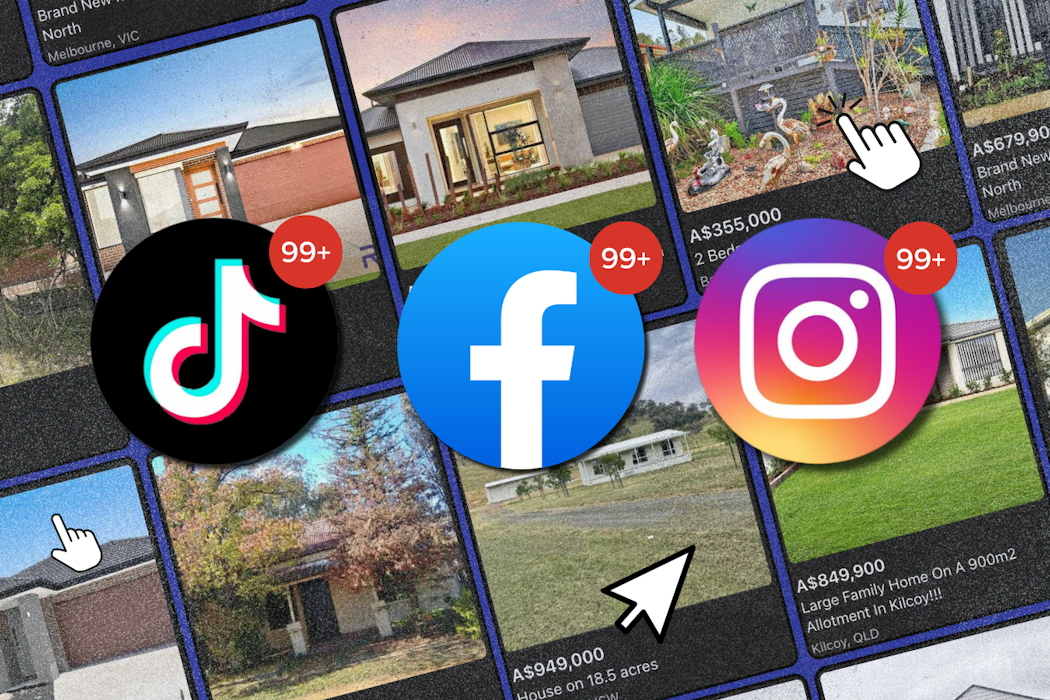
Whether using newspaper or television ads, posters or signposts on the front lawn, the mechanism for selling a home has been the same for many decades: broadcast the message to the crowd and hope the right person finds it.
Even the rise of modern online listing platforms, such as Domain and realestate.com.au, did not change this basic approach. But social media[1] has revolutionised the scene.
Algorithms can actively find prospective buyers based on user behaviour and serve them content, sometimes before they intend to buy a house. Social media has even allowed some home sellers to advertise properties all by themselves, and circumvent real estate agents[2] altogether.
So, how has social media changed the real estate game? And for agents or individual sellers thinking about using it, what are some pros and cons?
Selling in the social era
In 2015, Nic Fren, a Sydney-based real estate agent, reportedly became the first Australian real estate agent to list and sell a property exclusively on Facebook[3]. That makes the use of social media for home sales relatively new.
To advertise a house the traditional way, you have to deal with a gatekeeper. Listing on a site such as Domain or realestate.com.au is permission-based. Not only do you have to follow certain rules, it typically costs a significant amount of money.
The fees for advertising on Australia’s big real estate platforms are some of the highest in the world[4]. Both major platforms have increased their prices significantly[5] over the past five years.
But social media is decentralised, with no gatekeepers or major fees. Combined with the potential to reach a broader market, this makes it highly attractive to many agents and sellers.
For home sellers looking to bypass using a real estate agent entirely[6] through so-called “for sale by owner[7]” listings, social media can help reach a large audience at a low cost.
Agents can build a brand
Social media doesn’t just offer a new way to advertise properties. It also lets real estate agents foster personal relationships and build trust with potential clients. This is part of agents’ social capital. Instead of just selling homes, they also educate and entertain.
By doing so, many have captured more market share by building “celebrity-like” personal brands through their social media engagement with audiences. This is without having to wait until they have properties to sell.
This content can catch people’s eye even when they’re just scrolling for fun. That means if they are later looking to buy, they can feel like they already “know” a particular agent.
Amplifying exposure
There has been some international research on the impact of social media on property sales.
A study[8] from the United States found total Facebook likes, total links posted or shared, and total Facebook stories shared were positively related to real estate sales in Orange County, California.
Most brokers are not yet replacing traditional platforms such as Domain or realestate.com.au with social media. For now, they are complementary.
Over time, however, they could gradually become competing platforms – just as Facebook Marketplace has become[9] to eBay and Gumtree. There are reports[10] of some homes being sold after being advertised only on social media.
On TikTok, the algorithm means you don’t need a huge following[11] to go viral. Even small accounts can reach a huge audience.
TikTok’s demographic is typically younger. For this younger generation of consumers, social media is becoming the first point of exposure to real estate listings.
What are the risks?
Because social media decentralises marketing and removes a centralised real estate platform, some safeguards disappear. Prospective buyers may have to do more work to verify listing details and avoid property scams.
Social media may have heightened these risks of exposing buyers to misleading ads and non-existent properties.
Australians lost A$43.2 million[12] to property scams in 2024, up from $13 million in 2021.
Fake listings and fraudulent settlement schemes (which trick buyers into transferring money to impersonated accounts) are some of the most common ways people are scammed.
Navigating AI
Artificial intelligence (AI) adds a new layer of complexity to real estate marketing. This technology is increasingly being used to generate content, such as listing descriptions.
In the US, nearly half[13] (46%) of realtors who are members of the National Association of Realtors use AI for this purpose.
But there are ongoing concerns about how best to use it without introducing new risks to buyers. “Hallucinations” are one concern, where AI-generated descriptions may contain serious errors[14].
Despite its limited use, an emerging trend is the use of AI to generate hyper-realistic images for marketing. This is another major concern, as these pictures can seriously misrepresent the property. Whether this influences buyer behaviour and impacts buyers is untested territory.
References
- ^ social media (www.afr.com)
- ^ circumvent real estate agents (www.abc.net.au)
- ^ exclusively on Facebook (www.bespokemediamanagement.com)
- ^ some of the highest in the world (theconversation.com)
- ^ increased their prices significantly (www.theguardian.com)
- ^ bypass using a real estate agent entirely (www.abc.net.au)
- ^ for sale by owner (www.investopedia.com)
- ^ study (doi.org)
- ^ has become (www.theaustralian.com.au)
- ^ reports (www.afr.com)
- ^ don’t need a huge following (www.theguardian.com)
- ^ lost A$43.2 million (www.realestate.com.au)
- ^ nearly half (www.nar.realtor)
- ^ contain serious errors (www.theguardian.com)
Authors: Piyush Tiwari, Professor of Property, The University of Melbourne