Beyond the PwC scandal, there’s a growing case for a royal commission into Australia’s ruthless corporate greed
- Written by: Carl Rhodes, Professor of Organization Studies, University of Technology Sydney

Accounting and consulting group PwC has been front page news ever since its chief executive Tim Seymour stepped down “effectively immediately[1]” in May, when the firm said it had “betrayed the trust” of Australians and promised an independent review[2] of its governance, accountability and culture.
That review, conducted by former Telstra chief Ziggy Switkowski, was published[3] on Wednesday, along with an assurance from the firm that it would implement the recommendations.
Released with the review was a separate Statement of Facts[4] prepared by PwC. This set out how it had provided advice to clients based on confidential government information about tax policy, which had been provided to one of its partners on the condition it be kept confidential.
‘Untouchables’ and ‘troublesome practice matters’
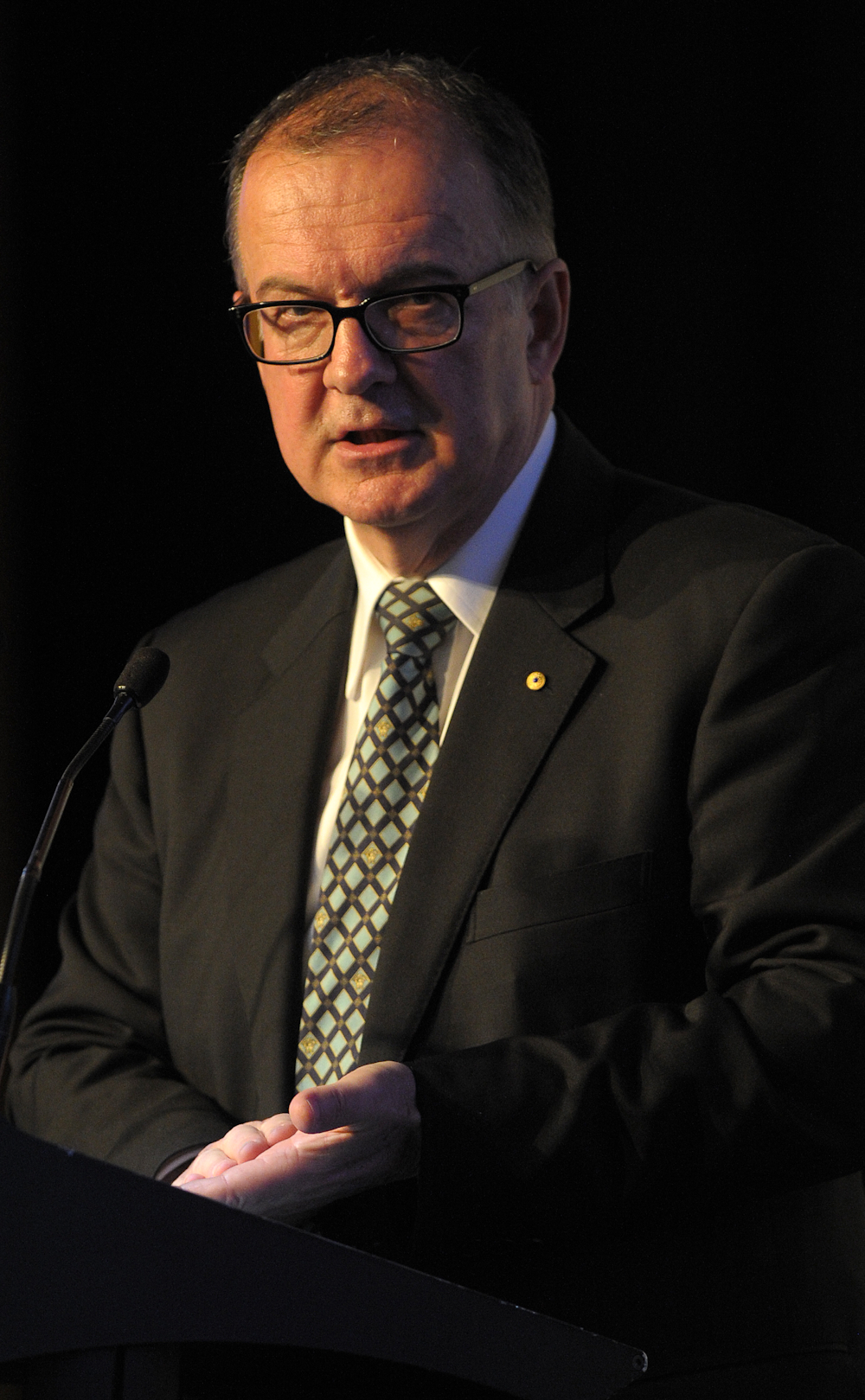
Switkowski found PwC Australia’s culture and governance practices were so weak they led to “integrity failures”.
It was an organisation that prized revenues and growth over ethics, values and purpose, with a “whatever it takes” culture that made “heroes” out of partners who raked in the most money.
If you were at the top, you were called a “rainmaker”. The biggest rainmakers who brought in the most money were referred to as “untouchables”, to whom “the rules don’t always apply”.
Switkowski found the culture was “collegial” in the sense that dissent wasn’t welcome.
While good news was shared among partners, difficult news was kept quiet and referred to internally as “troublesome practice matters”, or TPMs. Legal updates about TPMs were “generally verbal”.
Read more: More than reputation at stake: PwC faces penalties, including jail time[5]
The chief executive, elected by partners in a “presidential-style campaign”, was “not perceived to be accountable to the board”.
Among Switkowski’s most important recommendations were that PwC Australia be run[6] like a public company listed on the Australian Securities Exchange – with a board that included independent directors and had the power to hire and fire the chief executive.
PwC Australia has agreed to this, and all 23 recommendations[7].
Problems far from over
As damning as the report is, Labor Senator Deborah O’Neill – who is chairing the Senate inquiry into the management and integrity of consulting services – says it “merely scratched the surface[8]” of what was going on both at PwC.
Her committee has until November[9] to report.
Back in May, the Australian Treasury asked the Australian Federal Police to consider commencing a criminal investigation[10] into PwC’s improper use of confidential Commonwealth information.
And in July, Greens Senator Barbara Pocock formally referred PwC’s conduct to the new National Anti-Corruption Commission[11].
This all spells more trouble ahead for PwC, and perhaps for the Australian consulting industry more generally.
More than one bad apple?
Although sparked by the revelations about PwC Australia, Senator O'Neil’s committee is inquiring into the behaviour of all of Australia’s consultancy groups[12].
It has taken evidence from Deloitte, EY, KPMG, McKinsey and The Boston Consulting Group.
New research by Roy Morgan[13] suggests the bad image of corporations spreads beyond the consultants.
Asked about distrust or distrust of any brand in Australia in June, the result was an all-time high for distrust.
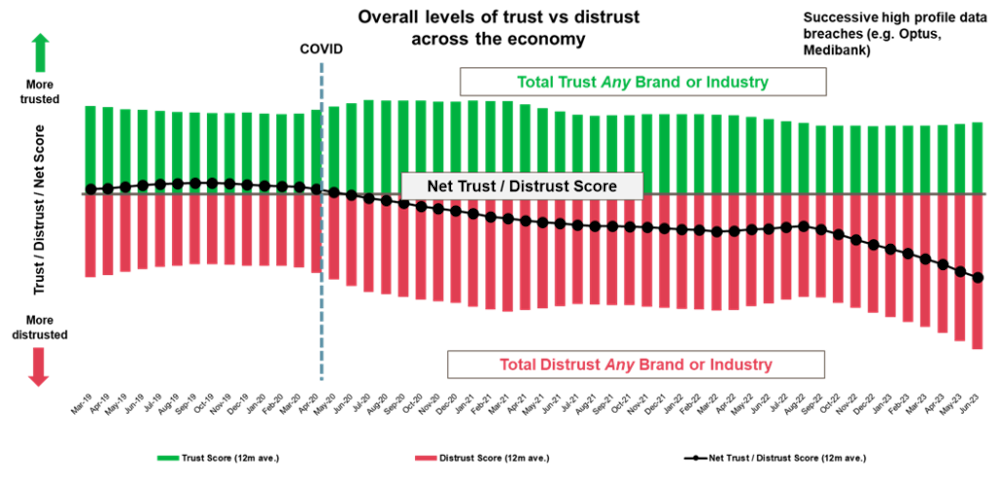 Roy Morgan Australia Risk Monitor[14]
Roy Morgan identified the PwC tax scandal and the data breaches at Optus and Medibank among recent events accelerating distrust.
It also identified:
the Harvey Norman JobKeeper scandal, Rio Tinto’s destruction of the Juukan Gorge, Qantas’ refusal to pay back any of the $2.7 billion in COVID government handouts and the class action by hundreds of thousands of customers fuelled by the airline’s unwillingness to refund $2 billion in cancelled flights
A record number of those surveyed identified “too motivated by profit” as a reason for their distrust.
This makes it reasonable to ask whether a culture of ruthless profiteering has infiltrated Australian corporate cultures across the board.
After the consultants have been dealt with, there is a case for royal commission into whether Australia’s entire corporate sector is meeting its responsibilities.
PwC has helped open the door.
Read more:
My 3-point plan to untangle the public service from consultants such as PwC[15]
References^ effectively immediately (www.pwc.com.au)^ independent review (www.pwc.com.au)^ published (www.pwc.com.au)^ Statement of Facts (www.pwc.com.au)^ More than reputation at stake: PwC faces penalties, including jail time (theconversation.com)^ run (www.asx.com.au)^ 23 recommendations (www.pwc.com.au)^ merely scratched the surface (www.smh.com.au)^ November (www.aph.gov.au)^ criminal investigation (treasury.gov.au)^ National Anti-Corruption Commission (www.afr.com)^ all of Australia’s consultancy groups (www.aph.gov.au)^ Roy Morgan (www.roymorgan.com)^ Roy Morgan Australia Risk Monitor (www.roymorgan.com)^ My 3-point plan to untangle the public service from consultants such as PwC (theconversation.com)Authors: Carl Rhodes, Professor of Organization Studies, University of Technology Sydney
Roy Morgan Australia Risk Monitor[14]
Roy Morgan identified the PwC tax scandal and the data breaches at Optus and Medibank among recent events accelerating distrust.
It also identified:
the Harvey Norman JobKeeper scandal, Rio Tinto’s destruction of the Juukan Gorge, Qantas’ refusal to pay back any of the $2.7 billion in COVID government handouts and the class action by hundreds of thousands of customers fuelled by the airline’s unwillingness to refund $2 billion in cancelled flights
A record number of those surveyed identified “too motivated by profit” as a reason for their distrust.
This makes it reasonable to ask whether a culture of ruthless profiteering has infiltrated Australian corporate cultures across the board.
After the consultants have been dealt with, there is a case for royal commission into whether Australia’s entire corporate sector is meeting its responsibilities.
PwC has helped open the door.
Read more:
My 3-point plan to untangle the public service from consultants such as PwC[15]
References^ effectively immediately (www.pwc.com.au)^ independent review (www.pwc.com.au)^ published (www.pwc.com.au)^ Statement of Facts (www.pwc.com.au)^ More than reputation at stake: PwC faces penalties, including jail time (theconversation.com)^ run (www.asx.com.au)^ 23 recommendations (www.pwc.com.au)^ merely scratched the surface (www.smh.com.au)^ November (www.aph.gov.au)^ criminal investigation (treasury.gov.au)^ National Anti-Corruption Commission (www.afr.com)^ all of Australia’s consultancy groups (www.aph.gov.au)^ Roy Morgan (www.roymorgan.com)^ Roy Morgan Australia Risk Monitor (www.roymorgan.com)^ My 3-point plan to untangle the public service from consultants such as PwC (theconversation.com)Authors: Carl Rhodes, Professor of Organization Studies, University of Technology Sydney