

Is PVC safe for drinking water?
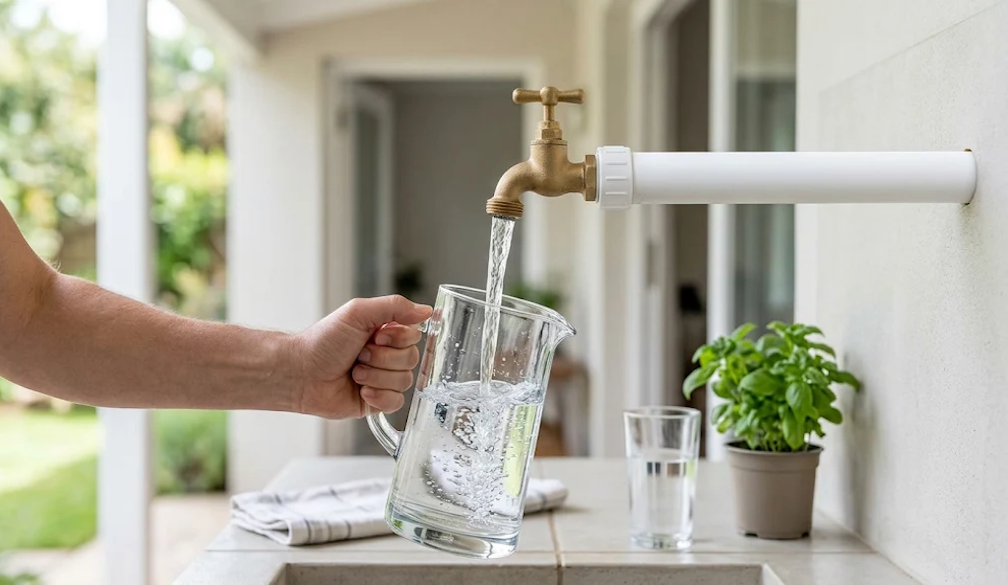
PVC can be a safe drinking-water material — but the evidence lies in certification and correct installation. Here’s what We should check for potable PVC pipe, fittings and jointing products.
PVC Pipe is often questioned when it comes to drinking water. That is a reasonable question for any material that comes into contact with potable water. The concise answer is that PVC is suitable for drinking water when the pipe, fittings and jointing products are properly certified for potable-water use — and when the material is used within its intended temperature range.
For Australian projects, the key point is not the word “PVC” on its own. It is the certification evidence behind the product. Specifiers should look for testing to AS/NZS 4020 for products in contact with drinking water, and WaterMark certification where the product falls within Australia’s plumbing and drainage product requirements. Internationally, NSF/ANSI/CAN 61 is the widely recognised health-effects certification for drinking-water system components.
In short: certified PVC is a proven potable-water material. Uncertified PVC, hot-water misuse or non-potable jointing chemicals are a different matter.
What certification actually confirms
NSF/ANSI/CAN 61 — Drinking Water System Components: Health Effects was developed in 1987 at the request of the US EPA. It sets health-based limits on substances that may migrate from products into drinking water, and it is referenced by many plumbing codes internationally. PVC has held NSF/ANSI 61 certification since 1989 and has a service record of around 70 years in water systems.
In Australia, the relevant due diligence is not simply “does it have an overseas certificate?” The product should have the appropriate Australian evidence for potable-water contact and, where required, plumbing-product certification. Overseas approvals can support a specification, but they do not automatically replace Australian requirements.
Table 1 — Certification and approval checks for potable PVC
|
Certification / approval |
What it covers |
Why it matters |
|---|---|---|
|
NSF/ANSI/CAN 61 |
Health effects —limits chemical migration into drinking water |
Internationally recognised core drinking-water safety approval |
|
NSF/ANSI 14 |
Physical and performance requirements forplastic piping |
Confirms the pipe meets its material and pressure performance standard |
|
NSF/ANSI/CAN 372 |
Lead content — “lead-free” verification |
Confirms no added lead in the product |
|
AS/NZS 4020 |
Testing of products for use in contact with drinking water |
The key Australian test evidence for potable-water contact |
|
WaterMark |
Australian plumbing and drainage product certification, where applicable |
Demonstrates compliance with relevant Australian plumbing requirements |
|
WRAS / KIWA |
UK and EU potable-water approvals |
Useful for export or comparative specifications, not a substitute for Australian evidence |
Lead-free formulation and low leaching
Modern potable PVC typically uses lead-free stabiliser systems, such as calcium-zinc stabilisers. Certified products are verified as lead-free under NSF/ANSI 372, and health-effects testing confirms that substances that may migrate into water — including residual vinyl chloride monomer — remain below the applicable health limits.
There is also a practical advantage that is easy to overlook: PVC does not corrode. Unlike ageing metal pipe, it cannot add lead or copper to the water over time. That corrosion resistance is one reason utilities and asset owners have increasingly adopted plastic potable mains, including PVC and HDPE.
How certification is policed:
Certification is not a one-off badge. For NSF/ANSI 61, the programme includes ongoing surveillance with real consequences:Each certified product family is re-tested to NSF/ANSI 61 at least once a year.
Residual vinyl chloride monomer is tested at least twice a year.
Every certified plant receives at least two unannounced inspections per year.
Around 17% of products initially submitted to NSF fail — evidence that the mark is not a rubber stamp.
Australian certification schemes also apply their own surveillance and compliance requirements. The principle is the same: the certificate should be current, the product should match the certified scope, and the evidence should be available for review.
Common concerns, answered plainly:
Most PVC drinking-water worries arise from three sources: uncertified pipe, use in hot-water applications, or the jointing chemicals rather than the pipe itself.
Two practical cautions stand out:
Use potable-grade certified pipe and matching jointing products. The solvent cement and primer must also be suitable for potable-water use and approved for the Australian market. A certified pipe joined with non-potable chemicals is not a certified potable-water system.
Keep standard PVC to cold-water service. Standard PVC is intended for cold water. Do not use it for hot water above approximately 60 °C; CPVC is the appropriate choice where higher temperatures are involved.
The bottom line
PVC certified for drinking-water contact is a safe, well-proven material for potable-water systems: non-corroding, lead-free and supported by ongoing third-party testing. But the safety case rests on certification and correct use — not on the material name alone.
For Australian projects, specify potable-grade certified pipe, confirm AS/NZS 4020 evidence and WaterMark certification where applicable, use matching approved jointing products, and keep standard PVC to cold-water service. On those terms, PVC has earned its place in drinking-water systems worldwide.


 Emma Fawcett, CEO of Compare Club






