Australia's Warehouse Network Is Ageing. The Next Decade Won't Be Won by Building More Sheds
- Written by: Phillip Makowski, Marketing Director, Dematic Australia
There's a comfortable story Australian supply chain leaders have told themselves for twenty years: if the warehouse gets tight, lease the shed next door.
That story has quietly stopped being true, and the property data now shows it plainly.
Australia's national industrial and logistics vacancy rate sat at 3.2 per cent in the first half of 2026, at or very near its cyclical peak on CBRE's forecast and below the 4 per cent the market treats as equilibrium. By global standards, that is extraordinarily tight.
But the headline hides the part that should worry operators: the vacant space is largely the space nobody wants. For example, the CBRE notes Melbourne's vacancy is dominated by older stock, with super prime facilities only a small share of what's available. At the large end, JLL found just five vacant warehouses above 30,000 square metres nationally in April. That’s 224,140 square metres down from 445,078 a year earlier.
The mismatch between the buildings and the work
Much of Australia's warehouse stock was designed in the 1990s and early 2000s for a different job: full-pallet movements, predictable replenishment, a few thousand SKUs, paper-based picking. Low clear heights, wide aisles and no meaningful data layer were rational choices at the time.
Those same buildings are now running a different operation altogether. Australians spent a record $82.6 billion online in 2025, up 14 per cent, now roughly a quarter of total retail spend. The shape of demand has changed as much as the volume. The average basket has fallen to $96, and the average household buys from around 16 retailers a year. More orders, smaller orders, more frequently, across more channels.
Then there's the reverse flow. Australia's reverse logistics market was worth $21.5 billion in 2025 and is forecast to reach $32.4 billion by 2034. Returns are no longer a side process. They're a second inbound stream competing for the same dock doors, floor space and people.
A building designed for pallets in and pallets out is now running eaches picking, multi-channel allocation and a returns operation it was never racked or resourced for. The symptom shows up as a floor-space problem when it's usually a cubic utilisation problem. This means metres of unused air above the racking, and a pick face that hasn't been re-slotted in years.
Three pressures that make standing still expensive
Technology debt. Ask an operator when their warehouse management system went in and the answer is often older than the building's last refit. Peerless Research Group's 2026 materials handling software survey found close to a third running a WMS a decade or older, 14 per cent of them 15 years or more. That software was built to count pallets, not to locate a single unit and tell you which channel has a claim on it. This is why so many sites still can't say what they're holding until someone walks the aisle and counts.
Labour economics. The Wage Price Index rose 3.2 per cent over the year to the June quarter 2026, while the 2026–27 national minimum wage decision lifted the floor by 4.75 per cent. Jobs and Skills Australia projects total Australian employment to grow 13.3 per cent over the decade to May 2035. Warehousing will be competing for that labour against every other sector. Absorbing volume growth by adding headcount is getting structurally harder and more expensive.
Fragility. This is the one Australian boards should sit with. Proxima's 2026 Global Supply Chain Resilience Outlook found Australian businesses the most exposed of any market surveyed: 59 per cent could not maintain operations beyond three weeks after a major shock. Geography and lead times mean we absorb shocks with less margin than almost anyone, and a warehouse without real-time inventory visibility makes it worse, because you cannot reallocate stock you cannot see.
Retrofit is the realistic strategy
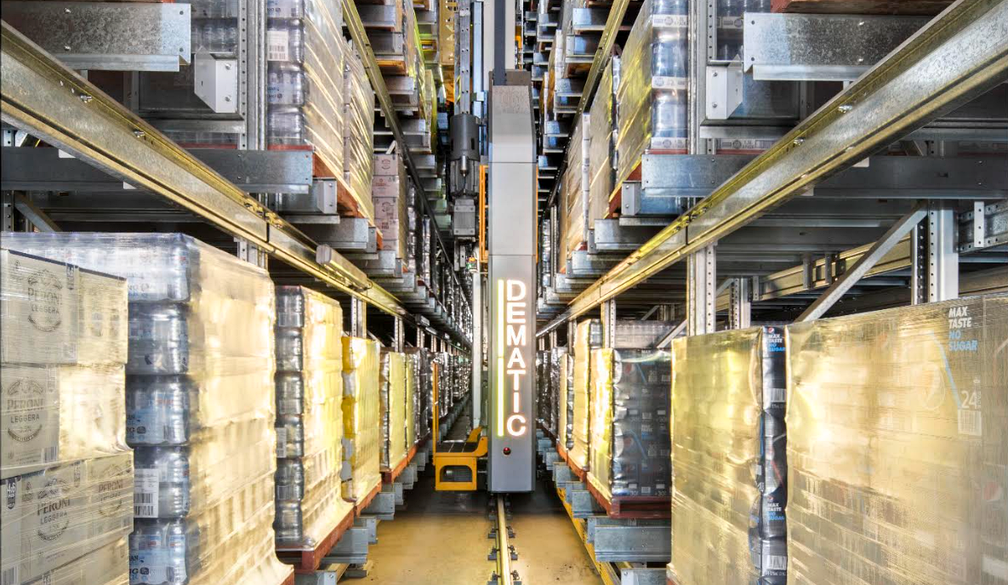
Over the next ten years, the biggest gains in Australian supply chains will come from getting more out of the warehouses businesses already have. Automated storage systems can increase usable warehouse space by up to 40 per cent by making better use of existing height. Goods-to-person technology can also reduce the time workers spend walking to pick orders, while modular robotics and software improvements can be introduced gradually without disrupting day-to-day operations.
Getting the order right matters more than choosing the latest technology. The best operations start by getting their data right. This means knowing exactly what they have, how much inventory they have, and how much they can realistically process. They then use automation to fix the specific problem slowing them down, rather than trying to automate the entire operation.
The real value isn’t simply reducing the cost of each order. A flexible warehouse can handle sudden increases in demand, delays or new sales channels without needing to move or expand. When there’s no spare warehouse nearby and even a few weeks of disruption can have a major impact, that flexibility becomes a critical part of staying resilient.
Australia's warehouse network is ageing. The decision in front of operators is whether those assets are allowed to quietly cap the business, or are re-engineered to carry it through the next decade.