Puhui Industry Highlights Growing Demand for HDPE Piping in Water and Mining
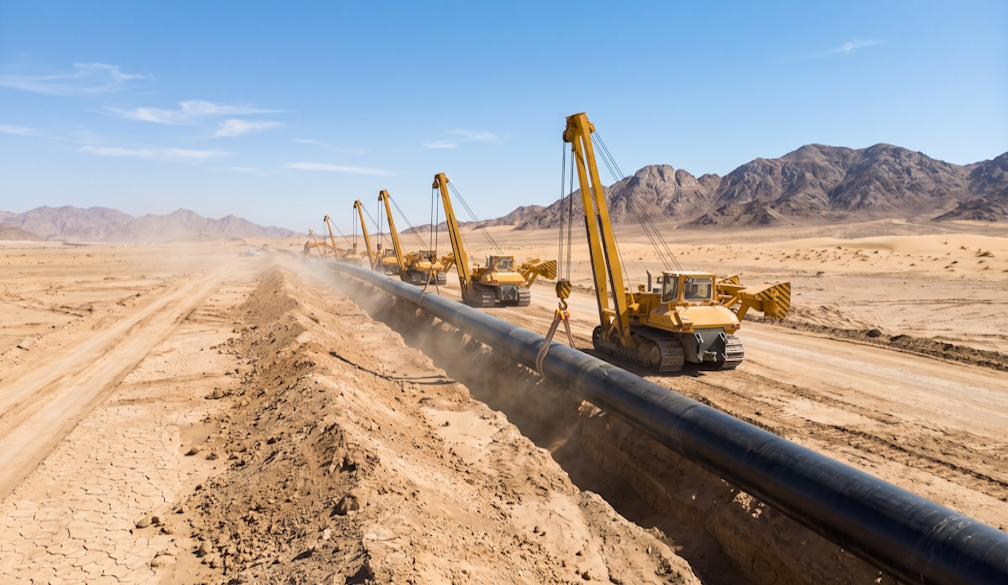
With the upgrading of global water supply infrastructure, the construction of long-distance water transmission projects, and the continued development of mining projects, the requirements for pipeline systems in engineering projects are changing. Corrosion resistance, long-distance transport capacity, adaptability to complex terrain, connection reliability, and long-term maintenance costs are becoming important considerations when selecting pipeline systems for water and mining projects.
Puhui Industry observes that international engineering clients' focus on HDPE pipes is no longer limited to pipe diameter, pressure rating, and purchase price. More and more projects are beginning to consider pipe materials, SDR, design pressure, connection methods, fitting configurations, construction conditions, international standards, and local certification requirements.
This change means that the water and mining markets need more than just single HDPE pipe products; they need HDPE pipeline solutions that can be matched to actual engineering conditions.
Puhui Industry believes that as large-scale water, mining, and infrastructure projects become more complex, technical communication between HDPE pipe manufacturers and project purchasers, contractors, and engineering teams will become increasingly important.
Water and Mining are generating more diversified HDPE pipe demands.
Water and mining are two industries with significantly different application environments, but both are highly dependent on reliable fluid transport systems.
In the water sector, HDPE pipes can be used in projects such as urban water supply, long-distance water transmission, raw water transportation, rural water supply, island water supply, industrial water supply, and water treatment facilities.
With urban population growth, increasing industrial water demand, and the upgrading of aging water supply infrastructure in some areas, engineering projects are increasingly focusing on the reliability of pipeline systems throughout their design life.
For long-distance water transmission systems, pipelines may need to traverse cities, mountains, rivers, roads, and even coastal areas. The longer the pipeline distance, the more factors need to be considered in the engineering design, including flow rate, pipe diameter, pressure loss, terrain elevation differences, pump station configuration, transient pressure, and construction methods.
Mining projects face even more complex environments.
Pipelines in mines are not just used for transporting clean water. A large mining area may simultaneously have multiple systems, including raw water transportation, mine water supply, process water, mine drainage, tailings transportation, and slurry transportation.
The media, flow rate, pressure and operating conditions vary significantly in different systems. Therefore, "Mining HDPE Pipe" is not a fixed specification product, but a series of piping solutions that need to be configured according to specific application conditions.
Corrosion resistance is a crucial consideration for long-term pipeline investment
For underground and mining pipeline systems that operates for extended periods, corrosion is a significant factor influencing material selection.
Pipelines may operate underground for extended periods in high-humidity, coastal salt spray, or specific soil environments. For traditional metal pipelines, engineering design typically requires a comprehensive consideration of the material itself and corresponding corrosion protection measures.
HDPE materials do not undergo the electro chemical corrosion which is common to the other traditional metals, thus offering advantages in applicable water supply, mining, and underground pipeline conditions.
This characteristic is particularly important for mining operations.
Many mining areas are located in remote regions. A main pipeline failure can significantly increase project operating costs due to the personnel, equipment, and downtime required for repairs. Therefore, project owners typically consider not only initial procurement costs but also installation, maintenance, and long-term operating conditions when selecting pipeline materials.
However, different pipeline materials have their own suitable engineering environments.
HDPE cannot simply replace all traditional pipe materials. Under extremely high temperatures, special mechanical loads, or certain high-pressure conditions, steel pipes or other materials may still be more suitable. Therefore, the selection of materials should be based on engineering conditions, rather than simply comparing the individual properties of a particular material.
Hot-melt fusion allows HDPE pipes to form continuous piping systems
The performance of the pipe itself is only one part of the overall reliability of the transportation system; the connection method is equally important.
HDPE pipes can typically be connected using Butt Fusion or Electrofusion.
With the correct equipment, process parameters, and construction operations, HDPE pipes and corresponding fittings can form a continuous connection system.
This feature is of practical significance for long-distance water transportation and mining pipelines.
A pipeline system that last several kilometers or even longer may contain numerous connection points. If each connection point relies on a mechanical seal, the increased number of joints means that the project needs to pay more attention to long-term sealing and maintenance.
Therefore, more and more HDPE projects are not only inquiring about pipe prices but also about fittings, hot-melt fusion equipment, electrofusion equipment, and field connection solutions.
This also means that a complete HDPE Pipeline Solution needs to be considered.
Pipe → Fittings → Jointing → Installation, and not just the straight pipe itself.
Long-Distance Water Transmission Drives the Application of Large-Diameter HDPE Pipes
Large-scale water supply projects are a significant application scenario for the increasing demand of HDPE pipes.
In some regional water transmission projects, the distance between the water source and the city may be tens of kilometers; industrial parks may need to obtain a stable water supply from distant water sources; islands, remote communities, and mining areas may also require the construction of independent long-distance water transmission systems.
As the design flow rate increases, the required pipe diameter also increases accordingly.
Large-diameter HDPE pipes have therefore become an important material choice for some long-distance water transmission and large-scale infrastructure projects.
Puhui Industry currently has the production capacity for HDPE pipes ranging from 20 mm to 1800 mm, providing appropriate size options for different project flow rates, pressures, and application environments.
However, for large-diameter pressure pipelines, "larger diameter" does not necessarily mean a simpler solution.
Engineering design needs to comprehensively consider factors such as flow rate, flow velocity, pressure loss, pump head, terrain elevation differences, pipe wall thickness, and transient pressure.
For example, a long-distance water pipeline designed to operate at a pressure of 1.0 MPa does not necessarily mean that simply selecting PN10 will meet all operating conditions.
Pump start-up or shutdown, rapid valve closure, sudden power outages, and rapid changes in flow rate can all cause transient pressure, commonly known as water hammer in engineering.
Therefore, for large water transmission systems with pumping stations, project owners typically need to further evaluate transient operating conditions beyond the normal operating pressure.
The mining industry is seeing more specialized applications of HDPE pipes
Compared to general municipal water supply, mining pipeline systems often have more complex application conditions.
A single mining project may operate multiple pipelines for different purposes simultaneously.
Mine Water Supply
A stable water supply is required for production, living conditions, and the operation of some equipment in the mining area. For mining areas far from water sources, long-distance raw water or clean water transmission pipelines may be necessary.
Process Water
Mineral processing, washing, and other mineral treatment processes typically require large amounts of process water. Some projects also utilize circulating water systems to improve water resource utilization efficiency, thus requiring the establishment of corresponding supply and return water networks.
Mine Dewatering
Open-pit and underground mines may require continuous drainage. Drainage pipelines need to be configured based on head, flow rate, pumping stations, and terrain conditions.
Tailings Transportation
Tailings systems differ significantly from general clean water transportation.
Tailings typically contain solid particles, therefore pipeline design must consider not only pressure but also particle size, solid concentration, slurry density, flow velocity, and abrasion.
Slurry Pipeline
The physical properties of different slurries can vary significantly.
Ore type, particle size distribution, solids content, and operating flow rate all affect pipeline operation; therefore, slurry pipelines typically require evaluation based on specific media and engineering data.
These different applications indicate that the mining industry's demand for HDPE is gradually shifting from simple "Mining Pipes" to specialized pipeline systems designed for different transport media.
Tailings and slurry projects place greater emphasis on abrasion and flow velocity
Abrasion is a frequently discussed issue in mining pipeline design.
Unlike clean water, solid particles in tailings and slurries may continuously come into contact with the inner wall of the pipeline, thus actual abrasion is influenced by a variety of factors.
Projects typically need to consider:
Particle Size
Particle Distribution
Solid Concentration
Slurry Density
Flow Velocity
Temperature
Pipeline Length
Elevation Difference
Operating Pressure. Flow velocity is particularly important.
The very low flow velocity may lead to the deposition of some solid particles; too high a flow velocity may increase system energy consumption and may exacerbate abrasion under certain operating conditions.
Therefore, while HDPE performs well in many abrasive conveying applications, it cannot be simply described as "abrasion-free" or "abrasion-proof."
For tailings and slurry systems, a more reasonable approach is to conduct an engineering analysis that considers the actual medium, design flow velocity, pressure, and expected service life.
This complexity in application is also a key reason why the mining market is increasingly focusing on HDPE Pipeline Solutions rather than the price of individual pipes.
Complex terrain is driving increased attention to flexible piping systems
Many water and mining projects are not located in urban areas with ideal construction conditions.
Mines may be located in mountains, deserts, plateaus, or other remote areas; rivers, roads, valleys, and significant elevation differences may exist between water sources and water usage areas.
HDPE pipes have a degree of flexibility, allowing them to adapt to some route changes within permissible bending radius and engineering design limits.
For projects requiring crossing roads, rivers, or other obstacles, HDPE can also be used in some Horizontal Directional Drilling (HDD) projects.
Trenchless construction reduces some surface excavation, but it also places new demands on pipe materials, welding quality, pullback processes, and construction design.
Therefore, even when using HDPE pipes of the same specifications, the engineering conditions to be considered for traditional excavation, HDD, mountain laying, and surface pipelines in mining areas may be completely different.
SDR and PN are not the whole story in HDPE pipe selection.
In international HDPE pipe quotations, common procurement information may only include:
Diameter + SDR/PN + Quantity. This information can be used for preliminary quotations, but it is usually incomplete for actual project selection.
A pressure piping system may also need to consider:
Operating Pressure
Design Pressure
Temperature
Flow Rate
Elevation Difference
Pump Operation
Surge Pressure
Installation Method
Transported Medium. Among these, SDR is a crucial parameter in HDPE pipe selection.
SDR represents the ratio between the pipe's nominal outer diameter and nominal wall thickness. Under the same outer diameter and material conditions, different SDR imply different wall thicknesses and corresponding pressure performance.
However, the pressure rating itself cannot be considered in isolation from temperature, operating conditions, and design requirements.
Especially in pumping systems, the normal operating pressure is only one part of the overall system pressure variation. Pump start-up and shutdown, valve operation, and other transient events can all affect the actual pressure.
Therefore, Puhui Industry has observed that some international engineering clients have begun to provide more complete project parameters during the inquiry stage, rather than simply submitting a table of pipe diameters and quantities.
International HDPE procurement is shifting from "buying pipes" to "procuring piping systems."
As engineering projects become increasingly specialized, the international HDPE procurement model is also changing.
Traditional inquiries often focus on:
Diameter + SDR + Quantity + Unit Price
However, more and more projects are beginning to require:
HDPE Pipe
HDPE Fittings
Flange Connections
Butt Fusion Fittings
Electrofusion Fittings
Welding Equipment
Technical Datasheets
Product Certifications
Packing Information
Container Loading Plans. This shift is particularly significant for large-scale projects.
For example, large-diameter HDPE main pipes may require connections to branch pipes of different sizes, valves, pump stations, and other equipment. If there is a lack of proper matching between pipes, reducers, flanges, and welding equipment, even if individual pipe products meet the requirements, on-site construction may still face problems.
Therefore, project purchasers are increasingly focusing on whether manufacturers can provide a complete configuration from pipes to connection systems.
This is precisely the key difference between "HDPE Pipe" and "HDPE Pipeline Solution.
International standards and certifications are being incorporated into project procurement processes earlier
The dimensional systems, product standards, and certification requirements for HDPE pipes vary across different regions globally.
International water supply projects using the metric system may specify ISO 4427; some projects using the IPS dimensional system may require ASTM D3035 or ASTM F714.
For drinking water projects, purchasers may also focus on certifications related to drinking water contact, such as NSF/ANSI 61 or WRAS.
Some markets or projects may require product certification documents such as AENOR, while fire-fighting water supply projects may specify FM Approved products.
These requirements mean that international HDPE pipe procurement cannot simply use a single product specification to cover all markets.
Project owners need to confirm the following during the design or procurement phase: Dimension Standard + Material + Pressure Class + Application + Certification.
Manufacturers, on the other hand, need to clearly distinguish between different standards, dimensional systems, and certification coverage.
Puhui Industry currently offers corresponding HDPE pipe products and certification options for different international projects and provides technical documentation support based on actual product specifications and certification scope.
Puhui Industry Responds to the Increasingly Project-Driven Demands of the HDPE Market
Faced with the rising demands for HDPE Pipeline Solutions from water and mining projects, Puhui Industry is enhancing its project service capabilities across multiple areas, including manufacturing, product configuration, and system supply.
The company currently manufactures HDPE pipes ranging from 20 mm to 1800 mm, covering various sizes from small-diameter branch lines to large-diameter main water supply lines, and offers PE100 HDPE pipes and double-layer co-extruded HDPE pipes.
At the application level, Puhui Industry provides customized product configurations for water supply, long-distance water transmission, mine water supply, process water, drainage, tailings, slurry, and other infrastructure projects, tailing the solutions to specific engineering conditions.
Furthermore, the company can also provide complementary HDPE pipe fittings, flange connection assemblies, hot-melt connection equipment, and electrofusion products, enabling project procurement to extend beyond single pipes to more complete piping systems.
For international projects, Puhui Industry can also provide products conforming to standards such as ISO 4427 and ASTM D3035/F714, and provide certifications and documentation support such as NSF/ANSI 61, WRAS, AENOR, FM Approval, and third-party product verification for the corresponding specifications.
The HDPE pipe market is evolving towards greater engineering specialization
Puhui Industry believes that future demand for HDPE pipes in the water and mining sectors will not only be reflected in increased procurement volumes, but more importantly, in the increasing specialization required for piping systems.
Large-scale water supply and infrastructure projects will continue to drive demand for large-diameter HDPE pipes; applications in mining, tailings, slurry, and HDD will drive more specialized product selection and engineering assessments.
Meanwhile, international buyers' focus on certifications, technical documentation, fitting configurations, connection equipment, and logistics solutions means that HDPE manufacturers need to assume a more comprehensive project support role.
For future HDPE piping projects, simply answering "how large a pipe is needed" may no longer be sufficient to determine the final solution.
The medium being transported, the required flow rate, how the system generates pressure, the terrain the pipeline traverses, the construction methods used, and the standards and certifications that need to be met are all collectively determining how the HDPE piping system should be configured.
Therefore, Puhui Industry believes that the increased demand for HDPE in the water and mining sectors should not be simply interpreted as that the market is needing more HDPE pipes, but rather as an increasing number of projects seeking complete HDPE pipeline solutions that can be matched to specific engineering conditions.
About Puhui Industry
Puhui Industry is an international manufacturer of HDPE pipes and piping systems for the engineering market. It produces HDPE pipes ranging from 20 mm to 1800 mm and provides PE100 HDPE pipes, double-layer co-extruded HDPE pipes, HDPE fittings, connection components, and welding equipment.
The company's products serve applications in water supply, long-distance water transmission, mining, tailings, industry, and infrastructure. It provides certifications and documentation support according to applicable product and project requirements, including ISO 4427, ASTM D3035/F714, NSF/ANSI 61, WRAS, AENOR, FM Approval, and third-party product verification.
Puhui Industry continuously improves its HDPE pipe product and system supply capabilities based on actual engineering conditions, providing more professional and project-adaptive HDPE pipeline solutions for water, mining, and infrastructure projects worldwide.


 Business Daily Media