Why Small Contractors Are Losing The Equipment Race, Even When They Can Pay For It
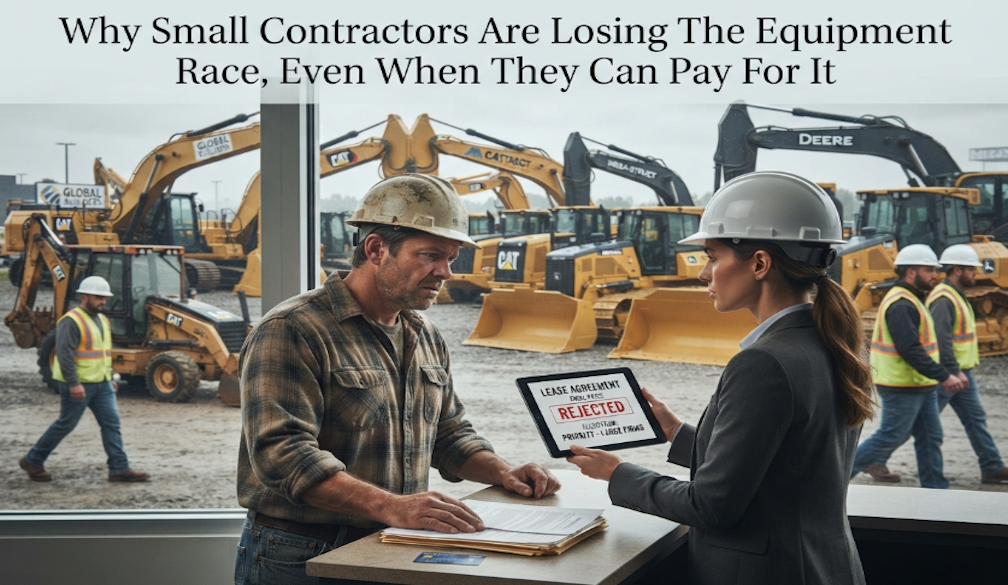
Australia is running several of its biggest infrastructure programs at once. Transmission upgrades tied to the energy transition now account for roughly $15 billion across the five-year outlook, up from about $4 billion the year before, according to Infrastructure Australia. Investment in social and affordable housing has climbed from roughly $17 billion to $28 billion over the same period. Add the Brisbane Olympics build and a run of defence projects, and a large share of the country's major construction work is now happening in overlapping windows instead of in sequence.
Equipment is part of the squeeze, not just labour
Most of the coverage of that concentration has focused on people. Shortages of trades workers and labourers are forecast to peak at around 126,000 by mid-2027, and that figure gets most of the attention. Less discussed is what happens to plant and equipment under the same conditions. Civil construction equipment supplier Conplant's assessment of the 2026 infrastructure pipeline notes that running these projects concurrently is increasing competition for workers, materials and equipment together, and that the pressure lands on contractors of every size, not just the majors.
Availability, not price, is what's actually being rationed
For a small subcontractor, that pressure rarely shows up as a straightforward price problem. Hire rates matter, but the sharper issue is often timing: a business can be ready to pay the going rate for an excavator or a boom lift and still miss the window the job needs, because the same machine has already gone to a larger, standing account. Quantity surveyors RLB noted in their first-quarter 2026 market update that growing demand from Tier 1 projects is starting to draw down the pool of resources available to Tier 2 and Tier 3 firms, tightening cost and availability further down the chain. Some smaller operators are responding by widening the net before they commit to a job, using sourcing services such as Quotor to check availability across several suppliers and locations at once rather than ringing round one hire company at a time.
Why hire fleets protect their biggest accounts first
This is a rational response by hire companies to a real constraint, not a failure of the market. When a fleet is fully booked, a supplier protects the relationships that keep its business predictable: the builder who hires ten machines a month, not the subcontractor who hires one machine twice a year. It means the businesses with the least buying history are the most exposed when demand spikes, regardless of how urgent their own job is.
What a missed hire window costs a small operator
For a small operator working to a fixed-price contract, a two-week wait for the right machine is not a minor inconvenience. It can push a program past its deadline, trigger a penalty clause, or cost the business its next booked job if the crew and gear earmarked for that job are still tied up on the last one. Advisory firm Moore Australia has already flagged cash-flow pressure and margin compression as risks for smaller construction businesses this year, and an unplanned equipment delay lands on operators with the least room to absorb it.
Labour is still the bigger constraint on Australian construction right now, and no single factor explains the pressure smaller operators are under. But equipment access deserves a place next to labour and cash flow on the list of scheduling risks small contractors actively manage, rather than one they simply hope doesn't bite on this job.


 Business Daily Media