How Security Screens Let the Breeze In Without Compromising Safety
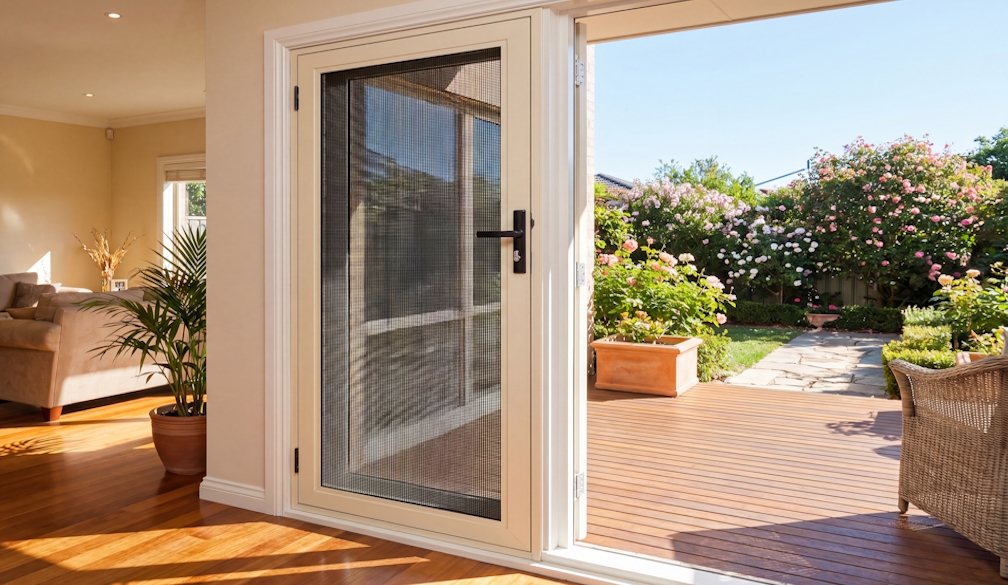
There's a strange trade-off most homeowners feel they have to make every summer. Open the windows and doors to let some air through the house, or keep everything locked up tight and put up with the heat. For years, that's genuinely been the choice. But it doesn't have to be anymore, and that's largely thanks to how far security screens have come.
Modern security screens are built to do two jobs at once: let air move freely through your home, and stop anyone from getting in who isn't supposed to. It sounds like a simple idea, but the engineering behind it is worth understanding before you decide what's right for your home.
Why This Trade-Off Existed in the First Place
Australians love fresh air, and it makes sense given the climate. Sustainability Victoria reports that up to 90% of Victorian homes rely on natural ventilation during the warmer months. The problem is that many homeowners avoid leaving windows open because of security worries, which ends up reducing airflow and increasing how much they rely on cooling systems instead.
That worry isn't unfounded either. A home burglary occurs once every 18 minutes across Victoria, and roughly one in five Victorians have experienced a break-in or attempted break-in, according to the Crime Statistics Agency Victoria. And it's not just a Victorian issue, the Australian Bureau of Statistics reported that in 2023–24, around 2.3% of Australian households experienced a break-in or attempted break-in.
So the instinct to lock everything down is reasonable. The good news is that you don't have to choose between feeling safe and feeling comfortable, and that's exactly the gap that good home security solutions are designed to close.
How the Mesh Actually Works
The part of a security screen doing most of the heavy lifting is the mesh, and not all mesh is created equal. Good security mesh is woven from fine strands of stainless steel, in a pattern similar to a checkerboard, with gaps small enough to keep insects and intruders out while still letting plenty of air pass through.
To give you a sense of the numbers involved, one premium woven stainless steel mesh offers a 42.71% open area with a 1.575mm aperture, which means almost half of the screen's surface is actually open space for air to move through. Other products on the market sit in a similar range, one stainless steel security mesh has an aperture of 1.62mm and a 42.5% open area, while a perforated aluminium alternative has a slightly larger 2.0mm aperture and a 40% open area. Both styles strike a workable balance, though the exact figures vary slightly depending on the brand and material.
It's worth knowing the difference between mesh types too. Woven stainless steel mesh is made from individual strands woven together and offers excellent airflow, visibility, and insect protection, while perforated aluminium is a single sheet of metal with holes punched through it, which offers more privacy but somewhat less airflow. Neither is "wrong", it really comes down to what you want from your screen, whether that's maximum airflow, more privacy, or a particular look.
The Strength Side of the Equation
Letting air through is only half the story. A security screen also has to actually stop someone from getting in, and that comes down to how well the mesh and frame are built and tested.
In Australia, this isn't just a marketing claim, there are formal standards behind it. Australian Standard AS5041 requires screen door mesh to pass six separate strength tests before a product can legally be called a security door. This matters because plenty of products marketed as "screens" are really just flyscreens with no meaningful security value at all. A basic safety screen, for instance, is not the same thing as a true security screen, even though they can look similar from a distance.
Some manufacturers go well beyond the minimum requirements too. One stainless steel perforated security door design has reportedly been tested to withstand extreme impact and knife attacks, exceeding Australian Standards by up to 10 times, which gives you a sense of just how much headroom exists between "meets the standard" and genuinely robust.
Why This Matters Day to Day, Not Just in a Break-In
It's easy to think about security screens purely in terms of stopping a worst-case scenario. But the real, everyday benefit for most homeowners is being able to leave doors and windows open without a second thought.
With a proper security screen fitted, you can leave your windows open all day and night, even when you're not home, because the screen lets air keep flowing constantly while keeping your home secure. Without one, you generally need to shut your windows before heading out, and again at night, which cuts off airflow exactly when your home might need it most.
There's a flow-on comfort benefit too. Letting air move through your home helps clear out stale air and keep mould at bay, and it can noticeably reduce indoor heat during summer, which in turn helps cut down on air-conditioning costs. Multiply that across a whole summer, and the savings on cooling can be meaningful.
Where Burglars Actually Try to Get In
Understanding where security screens make the biggest difference helps when deciding which doors or windows to prioritise first. Research shows that around 32% of home break-ins happen through unlocked or weakly secured doors, with another 29% occurring through windows that have no visible or physical barrier.
That's more than 60% of break-ins happening through entry points that a well-fitted security screen would directly address. It's also a strong argument for not just securing your front door, but thinking about sliding doors, side entries, and windows too, particularly the ones that get left open for airflow on a regular basis.
Choosing What's Right for Your Home
Not every home needs the same setup, and local conditions matter more than people expect. Homeowners looking at Inner West Sydney security screens are often dealing with older, character-style homes where original window and door frames need a custom fit rather than an off-the-shelf solution. Further north, homeowners researching Ryde security screens are frequently balancing leafy, established streets with a genuine need for airflow through warmer months, which makes mesh choice and open area percentage especially worth getting right.
If you're in an area with limited break and enter activity but heavy insect activity, you might prioritise airflow and visibility over maximum strength. If you live somewhere with higher burglary rates, or you travel often and leave the house empty, it's worth leaning towards the more rigorously tested products, even if the open area percentage is marginally smaller.
Whichever direction you lean, the underlying point stands: you no longer have to choose between fresh air and feeling safe. The technology behind modern security mesh has closed that gap, and for most homeowners, it's one of the more practical upgrades you can make, quietly working in the background every single day, not just on the rare occasion someone tries the door.


 Business Daily Media