How Healthcare Organizations Can Strengthen Employee Belonging
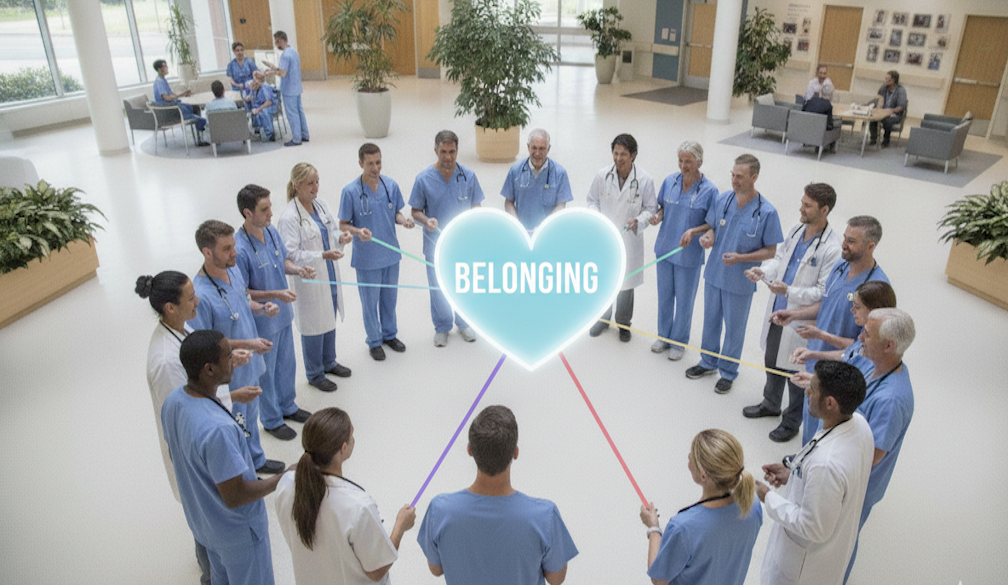
Picture a nurse who has worked your unit for three years. She knows her patients, knows her colleagues, and does her job well. However, something has shifted. She no longer speaks up in team huddles. She eats lunch alone. She has quietly started updating her resume. Nothing dramatic happened, no blowup, no demotion, just the slow accumulation of feeling invisible. Now multiply that story across your organization, and you start to see why belonging is not a culture buzzword. It is a retention strategy, a patient safety issue, and a competitive advantage all at once. The question is what you are actually doing about it.
Build Inclusion Into the Hiring Process, Not After It
Too many organizations treat inclusion as something you layer on after a hire is made. That approach starts the relationship at a deficit. When you align hiring with inclusion initiatives from the very first touchpoint, you make a promise before day one that your workplace is genuinely built for a wide range of people to succeed. Rewrite job postings to focus on what someone needs to accomplish rather than a checklist of credentials that unintentionally narrows your pool. Structure your interviews so bias has fewer places to hide, then let onboarding carry that momentum forward, with mentors assigned before the first shift, resource groups introduced in the first week, and the unwritten rules of your culture made explicit rather than left for new hires to stumble through.
Psychological Safety Is the Engine, Not a Perk
Here is an uncomfortable truth: if your staff are afraid to speak up, your patients are less safe, and your talent is walking out the door. Psychological safety, the belief that raising a concern will not get you penalized or dismissed, is the bedrock of belonging in clinical settings. The Agency for Healthcare Research and Quality has found that structured team communication frameworks meaningfully reduce medical errors while also strengthening how colleagues trust and relate to one another. You build that kind of safety by making post-shift debriefs routine rather than reserved for crises, by having leaders visibly own their own mistakes, and by recognizing the person who flagged a problem rather than quietly fixing it and moving on.
Your Managers Are Your Culture, Whether You Like It or Not
No wellness initiative, no DEI workshop, no all-hands speech will overcome a bad manager. The relationship between an employee and their direct supervisor accounts for more of their daily sense of belonging than any organization-wide program ever will. That means investing heavily in your middle managers, teaching them to check in with curiosity rather than just task management, training them to notice who has gone quiet in team meetings, and coaching them to spread recognition broadly instead of recycling praise toward the same reliable few. When a manager treats belonging as part of their job description rather than someone else’s department, the culture changes at the level where it actually lives.
Listen Like You Mean It
Employees know the difference between a survey that disappears into a spreadsheet and one that leads to something real. If you want honest feedback on whether people feel they belong, you have to close the loop every single time. The Society for Human Resource Management points to consistent listening practices, including pulse surveys, stay interviews, and small-group conversations, as among the most effective tools for catching disengagement before it becomes departure. In healthcare, where the cost of replacing a single registered nurse can reach six figures, that early warning is worth far more than the hour it takes to act on it. Share back what you heard. Name the changes you are making because of it, then ask again.
Belonging Is Built One Interaction at a Time
There is no program you can launch that will solve this in a quarter. Belonging is earned through the accumulation of small moments: the manager who notices someone is struggling, the onboarding buddy who answers a nervous question at 7 a.m., the debrief where speaking up actually changed something. Your job is to make those moments more likely, more frequent, and more intentional across every corner of your organization. Do that, and the nurse updating her resume might decide to stay.


 Business Daily Media