Why Small Windscreen Chips Can Turn Into Major Cracks
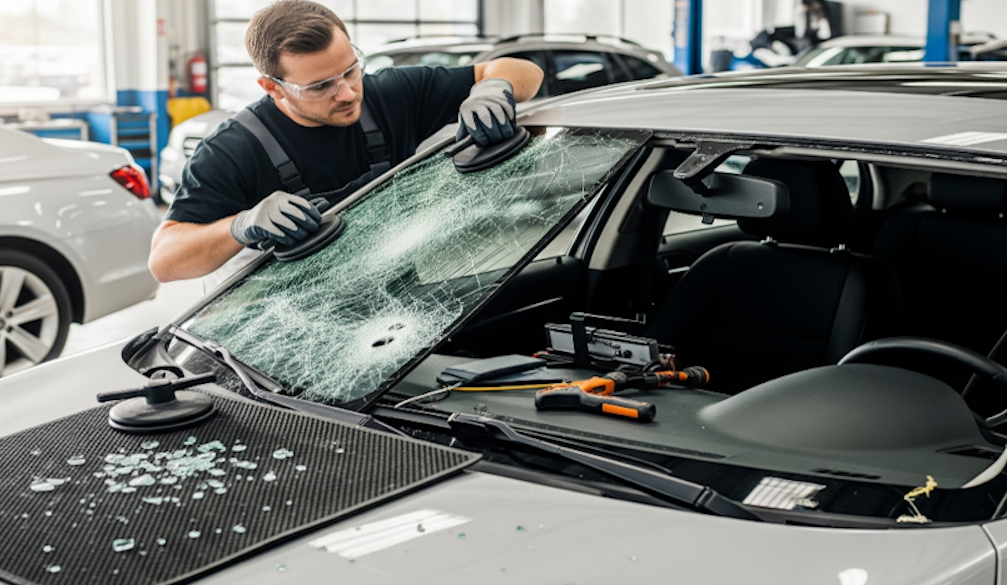
It is a familiar sound for almost every driver: the sharp "crack" of a small stone striking the windscreen while cruising at highway speeds. Often, the resulting damage appears as nothing more than a tiny, insignificant speck or a "bullseye" no larger than a five-cent piece. Because it doesn't immediately obstruct the line of sight, many motorists choose to ignore it, assuming it is merely a cosmetic flaw.
However, a windscreen is far more than just a piece of glass; it is a sophisticated structural component of the vehicle. In modern automotive engineering, the windscreen provides up to 30% of the cabin’s structural integrity and is essential for the correct deployment of passenger airbags. Understanding the physics of glass tension explains why a minor chip is often just the precursor to a total autoglass replacement.
The Physics of Glass Tension
Automotive windscreens are made of laminated glass, consisting of two layers of glass bonded together by a vinyl interlayer. This design ensures that if the glass breaks, it stays in one piece rather than shattering into dangerous shards. However, this structure is constantly under immense pressure.
When a stone strikes the glass, it creates a point of weakness by breaking the outer layer. Even if the chip looks stable, the structural integrity of the glass has been compromised. The outer environment and the vehicle’s operation then begin a process of "stress loading" on that single point of failure.
1. Temperature Fluctuations and Thermal Expansion
The most common cause of a chip suddenly spidering into a large crack is temperature change. Glass expands when it is hot and contracts when it is cold. In the Australian climate, this is a daily occurrence.
Imagine a car parked in the sun on a 30-degree day. The glass heats up significantly. If the driver then enters the vehicle and turns the air conditioning to its maximum setting, the rapid cooling causes the glass to contract. This thermal shock puts immense pressure on the edges of the chip. Since the chip is already a weakened point, the glass relieves this pressure by cracking along the lines of least resistance.
2. Structural Vibration and Road Conditions
Every time a vehicle travels over a speed bump, hits a pothole, or even vibrates while idling, the chassis undergoes subtle twisting and flexing. A healthy windscreen absorbs these vibrations easily. However, a chipped windscreen cannot distribute this energy evenly. Instead, the vibration focuses on the damaged area, acting like a tiny wedge that slowly hammers the chip into a long-running crack.
3. Contamination of the Vinyl Layer
A windscreen chip is essentially an open wound. Over time, moisture, dirt, and road grime find their way into the crevice. This is particularly problematic in wet weather. If water enters the chip and then freezes or heats up, it expands, pushing the layers of glass apart. Furthermore, once the plastic interlayer becomes contaminated with dirt, it becomes much harder to perform a clean, invisible repair, making a full replacement the only viable option for restoring clarity and safety.
The Safety Implications of Neglect
Modern vehicles are equipped with Advanced Driver Assistance Systems (ADAS), such as lane-departure warnings and autonomous emergency braking. These systems often rely on cameras and sensors mounted behind the top of the windscreen. Even a small crack, if it spreads into the camera’s field of vision, can cause these life-saving systems to malfunction or fail entirely.
Moreover, in the event of a rollover accident, a cracked windscreen is far more likely to fail, leading to a collapse of the roof. Maintaining the glass in its original, undamaged state is not just about aesthetics; it is a fundamental requirement for the safety of everyone inside the vehicle.
Repair versus Replacement
The general rule in the industry is that if a chip is smaller than a twenty-cent piece and not directly in the driver's line of sight, it can often be repaired using high-quality resin. This process seals the damage and prevents it from spreading.
However, once that chip turns into a crack—especially one that reaches the edge of the glass—the structural integrity is lost. At this stage, a repair is no longer safe or effective, and a professional installation of a new windscreen becomes necessary to restore the vehicle to its factory safety standards.
By addressing a small chip early, drivers can avoid the inconvenience and higher costs associated with major damage. Proactive maintenance ensures that the vehicle remains roadworthy and that its most important safety shield remains intact.
References
- Department of Infrastructure, Transport, Regional Development and Communications: Vehicle Standard (Australian Design Rule 8/01 – Safety Glazing Material).
- Standards Australia: AS/NZS 2080:2006 – Safety glass for land vehicles.
- National Glass Association (NGA): Research on structural integrity and laminated glass performance.


 Business Daily Media