

VistaPrint Research Reveals Australian Small Businesses Face a Succession Cliff
With only 16% of retiring small businesses having a succession plan, tens of thousands risk closure as one in three owners nears retirement.
- Nearly one in three Australian small business owners plan to retire within five years, of which 16% have a documented succession plan.
- Close to half (45%) of all Australian small business owners considering an exit have no succession or sale plan at all.
- More than seven in ten (71%) of all Australian business owners say their business relies more on personal reputation and word-of-mouth than formal branding or marketing.
- Among those nearing retirement, over two-thirds (67%) lack consistent branding across signage, vehicles, uniforms or packaging.
- Nearly six in ten (59%) of all Australian business owners agree refreshed branding would increase the value of their business.
New research commissioned by VistaPrint has found that tens of thousands of businesses risk closing not because they are failing, but because no one is ready to take over1, at a time when small business insolvencies are already at record levels2.
Nearly one in three (31%) Australian small business owners plan to retire within the next five years, but just 16% have a documented succession plan.
Close to half (45%) of all Australian small business owners considering an exit have no succession or sale plan at all. One in four (25%) have never even considered what will happen to their business when they leave.
“With one in three small businesses getting close to retirement without a clear plan for what happens next, we are heading towards a succession cliff. In many cases, the business is still heavily tied to the owner, through their relationships, reputation and day-to-day involvement, which can make it much harder to sell, hand over or keep the business going when they step away,” said Marcus Marchant, CEO of VistaPrint ANZS.
Exits Are Often Unplanned
Four in ten owners (40%) of all Australian small business owners have already experienced a sudden departure from a previous business - through health crises, financial pressure, burnout or market shifts. Yet one in five (19%) of those planning to retire have not discussed their exit with anyone - not family, not staff, not an adviser.
1VistaPrint Pureprofile Study 2026, N=510 Australian small and medium sized business owners. Calculation based on 2.5% Australian SMB owners who intend to retire in the next 5 years and expect to close the business when they exit, by 2,724,326 Australian SMBs as reported by Australian Small Business and Family Enterprise Ombudsman. 2Australian Securities and Investments Commission (ASIC), Insolvency statistics.
Built on Reputation, but at Risk of Disappearing
For decades, many of Australia’s small businesses have run on the back of the founder’s name and relationships. That works while they’re still behind the counter or laying the bricks. But when a business changes hands, those personal connections don’t always follow. Without visible branding and a digital presence, they’re starting from scratch.
Among small business owners aged 50 and over, reliance on reputation rather than formal branding rises to 78%. Nearly one in five (18%) of those nearing retirement have no professional logo, no website, no social media presence and no marketing program.
“If a buyer or successor can’t find you, can’t see what you stand for and can’t evaluate what they’d be taking on, then they’ll move on,” Mr Marchant said. “Branding isn’t vanity for these businesses. It’s the difference between a business that can be handed over and one that closes when the founder walks away.”
Making It Work
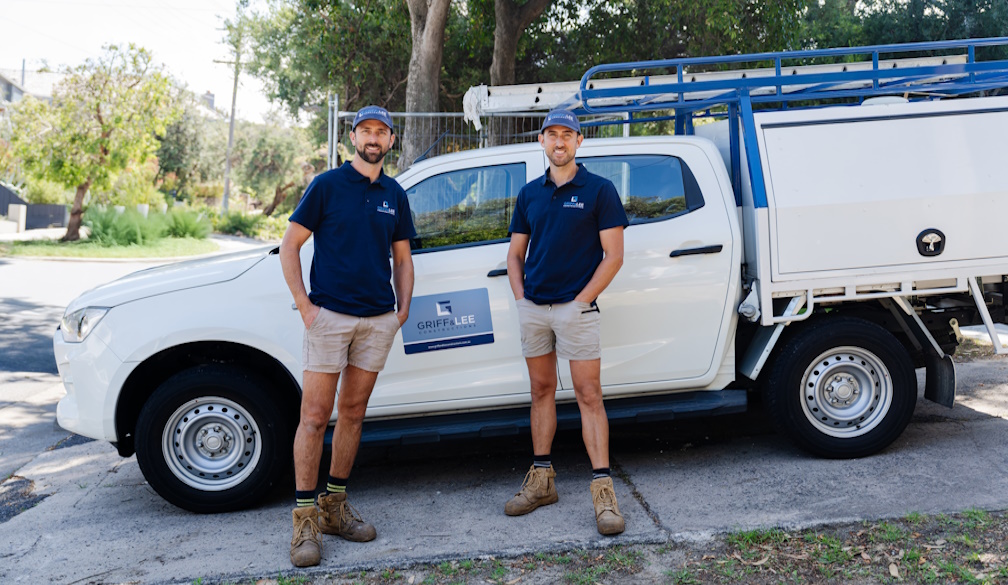
Mark Griffiths, who, along with his brother Lee, took over Melbourne-based Griff & Lee Construction from their father in 2025, says investing in the way the business presented itself made the handover successful.
“We’d worked alongside Dad for years, so we knew the trade inside out. But when we stepped out on our own, we realised his reputation didn’t automatically transfer to us. We had to build our own identity from scratch: signage on the trucks, uniforms with a professional logo, and a website, so people could see we were a legitimate operation.”
“It’s made a real difference. We’re getting enquiries from people who found us online or saw our van on site. Dad mostly built his business on word of mouth and a phone number on the fridge, and that still works. But if you want to grow beyond the people who already know you, you need a new way for them to find you,” Mr Griffiths said.
Branding as a Business Asset
More than eight in ten owners (84%) believe branding would lift their business’s value or sales appeal.
More than six in ten (63%) of all Australian small business owners want their business to continue beyond them. Among those actively considering an exit, 72% say they’d invest in branding if it improved their sale outcome. The barrier isn’t willingness; it’s cost concerns and not knowing where to start.
For businesses preparing for succession, it’s important to actively get your brand out into the world. Ensure your logo appears wherever potential customers are likely to see it - from signage and uniforms to business cards, flyers and online channels.
A clear and consistent brand presence across these touch points helps make your business 1VistaPrint Pureprofile Study 2026, N=510 Australian small and medium sized business owners. Calculation based on 2.5% Australian SMB owners who intend to retire in the next 5 years and expect to close the business when they exit, by 2,724,326 Australian SMBs as reported by Australian Small Business and Family Enterprise Ombudsman. 2Australian Securities and Investments Commission (ASIC), Insolvency statistics.
visible not only to customers, but also potential buyers. By applying your brand consistently, you shift the business from being built on “personal reputation” to becoming a transferable brand asset.
“The owners who act now, documenting how the business runs, strengthening how it presents itself, will have more choices and better outcomes than those who leave it until it’s too late,” Mr Marchant said.






