

NextOre Unveils World First MR Analyser for Underground Copper Trucks
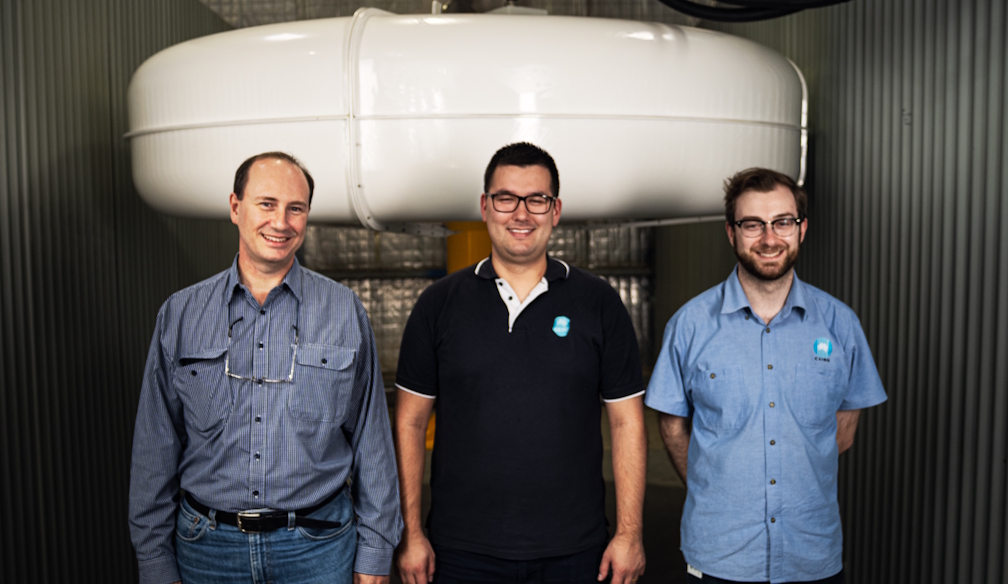
NextOre, a global leader in Magnetic Resonance (MR)-enabled bulk ore sorting technology, has now made its world first sensor system available for underground copper miners.
After decades of research and development by the CSIRO, the technology was initially commercialised for conveyor belt application and has now been adapted for analysing the ore transported by underground copper trucks.
The company’s MR analyser rapidly determines ore grade to cost-effectively sort minerals of value from waste enabling significant reductions in fuel, water, electricity and chemical consumption while also reducing the quantity of wet tailings produced for each tonne of copper
NextOre CEO Chris Beal says mining companies are under increasing pressure to improve efficiency and maximise metal recoveries while keeping costs under control, and the company’s OG3 sensor provides a solution to these challenges.
“In the current economic climate, with traditional large-scale capital expansion projects becoming less viable, operators are looking for smarter, lower-risk solutions that deliver immediate value,” he says.
“Our latest MR analyser provides a powerful, real-time tool that enables underground mines to optimise ore movement, reduce waste, and improve overall productivity without the need for costly infrastructure upgrades.”
OGX stands for open geometry and the stated diameter (X) of the sensor. The OG3 sensor - based on a 3-metre-wide unit initially developed by the CSIRO - has been specifically adapted for use with underground haul trucks. Key enhancements include ruggedisation for harsher environments and improved efficiency in crane positioning. The unit is capable of analysing the grade of up to 50 tonnes of material in under a minute, providing mining operations with real-time data to inform ore routing decisions.
Our goal has been to ensure that the sensor is easy to install, simple to operate, and provides fast, actionable insights,” Beal says.“The higher the grade of the material, the shorter the analysis time. Conversely, lower-grade material requires slightly longer scanning durations.”
The introduction of NextOre’s underground MR analyser has significant implications for mine operations. By enabling real-time ore grade measurement, the sensor provides operators with critical insights to:
Reduce unnecessary haulage by selectively rejecting low-grade material at the source.
Improve ore blending and downstream processing efficiency.
Optimise material movement from satellite orebodies to central processing plants.
Enhance overall productivity while reducing operational costs and environmental impact.
NextOre continues to expand its footprint globally, with successful MR analyser installations in high-capacity operations such as First Quantum Minerals’ Kansanshi copper mine in Zambia and a large-scale 6,500 t/h conveyor application in Chile.
The first deployment of the OG3 sensor is expected in an underground mine in New South Wales in 2025. Initially the unit will be used for 30-50 tonne mine trucks, with the potential to expand applications to Load-Haul-Dump (LHD) bucket loads, further enhancing underground efficiency.






