Why Smart Facility Managers Use Temporary Cooling Solutions to Protect Business Continuity
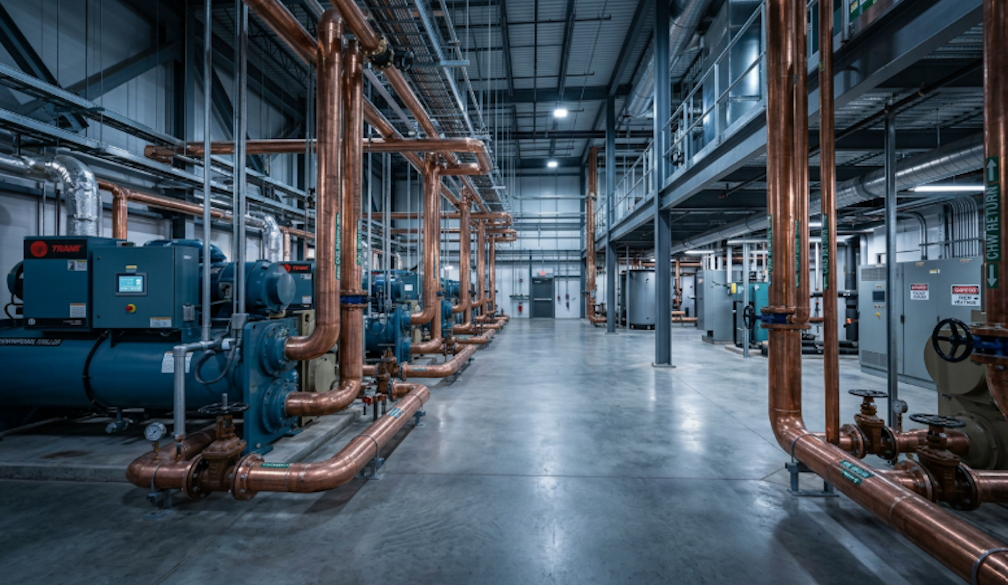
There's a particular kind of dread that comes with a chiller failure at the wrong moment. It might be the middle of a heatwave. It might be the week before a major audit. It might be the day before a hotel's fully booked weekend. Whatever the circumstances, the sequence of events that follows: rising temperatures, uncomfortable occupants, panicked calls to contractors, regulatory exposure, is something facility managers remember for a long time.
What separates the operators who recover quickly from those who don't isn't always budget. Quite often, it comes down to planning. And one of the most underused tools in a facility manager's risk toolkit is a straightforward one: temporary cooling.
The Real Cost of HVAC Downtime in Commercial Buildings
Most building operators think about HVAC failure in terms of repair costs. That's natural. A major chiller overhaul is a significant line item. But the indirect costs of cooling downtime tend to be considerably larger, and they're the ones that don't show up cleanly on a maintenance invoice.
Consider what actually stops working when a central chiller goes offline in a commercial property. In an office building, productivity drops sharply once indoor temperatures climb past comfortable thresholds. In a hotel, guests check out early or request refunds. In a data centre, the consequences escalate from uncomfortable to catastrophic within hours. In a pharmaceutical facility or food manufacturing plant, temperature-sensitive inventory can be written off entirely.
A 2023 study published by the American Society of Heating, Refrigerating and Air-Conditioning Engineers (ASHRAE) found that thermal comfort is one of the leading drivers of occupant complaints in commercial buildings, with HVAC-related issues accounting for a disproportionate share of tenant satisfaction scores. The knock-on effects, including lease disputes, service credits, and reputation damage, add up far faster than most operators initially anticipate.
When Temporary Cooling Makes Sound Business Sense
The case for temporary cooling isn't limited to emergency breakdowns. There are at least four distinct scenarios where bringing in a rental chiller is not just sensible but arguably the most financially responsible decision available.
During planned maintenance and system overhauls. Preventive maintenance and major HVAC upgrades require taking cooling equipment offline for extended periods. In temperate climates, this might be manageable during cooler months. In tropical markets like Singapore, where ambient temperatures hover around 31°C year-round and humidity regularly exceeds 80%, there is no real off-season. Temporary cooling bridges the gap without forcing operators to defer critical maintenance indefinitely.
When an unexpected failure hits during peak demand. Equipment fails without consulting your calendar. A chiller that trips during a busy occupancy period creates immediate pressure, not just on operations but on the relationships with tenants and stakeholders who expect a functioning building. Having access to a rental unit that can be deployed within hours changes the calculus entirely.
During phased retrofitting and energy upgrade projects. Retrofitting an ageing HVAC system, whether to meet newer efficiency standards or to align with sustainability targets, rarely happens all at once. Facilities running large commercial or industrial cooling loads often phase upgrades across multiple systems over months. A temporary chiller keeps the rest of the building fully operational while each stage is completed.
For peak demand periods and seasonal surge. Hospitality properties, event venues, and retail centres sometimes experience demand spikes that exceed the design capacity of their installed cooling systems. Rather than over-specifying permanent infrastructure for peak scenarios that occur a few weeks a year, temporary rental capacity offers a flexible, cost-efficient supplement.
What to Look for in a Temporary Cooling Partner
Not all chiller rental services are equal, and in a market where uptime is everything, the details matter considerably.
Speed of deployment. In a genuine emergency, a rental unit that takes three days to arrive and commission is of limited value. When evaluating providers, ask specifically about their emergency response timeframe and whether they carry ready-to-deploy inventory. The most capable operators, particularly those serving the commercial and industrial sectors, can mobilise temporary cooling within hours, not days.
Technical compatibility and integration. A rental chiller needs to interface correctly with your existing piping, electrical infrastructure, and building management system. Providers who send equipment without qualified engineers to assess and manage the integration are introducing risk, not reducing it. Look for contractors who handle the full scope: delivery, connection, commissioning, and monitoring.
Flexibility of contract terms. Cooling requirements change as projects evolve. Rigid rental contracts that lock you into fixed terms regardless of how the project progresses are commercially unhelpful. Short-term, extension-capable agreements give you the flexibility to respond to how a project actually unfolds rather than how you predicted it would at signing.
After-hours and emergency support. Cooling emergencies don't observe business hours. A rental chiller that develops a fault at 2am on a Sunday needs a provider with 24/7 technical support, not a voicemail. This is non-negotiable for any critical facility.
For facility managers and building owners operating in Singapore's demanding tropical environment, chiller rental in Singapore through an experienced ACMV contractor provides the operational safety net that keeps buildings running through every maintenance cycle, upgrade project, and unexpected equipment failure.
The Intersection of Temporary Cooling and Energy Compliance
There's a dimension to temporary cooling that doesn't get discussed nearly enough: its role in enabling energy compliance upgrades without service disruption.
Singapore's regulatory environment has raised the bar considerably for commercial building operators in recent years. Under BCA Green Mark 2021 standards, buildings face stricter Total System Efficiency (TSE) requirements. For buildings above 15,000 square metres gross floor area, three-yearly energy audits are mandatory, and chiller replacements must meet minimum efficiency thresholds.
These aren't abstract requirements. They have real project timelines attached to them. And those projects, including chiller replacements, system retrofits, and cooling tower upgrades, all involve periods where installed cooling capacity is temporarily reduced or unavailable.
Operators who plan for this reality by incorporating temporary chiller solutions into their project management process tend to deliver upgrades on schedule, with minimal disruption to building occupants. Those who don't often find themselves choosing between cutting corners on the upgrade or exposing tenants and operations to unacceptable downtime.
The smarter path is to treat temporary cooling as a standard line item in any major HVAC project budget, not as an emergency expense to be avoided, but as a managed cost that protects everything else.
Building the Case Internally
For facility managers who already understand the value of temporary cooling, the challenge is sometimes making the case to finance teams or building owners who see a rental cost line and ask why the existing equipment can't simply be repaired faster.
A few framings tend to land well with non-technical decision-makers.
Frame it as insurance, not expenditure. The premium is the rental cost; the risk being hedged is the cost of downtime, occupant disruption, compliance exposure, or inventory loss. Presented this way, the rental cost is usually modest relative to the exposure it's covering.
Frame it as a project enabler. Without temporary cooling, the HVAC upgrade that reduces your energy bill by 20% can't proceed during occupied hours. The rental cost is the price of doing the project at all, on a timeline that makes financial sense.
Frame it as tenant protection. For owners of tenanted commercial or industrial properties, demonstrating that building operations will be maintained throughout planned works is a genuine selling point. It prevents lease disputes and protects the landlord-tenant relationship during potentially disruptive periods.
Final Thoughts
Cooling infrastructure is not a background concern for most commercial and industrial buildings. It's a foundational operational requirement. When it fails or needs to be taken offline, the consequences ripple outward quickly.
Temporary cooling solutions aren't a niche emergency product. They're a practical business continuity tool that well-run facilities use proactively. Understanding when to use them, what to look for in a provider, and how to make the internal case for the budget is part of how professional facility management actually works in practice.
In markets where the climate offers no seasonal relief and compliance requirements continue to tighten, having a dependable temporary cooling partner isn't a contingency plan. It's just good operations.