

Oil price escalation could help China grasp more green global leadership
- Written by: Chee Meng Tan, Assistant Professor of Business Economics, University of Nottingham
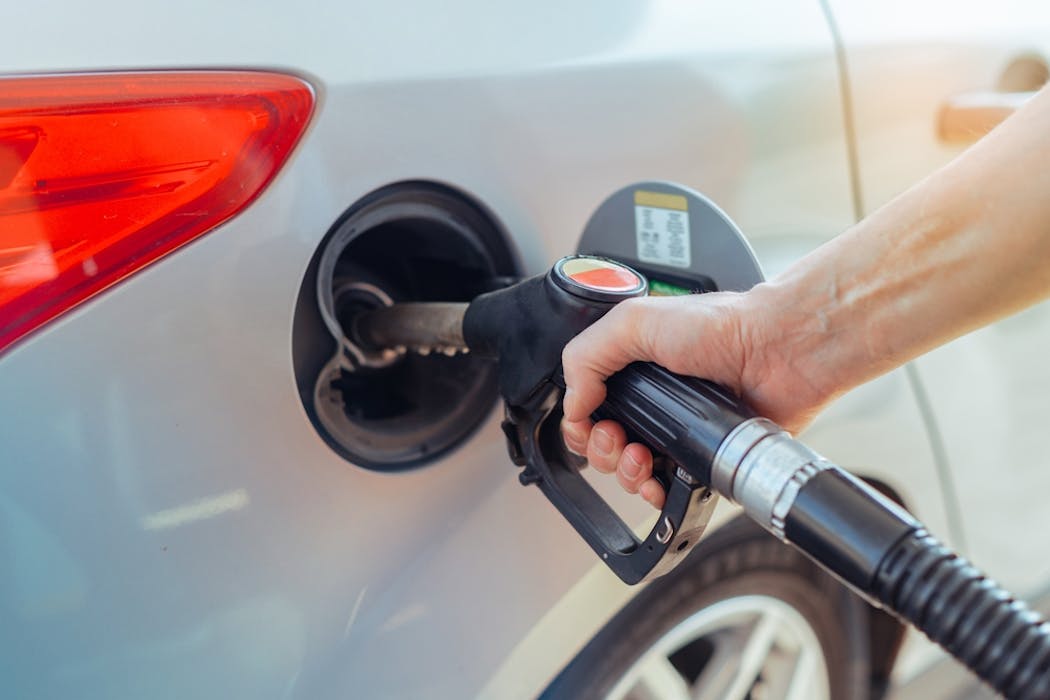
With crude oil prices incredibly volatile as the war in Iran continues, some countries are already warning they may run out of oil.
Pakistan and Bangladesh[1] are both introducing emergency measures as petrol and diesel reserves[2] come under pressure. Both countries are already closing down public buildings to reduce energy use and putting restrictions on fuel use. In Bangladesh the military are guarding oil depots[3] and there are queues building up at petrol stations in Vietnam, Pakistan and the Philippines as prices escalate.
The case for diversifying energy supplies and having more power plants[4] in your home country potentially means being less vulnerable to what happens in conflicts in other parts of the world. And that argument might well push a change in energy strategy for countries that are struggling with supplies right now.
China is already[5] the world’s leading green‑tech manufacturing hub in solar panels, windmills and electric vehicles, and produces more than 70%[6] of the world’s clean tech. So Beijing is in an ideal position to benefit from any growth in the green economy.
As Washington walks away from its climate commitments and continues to act unilaterally[7] on the world stage, Beijing has an opportunity to step in and also enhance its reputation with other nations.
Oil prices are volatile.China can do this by continuing to export affordable[8] green technologies, and finance[9] low‑carbon projects. Over time, it could even share its expertise with nations abroad. The goodwill that these initiatives generate could help enhance its reputation and alliances with other countries.
Yet China’s leadership in green technology brings its own challenges. Strong state backing[10] has fuelled rapid expansion in sectors such as solar panels, electric vehicles and batteries, creating significant overcapacity and even losses[11].
Read more: Who profits from war with Iran? Understanding that will be key to resolving the conflict[12]
And many Chinese manufacturers now depend on overseas sales to stay afloat, which has led to accusations of unfair competition[13] and market flooding[14]. China needs to address these issues, otherwise it risks turning a potential soft-power asset into a source of friction even as the US cedes its role as a global climate leader.
To be an international green economic leader, China may also need to continue to work on its own environmental practises. China remains the world’s largest emitter[15] of greenhouse gases, and was once called the “air pollution capital of the world”[16].
From 2014[17] however, China has made strides in reducing[18] air pollution.
There are some indications that China’s carbon dioxide emission have been falling[19] since 2024, and its large-scale tree planting and forest reparation program[20] has reduced sandstorms and land degradation across the country.
Read more: How would the Iran crisis play out in a world powered by renewables not fossil fuels?[21]
Since the mid-1990s, China’s armed forces have rapidly modernised[22] into a highly capable force. And its economy has been ranked as the world’s second largest[23] since 2010. Yet, China’s willingness to use its growing trade and military influence to achieve its objectives has alarmed western governments and its regional neighbours.
China’s current strength lies in its hard power[24], which is the ability to get what it wants through economic and military might. But therein lies the problem. For a country that insists its rise is “peaceful”[25], this sort of aggression sends mixed signals. If China wishes other countries to see its ascent as benign and not threatening, it will need to rely less on coercion and more on attraction (soft power) to raise its image and limit the push back it receives, and enhancing its green image could be part of that.
But beyond its iconic panda diplomacy[26], which is the practice of sending giant pandas on long‑term loan to foreign zoos, China’s other notable soft-power tools have produced mixed results. Confucius Institutes[27], focusing on educational partnerships with foreign institutions, have faced political backlash[28] in some countries, while China’s flagship economic initiative, the Belt and Road, has attracted both praise and criticism[29].
How Beijing responds to the growing oil crisis and its ability to grow green economic partnerships may give an indication of how it wants the rest of the world to see it in the future.
References
- ^ Pakistan and Bangladesh (www.msn.com)
- ^ petrol and diesel reserves (theconversation.com)
- ^ guarding oil depots (www.dawn.com)
- ^ energy supplies and having more power plants (www.dw.com)
- ^ already (e360.yale.edu)
- ^ more than 70% (about.bnef.com)
- ^ unilaterally (www.bbc.com)
- ^ affordable (www.tni.org)
- ^ finance (www.uts.edu.au)
- ^ Strong state backing (www.kielinstitut.de)
- ^ losses (www.pv-tech.org)
- ^ Who profits from war with Iran? Understanding that will be key to resolving the conflict (theconversation.com)
- ^ unfair competition (www.france24.com)
- ^ market flooding (www.bruegel.org)
- ^ largest emitter (www.sciencedirect.com)
- ^ “air pollution capital of the world” (www.thelancet.com)
- ^ 2014 (epic.uchicago.edu)
- ^ reducing (www.japantimes.co.jp)
- ^ falling (www.carbonbrief.org)
- ^ tree planting and forest reparation program (www.sciencedirect.com)
- ^ How would the Iran crisis play out in a world powered by renewables not fossil fuels? (theconversation.com)
- ^ rapidly modernised (www.csis.org)
- ^ second largest (research.nus.edu.sg)
- ^ hard power (press.armywarcollege.edu)
- ^ “peaceful” (english.scio.gov.cn)
- ^ panda diplomacy (www.diplomacy.edu)
- ^ Confucius Institutes (stratcomcoe.org)
- ^ political backlash (www.abc.net.au)
- ^ praise and criticism (www.economicsobservatory.com)






