How ChatGPT could change the face of advertising, without you even knowing about it
- Written by: Nessa Keddo, Senior Lecturer in Media, Diversity and Technology, King's College London
Online adverts are sometimes so personal that they feel eerie. Even as a researcher in this area, I’m slightly startled when I get a message asking if my son still needs school shirts a few hours after browsing for clothes for my children.
Personal messaging is part of a strategy used by advertisers to build a more intense relationship with consumers. It often consists of pop-up adverts or follow-up emails reminding us of all the products we have looked at but not yet purchased.
This is a result of AI’s rapidly developing ability to automate the advertising content we are presented with. And that technology is only going to get more sophisticated.
OpenAI, for example, has hinted that advertising may soon be part of the company’s ChatGPT service (which now has 800 million weekly users[1]). And this could really turbocharge the personal relationship with customers that big brands are desperate for.
ChatGPT already uses some advanced personalisation[2], making search recommendations based on a user’s search history, chats and other connected apps such as a calendar. So if you have a trip to Barcelona marked in your diary, it will provide you – unprompted – with recommendations of where to eat and what to do when you get there.
In October 2025, the company introduced ChatGPT Atlas[3], a search browser which can automate purchases. For instance, while you search for beach kit for your trip to Barcelona, it may ask: “Would you like me to create a pre-trip beach essentials list?” and then provide links to products for you to buy.
“Agent mode” takes this a step further. If a browser is open on the page of a swimsuit, a chat box will appear where you can ask specific questions. With the browser history saved, you can log back in and ask: “Can you find that swimsuit I was looking at last week and add it to the basket in a size 14?”
Another new feature (only in the US at the moment), “instant checkout”, is a partnership with Shopify and Etsy which allows users to browse and immediately purchase products without leaving the platform. Retailers pay a small fee on sales, which is how OpenAI monetises this service.
However, only around 2%[4] of all ChatGPT searches are shopping-related, so other means of making money are necessary – which is where full-on incorporated advertising may come in.
OpenAI’s rapid growth requires heavy investment, and its chief financial officer, Sarah Friar, has said the company is “weighing up an ads model”[5], as well as recruiting advertising specialists from rivals Meta and Google.
But this will take some time to get right. Some ChatGPT users have already been critical of a shopping feature which they said made them feel like they were being sold to. Clearly a re-design is being considered, as the feature was temporarily removed in December 2025[6].
So there will continue to be experimentation into how AI can be part of what marketers call the “consumer journey”[7] – the process customers go through before they end up buying something.
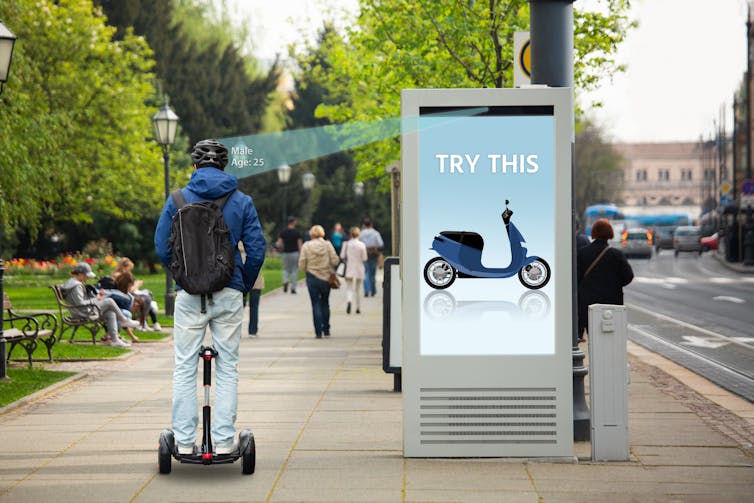
Some consumers prefer to use customer reviews and their own research or experience. Others appreciate AI recommendations, but studies suggest that overall, some sense of autonomy is essential[9] for people to truly consider themselves happy customers. It has also been shown that audiences dislike aggressive “retargeting”[10], where they are continuously bombarded with the same adverts.
So the option of ChatGPT automatically providing product recommendations, summaries and even purchasing items on our behalf might seem very tempting to big brands. But most consumers will still prefer a sense of agency when it comes to spending their money.
This may be why advertisers will work on new ways to blur the lines – where internet search results are blended with undeclared brand messaging and product recommendations. This has long been the case on Chinese platforms such as WeChat[11], which includes e-commerce, gaming, messaging, calling and social networking – but with advertising at its core.
In fact, platforms in the west seem far behind their East Asian counterparts, where users can do most of their day-to-day tasks using just one app. In the future, a similarly centralised approach may be inevitable elsewhere – as will subliminal advertising, with the huge potential for data collection that a single multi-functional app can provide.
Ultimately, transparency will be minimal and advertising will be more difficult to recognise, which could be hard on vulnerable users[12] – and not the kind of ethically responsible AI that many are hoping for.
References
- ^ 800 million weekly users (techcrunch.com)
- ^ advanced personalisation (openai.com)
- ^ ChatGPT Atlas (openai.com)
- ^ around 2% (www.nber.org)
- ^ “weighing up an ads model” (www.ft.com)
- ^ removed in December 2025 (www.businessinsider.com)
- ^ “consumer journey” (www.tandfonline.com)
- ^ Scharfsinn/Shutterstock (www.shutterstock.com)
- ^ autonomy is essential (www.tandfonline.com)
- ^ aggressive “retargeting” (www.tandfonline.com)
- ^ WeChat (edition.cnn.com)
- ^ vulnerable users (fortune.com)