John Lewis relies too heavily on its heritage – here’s what it could do instead
- Written by: Kokho Jason Sit, Senior Lecturer in Marketing; Associate Head (Global), University of Portsmouth
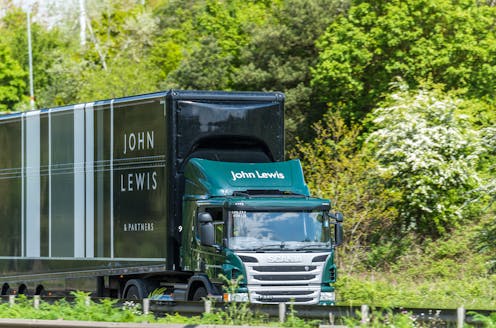
In a tricky economic climate, the British department store John Lewis has managed to deliver some good news. The retail partnership – owned by its 80,000 employees – posted pre-tax profits[1] of £56 million after a £234 million loss the year before.
The positive announcement was somewhat tarnished by the fact that those employees (known as partners) would not receive a bonus[2] for the second year in a row. There were also hints of job cuts.
But what more could this giant of UK retail, which also owns Waitrose supermarkets, do to endure its survival? Does its increasing reliance on grocery sales mean its own brand has become less valuable?
For over 160 years on the high street, John Lewis has worked hard on that brand. Its slogan (scrapped in 2022[3]) about being “never knowingly undersold” was well known, it remains a trusted supplier[4] of an extensive range of household hoods, rates highly for customer service[5], and runs Christmas TV adverts which have became a media event[6] in themselves.
In doing all of those things, John Lewis seemed to be in a much better place than its rivals. BHS (founded in 1928) and Debenhams (1778) have disappeared from the high street. House of Fraser (1849) was taken over[7] and has a much-reduced physical presence.
John Lewis’s nearest rival, Marks & Spencer (1884), is now doing well[8], but only after it underwent a fairly brutal restructuring[9] which involved cutting thousands of jobs during the pandemic[10], closing 67[11] stores, and slashing its operations[12] in France.
So John Lewis’s “brand heritage[13]” – its history, tradition and pedigree – has worked pretty well for a pretty long time. But its recent return to profit was the combined effort of reinvesting and streamlining, according to some reports[14].
Also known as “trimming the fat”[15] in the business world, the retailer’s streamlining endeavours consisted of cutting more than 1,500 jobs, and closing underperforming stores[16], such as the branch in Sheffield, which had served residents for nearly 80 years and was much mourned[17], including by my own mother-in-law.
It has also been reported that more job cuts are imminent, with up to 11,000 jobs to go[18] in the next five years.
And perhaps these measures highlight some of the harsh realities of running a department store in the always-open and effortless world of online shopping. Maybe employees (even those considered partners, as under John Lewis’s employee-ownership model) have become expendable.
Maybe physical stores, where consumers go to explore and seek advice, have become expendable. Maybe all traditions are expendable when they are not commercially viable.
Yet the world of retail[19] is filled with examples of heritage brands reinventing themselves to stay relevant, buoyant and competitive.
John Lewis will need to do the same if it wants to retain its legacy on the British high street. And it could do worse than taking a leaf out of Waitrose’s playbook.
For the company’s return to profit[20] was largely due to the buoyant sales generated by Waitrose supermarkets, which increased by 4%. The department store business meanwhile, suffered a 2% fall.
Part of Waitrose’s success comes from providing a sense of indulgence and enjoyment – including healthy food – through carefully curated and often locally sourced products. It works closely with local farmers[21], supports regional suppliers (an approach that has also contributed to M&S’s success), and reinvests in stores[22] and product offers.
Essentially, as part of UK’s grocery sector, Waitrose extended its partnership ethos to include people and groups beyond the shop walls – to build a “local retail ecosystem”[23] that promotes and leverages a community spirit around their stores.
John Lewis department stores could try and do something similar. They could focus more on products that help customers live healthier and more active lives, and which are relevant to their interests. They could sell products created by local small businesses, and make a determined approach to be a supportive presence in the regions they serve.
Research suggests[25] that heritage brands benefit from having a moral standing – when they show they care about the people they make money from, the local communities they operate in, and the people they employ.
So perhaps John Lewis should make moral values a part of its evolving heritage. It needs to show it cares not just for the people who work for the company directly, but also the people on whom it relies for success – the customers – and people it can build new relationships with. All of them could prove critical to its future success.
References
- ^ posted pre-tax profits (news.sky.com)
- ^ not receive a bonus (www.theguardian.com)
- ^ scrapped in 2022 (www.bbc.co.uk)
- ^ trusted supplier (www.marketingweek.com)
- ^ customer service (www.thisismoney.co.uk)
- ^ media event (theconversation.com)
- ^ taken over (news.sky.com)
- ^ doing well (www.bbc.co.uk)
- ^ brutal restructuring (www.theguardian.com)
- ^ jobs during the pandemic (www.theguardian.com)
- ^ closing 67 (www.bbc.co.uk)
- ^ slashing its operations (news.sky.com)
- ^ brand heritage (doi.org)
- ^ some reports (www.retailgazette.co.uk)
- ^ “trimming the fat” (www.forbes.com)
- ^ closing underperforming stores (www.bbc.co.uk)
- ^ much mourned (www.bbc.co.uk)
- ^ up to 11,000 jobs to go (www.theguardian.com)
- ^ retail (retailnext.net)
- ^ return to profit (www.theguardian.com)
- ^ local farmers (www.waitrose.com)
- ^ stores (www.retailgazette.co.uk)
- ^ “local retail ecosystem” (eurocities.eu)
- ^ Simon Vayro/Shutterstock (www.shutterstock.com)
- ^ Research suggests (doi.org)