

Performers and sole traders find it hard to get JobKeeper in part because they get behind on their paperwork
- Written by: Ann Kayis-Kumar, Senior Lecturer and Tax Clinic Director, School of Taxation & Business Law, UNSW
Performers and sole traders find it hard to get JobKeeper in part because they are behind on their paperwork
Are sole traders falling through the JobKeeper cracks?
JobKeeper is working out awfully for performers.
Although the arts industry has been hit harder[1] than any other apart from tourism according to the Australian Bureau of Statistics, performers are finding it hard[2] to get JobKeeper.
Read more: Coronavirus: 3 in 4 Australians employed in the creative and performing arts could lose their jobs[3]
Many are sole traders[4], providing services engagement-by-engagement.
Sole traders are meant to have access to the $1,500 per fortnight payment if their turnover has fallen or is likely to fall 30% or more[5], assuming their turnover is less than $1 billion.
That many haven’t got it, may be in part because they are behind in their paperwork.
Behind on paperwork
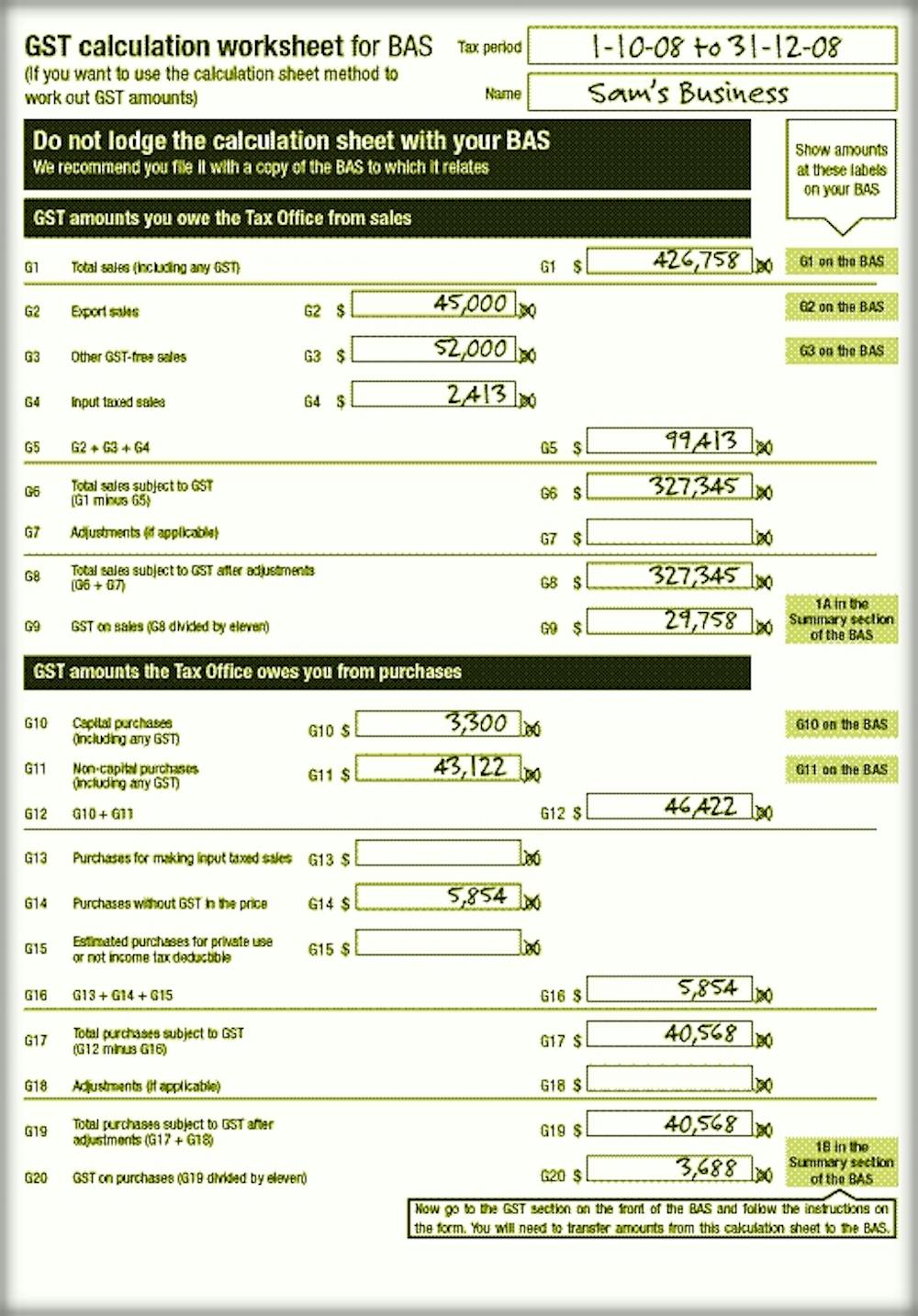 Business Activity Statement, of the kind sole traders fall well behind on.
Australian Tax Office
Business Activity Statement, of the kind sole traders fall well behind on.
Australian Tax Office
Sole traders behind on their quarterly Business Activity Statements[6] who seek help from the University of NSW Tax Clinic[7] are on average seven years behind.
We’ve seen some up to 20 years behind (that is, up to 80 statements behind).
If a business is cash-strapped and the owner is struggling financially and psychologically struggling, a visit to a tax accountant tends not to be high priority, if indeed the business has the cash to pay the agent.
In practice, our clinic supervisors are seeing many financially vulnerable sole traders opt instead for the lower-paying JobSeeker.
It means many of the most financially-vulnerable small businesses are slipping through the cracks because they can’t afford an accountant.
Being behind on tax returns can prevent access to other Centrelink benefits including child support.
Behind means further behind
It puts people who were already in financial hardship at a further disadvantage, one that is set to grow.
By the end of the year, deferred mortgages, loans and rent payments will recommence. This will happen at the same time as JobKeeper and the JobSeeker Coronavirus Supplement run out[8] (both of which can incur tax).
Many financially vulnerable people will have used up their superannuation savings to pay off things like credit card bills when they could have been eligible for hardship variations or waivers on those debts.
Read more: What'll happen when the money's snatched back? Our looming coronavirus support cliff[9]
It builds a powerful case for providing good quality independent tax advice to those who are most likely to need it and can least afford it.
Free advice is the best way out
To its credit, the Commonwealth government funds a relatively new National Tax Clinic Program[10] launched in 2019 following the successful prototype set up by Curtin University in 2018.
Operating out of ten universities[11], students studying tax-related courses assist qualified professionals in providing tax advice.
These clinics help address the tax advice gap between free tax help offered by the Australian Tax Office and independent advice normally only available for a fee – a gap that is likely to grow in the downturn ahead.
Read more: Coronavirus: Australian arts need a stimulus package. Here is what it should look like[12]
One of the hopes for the program is that it will act as a bellwether for issues affecting often-marginalised and silent Australians, bringing their problems into the open and fuelling research.
Many also need financial counselling, and so the program has partnered with Financial Counselling Australia and the state financial counselling associations in Victoria, NSW, Queensland, South Australia, the Northern Territory and Western Australia.
For further details please see: Kayis-Kumar, Noone, Martin and Walpole, “Pro Bono Tax Clinics: An international comparison and framework for evidence-based evaluation” (2020) Australian Tax Review[13] (forthcoming).
If you are in genuine financial hardship and need tax advice but cannot afford it, please contact: UNSW Tax Clinic: (02) 9385 8041, taxclinic@unsw.edu.au[14][15]
References
- ^ harder (www.abs.gov.au)
- ^ hard (www.meaa.org)
- ^ Coronavirus: 3 in 4 Australians employed in the creative and performing arts could lose their jobs (theconversation.com)
- ^ sole traders (www.ato.gov.au)
- ^ 30% or more (treasury.gov.au)
- ^ Business Activity Statements (www.ato.gov.au)
- ^ University of NSW Tax Clinic (www.business.unsw.edu.au)
- ^ run out (theconversation.com)
- ^ What'll happen when the money's snatched back? Our looming coronavirus support cliff (theconversation.com)
- ^ National Tax Clinic Program (www.ato.gov.au)
- ^ ten universities (www.ato.gov.au)
- ^ Coronavirus: Australian arts need a stimulus package. Here is what it should look like (theconversation.com)
- ^ Australian Tax Review (sites.thomsonreuters.com.au)
- ^ UNSW Tax Clinic (www.business.unsw.edu.au)
- ^ taxclinic@unsw.edu.au (theconversation.com)
Authors: Ann Kayis-Kumar, Senior Lecturer and Tax Clinic Director, School of Taxation & Business Law, UNSW






