How one student forced the government to admit the economic risks of climate change
- Written by: Arjuna Dibley, Head of Sustainable Finance Hub, The University of Melbourne
Last month, a significant victory for climate change was won behind closed doors. In 2020[1], Katta O’Donnell, then a 23-year-old university student in Melbourne, launched a world-leading class action lawsuit against the Commonwealth government.
O’Donnell alleged that she and other investors in Australian-issued bonds had been misled because the government failed to disclose how climate change might impact their investments.
Sovereign bonds allow governments to borrow money, from which, on top of taxes, they can fund expenditures and programs. Historically, investors consider sovereign bonds issued by stable economies such as Australia a safe bet.
Because our economy is large and our economic, political and legal institutions stable and mostly free from corruption, investors can be fairly certain that Australian governments will repay their debts.
This has created steady demand for Australian sovereign bonds, making them a reliable way for our governments to fund policy programs and respond to economic shocks. But O’Donnell’s lawsuit broadly questioned whether sovereign bonds were really safe for investors once the economic impacts of climate change were taken into account.
Her lawyers argued that the Commonwealth government should disclose the way climate change posed both “physical” and “transition” risks to the economy.
The first are financial risks that climate scientists say will impact Australia’s economy due to changes to the climate and the rise in extreme weather events. The second kind of risk emerges from changes in global demand for our fossil fuel exports.
Read more: 'A wake-up call': why this student is suing the government over the financial risks of climate change[3]
O’Donnell’s lawyers also suggest[4] that investors increasingly expect governments to try to manage their climate risks.
They point to the 2019 decision by Sweden’s Central Bank, Sveriges Rijksbank[5], to divest its holdings in Queensland and Western Australian bonds, because they are “not known for good climate work”, as an example of investors taking these risks seriously.
In March 2021 the Commonwealth sought to have the claim[6] struck out, alleging it was not clear what risks should be disclosed.
At that time, few government bond prospectuses issued[7] around the world referred to climate risks. However, Justice Murphy of the Federal Court decided[8] to keep the legal action on foot because he saw an “informational asymmetry” between the government and investors regarding the nature of climate risks.
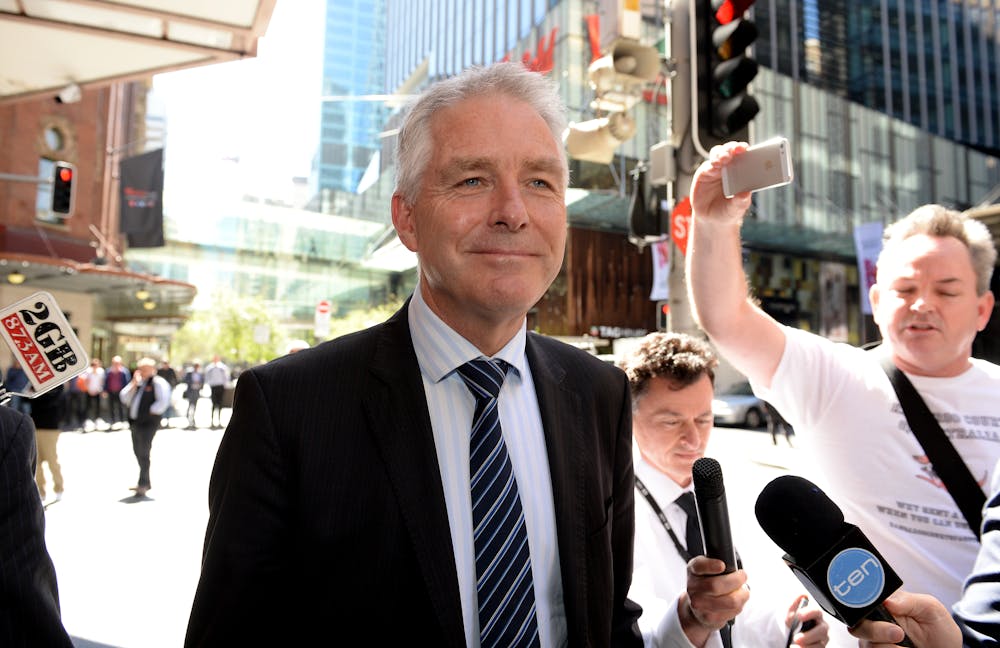 Justice Bernard Murphy of the Federal Court kept the case going.
AAP[9]
Justice Bernard Murphy of the Federal Court kept the case going.
AAP[9]
Following the election of the Albanese government, the Commonwealth decided not to contest the case in court, but to seek mediation.
Under the terms of the settlement[10], agreed on August 7 and to be approved by the court next month, the government will likely acknowledge on the Treasury website that climate change presents a risk to the country’s “economy, regions, industries, and communities”, and that there is uncertainty around the global transition to net zero emissions.
The government’s decision to disclose climate risks is no surprise. It is already taking steps to better understand and report on how climate change will affect the economy. Beyond taking policy measures to support the transition to a “net zero” economy, it has tasked Treasury with developing a national sustainable finance strategy[11].
It has also asked some large listed companies to analyse and disclose their climate-risk exposure, and is developing a legal framework – called a “taxonomy”[12] – to better regulate sustainable finance.
The Reserve Bank of Australia’s new governor, Michele Bullock, also said in a recent speech[13] that the economic implications of climate change could affect the stability of the financial system.
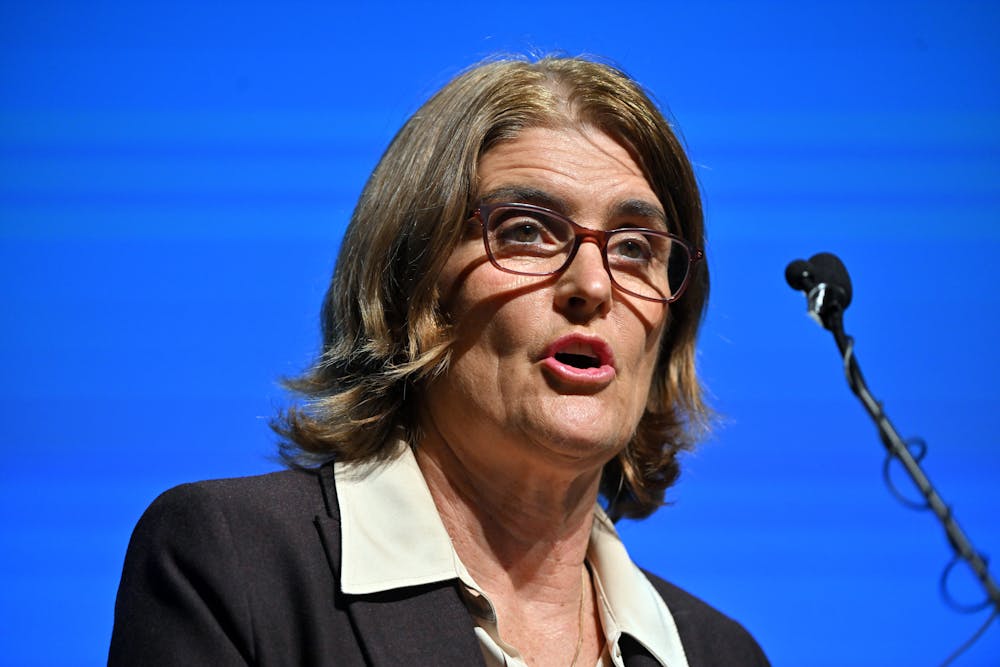 The Reserve Bank governor Michele Bullock has said climate change could affect economic stability.
AAP[14]
The Reserve Bank governor Michele Bullock has said climate change could affect economic stability.
AAP[14]
The settlement is significant because, for the first time, an AAA-rated government will recognise climate change as a systemic risk that can affect the value of its bonds. Large sovereign investors[15] and credit-rating agencies[16] are already focusing on how climate change impacts a country’s ability to repay, and pricing this information into its loans.
All this is creating pressure for governments like ours to better understand and disclose climate risks when they borrow money.
But climate risk disclosure in sovereign bonds is not enough. Governments are qualitatively different entities to companies[17], from which these disclosure practices evolved.
Companies are more able than governments to rid themselves quickly of polluting assets, acquire new clean resources, or change the location of their operations. Investors can engage with companies on climate change through annual general meetings, but they struggle to influence governments on climate change (although some are trying to develop strategies[18] for doing so).
Read more: Better than net zero? Making the promised 1.2 million homes climate-friendly would transform construction in Australia[19]
So while the recent case is a reminder for government issuers to consider how climate change will impact government bond repayment obligations, their challenge isn’t solved by better disclosure practices.
Nevertheless, Australian governments should continue their plans to better understand and disclose climate risks.
Moreover, under instruments such as Sustainability Linked Sovereign Bonds[20], governments can set climate-related performance targets, such as lowering carbon emissions by 10% by 2025. A government that does not meet these predetermined targets could be subject to an increase in its interest rate, or another penalty.
These instruments create an incentive for governments to achieve real emission reductions, which is the only activity that will ultimately address climate risk in the economy.
Correction: this article originally stated Katta attended the University of Melbourne.
References
- ^ In 2020 (theconversation.com)
- ^ AAP (photos.aap.com.au)
- ^ 'A wake-up call': why this student is suing the government over the financial risks of climate change (theconversation.com)
- ^ suggest (equitygenerationlawyers.com)
- ^ Sveriges Rijksbank (www.riksbank.se)
- ^ have the claim (www.judgments.fedcourt.gov.au)
- ^ few government bond prospectuses issued (www.nature.com)
- ^ decided (www.judgments.fedcourt.gov.au)
- ^ AAP (photos.aap.com.au)
- ^ terms of the settlement (equitygenerationlawyers.com)
- ^ developing a national sustainable finance strategy (ministers.treasury.gov.au)
- ^ called a “taxonomy” (www.asfi.org.au)
- ^ recent speech (www.rba.gov.au)
- ^ AAP (photos.aap.com.au)
- ^ Large sovereign investors (www.ascorproject.org)
- ^ credit-rating agencies (www.bloomberg.com)
- ^ different entities to companies (ad-aspi.s3.ap-southeast-2.amazonaws.com)
- ^ strategies (www.unpri.org)
- ^ Better than net zero? Making the promised 1.2 million homes climate-friendly would transform construction in Australia (theconversation.com)
- ^ Sustainability Linked Sovereign Bonds (www.bis.org)
Authors: Arjuna Dibley, Head of Sustainable Finance Hub, The University of Melbourne