Knowing When Your Furnace Has Reached Its Limit
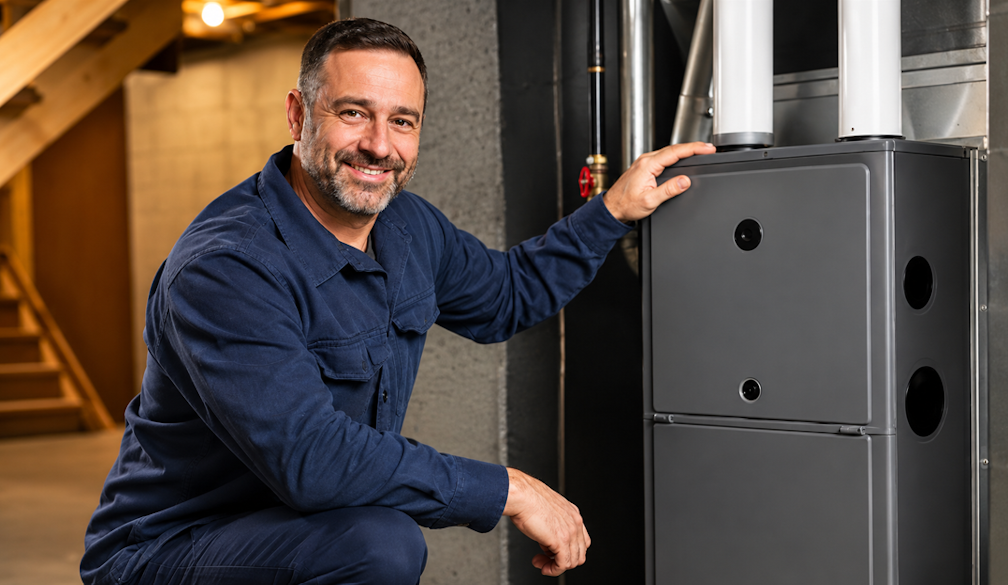
When a heating system begins to have problems, it rarely occurs at the most convenient time. Perhaps your system is taking longer to warm up your home, or some rooms never get as warm as others. Or perhaps you’re experiencing multiple repairs over a single heating season. If you’ve noticed any of these issues, knowing when a new furnace is the right choice can save you from an emergency situation during the middle of winter.
There’s no hard and fast rule when it comes to deciding when a furnace should be replaced. For example, you could have a system that’s well above the expected age, but it’s been properly maintained and is still operating fine. On the flip side, a furnace that hasn’t been cared for properly may break down long before it hits the expected age. A better question to ask is “Is my system still operating safely, efficiently, and cost-effectively?”
End-of-Life Signs
Just because you’ve had to make one repair doesn’t mean it’s time to get a new system. But there are some indicators that the existing unit may be getting ready to call it quits. Keep an eye out for:
- Multiple repairs within a single heating season
- Uneven heating from room to room, or a room that just won’t heat up
- Rattling, banging, scraping, or rumbling noises
- Increasing energy costs, without a corresponding increase in weather or usage
- Yellow burners instead of steady blue flames
- Dust, dryness, or weak airflow coming from your registers
Another indicator that the unit may be nearing the end of its life is “short-cycling.” This occurs when your system constantly turns on and off in rapid succession. This can be caused by a number of things, including an improperly sized system, a lack of proper airflow, or a failing component.
Repair or Replacement
To figure out whether your existing unit should be replaced or repaired, first look at the age of the unit and what the repair will cost; the practical side of ABT Plumbing Furnace Replacement starts there. If you have a relatively new furnace and it needs a minor part repaired, it makes sense. If your furnace is older and the repair is a major component, it is likely not worth it, especially if the rest of the system is already worn.
Consider an older unit that needs a large component replaced; a new system would be a better option, even though it will cost more upfront.
The opposite scenario is where your furnace is newer and has been well-maintained, and the problem is relatively minor. You’re likely better off having it repaired now and staying up to date with regular maintenance visits.
If your unit has been breaking down frequently, it might be best to have it replaced. The costs can quickly add up, not just in terms of the individual service calls, but in terms of comfort and peace of mind. You’re spending money on a system that doesn’t perform very well and has a risk of completely breaking down before you’re able to schedule another service call.
Efficiency and Sizing
Many people focus solely on the energy efficiency rating when choosing a new system, but there are many other factors that come into play. For instance, even though newer furnaces are more efficient than older units, they will still underperform if the entire system wasn’t properly designed and installed. For example, an oversized system will turn on, rapidly heat the house, then shut down while there are still areas that haven’t reached the desired temperature. Conversely, an undersized system will run non-stop on a bitterly cold night but won’t provide the desired level of heat.
Installation Planning
Replacing a furnace isn’t simply a matter of hooking up the new unit to the ductwork and turning on the power. The technician needs to ensure that the gas supply, electrical connection, venting, condensate drain, ductwork transitions, and combustion air flow are all properly sized. In addition, there needs to be adequate clearance around the new unit so that technicians will have easy access to perform future maintenance and repairs. For example, if you’re replacing a standard-efficiency furnace with a high-efficiency unit in a small closet, you may not have adequate space to meet installation guidelines.
Depending on where you live, you may also need a permit and inspection to make sure the installation was completed correctly. In addition, exhaust gases need to be vented away from the home, laid out without much jargon at cdc.gov/carbon-monoxide, and any areas where people or animals might come in contact with them.
When it comes to heating system replacement, preparation is key. If you wait until your furnace goes out in the middle of winter, you’ll be forced to choose whatever furnace is available. But if you plan ahead, you’ll have time to research different systems, learn about their efficiency ratings, and discuss any potential ductwork issues with your contractor.
Request an estimate before you need a replacement so you know what you’re working with. Ask your technician to bring along copies of the most recent service invoice and maintenance history when he or she comes to complete the estimate.


 Emma Fawcett, CEO of Compare Club