From Product Image to First Physical Prototype
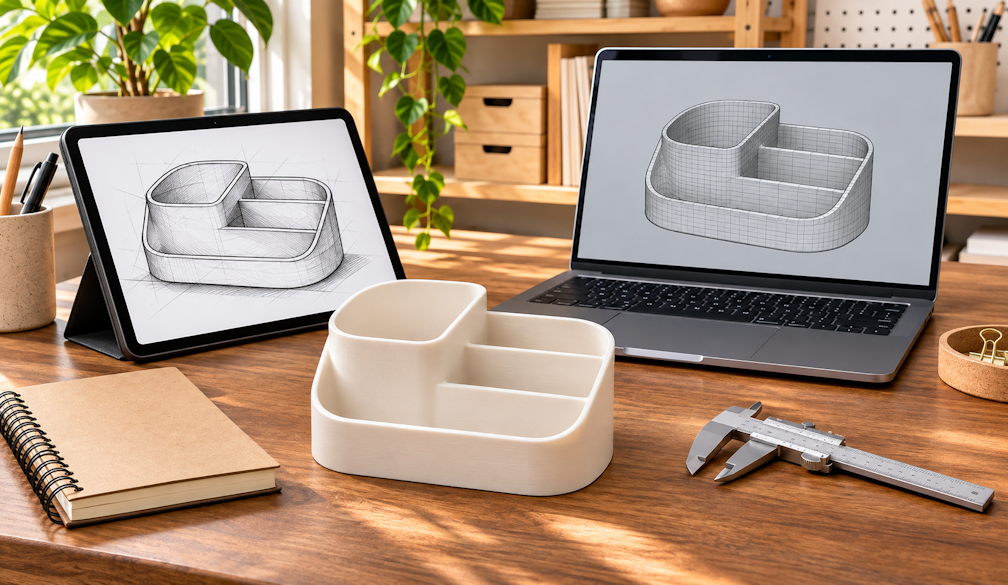
A product idea can look convincing on a screen while leaving a small business unsure about its shape, presence or everyday appeal. N4D offers an image based route into three dimensional modeling that can help a team begin exploring those questions before it commissions a more detailed design process.
For a business with a clear product reference, an image to stl workflow provides a way to generate a model and export geometry for further preparation. The useful outcome is a first sample with a defined purpose, supported by checks that match what the business wants to learn.
Give the first sample a specific purpose
Start with a question that a physical object can help answer. Would a desktop organizer occupy too much space beside a keyboard? Does its outer shape look balanced from the customer's normal viewing position? Can a shop display communicate the concept more clearly with a sample than with an image alone?
Choose one of those questions for the first iteration. Trying to validate appearance, assembly, durability and production cost in the same early sample creates an expensive and confusing brief. A focused purpose helps the business decide which details deserve attention and which can wait.
Write the purpose in a sentence that can travel with the file. For example, "This sample is for reviewing the organizer's overall size and appearance on a desk." That statement helps a designer or printing service understand the assignment and keeps an attractive prototype from being mistaken for a finished product.
Prepare an image that explains the idea
Select a reference that clearly shows the subject. A photograph or original sketch with an uncluttered background gives the generation process a more readable starting point. Keep the whole product visible and check that its main outline remains clear when the image is viewed at a smaller size.
Remove unrelated objects that could confuse the interpretation. If the organizer appears beside a pen, a mug and a charging cable, decide whether those items explain the design or simply distract from it. A clean reference is particularly helpful when the business is still deciding which features belong to the product.
Use only material the business is entitled to upload. An image found in a competitor's catalog should not quietly become the basis of an allegedly original design. Starting with an owned concept also makes it easier to explain the design history to future collaborators.
Review the generated form before arranging a print
After generating a model in N4D, rotate it and compare it with the reference. Look at its front, sides, back and underside. Ask whether the shape communicates the intended concept and whether the inferred areas make sense for the sample's purpose.
Image generation does not provide a measured specification of a real object. If the organizer must occupy a particular amount of desk space, establish those dimensions separately and verify the model against them. The same applies to openings, compartments or any feature expected to accommodate another object.
Keep the first review practical. If the sample is meant to explore the outside shape, do not let attractive surface detail distract from an oversized body. If a problem changes the central idea, resolve it before paying to produce a physical version.
Make the handoff to a printing service clear
A small business does not need to own a printer to run an early prototype exercise. It does need to give the person preparing the print enough information to understand the job. Send the selected STL together with the intended dimensions, the sample's purpose and the areas that matter most visually.
Explain which details are undecided. If the interior is only illustrative, say so. If a visible seam would interfere with the review, identify the surface where appearance matters. Useful context prevents the printing service from spending effort on assumptions the business never intended to make.
Ask for a review of the file before approving production. The service can identify preparation issues and explain the proposed material, orientation and finish for this particular sample. Those choices belong to the print preparation stage, rather than being decided simply by downloading a model.
Agree on a modest first iteration
Before accepting a quote, confirm what will be delivered and what further work is included. A raw appearance sample, a cleaned display model and a functioning assembly are different assignments. Put the agreed scope in writing so that both sides can judge whether the result answers the original brief.
Set a limit for the first round of revisions. If the business only needs to compare two outer shapes, making many small cosmetic variations may consume the budget without improving the decision. Choose differences that matter to the customer or the intended setting.
Record the total effort involved, including image preparation, model review, any outside editing and print preparation. That record gives the next prototype exercise a realistic starting point. It is more useful than assuming that the generation step describes the cost of the whole process.
Collect feedback against the original question
When the sample arrives, place it in the situation it was made to explore. An organizer intended for a crowded desk should be reviewed beside the objects that normally occupy that desk. A sample for a retail display should be viewed from the distance a customer would actually encounter it.
Ask specific questions and record the answers. "The front edge feels too tall beside the keyboard" can guide a revision. "It needs to feel more premium" needs a follow up question before anyone changes the model. Separate observations about shape from reactions to a temporary print material or unfinished surface.
Keep the notes connected to the correct version. Photograph the sample, identify the file used and record the dimensions reviewed. This makes a later conversation with a designer more concrete, especially when several people have commented on different versions.
Use the result to choose the next investment
The first sample may support another visual iteration, a more detailed design brief or a decision to stop. Each can be a useful outcome if the exercise answered the question it was given. A prototype does not need to prove that an idea is ready for sale to justify the work.
N4D can help a small business move from an owned product image toward a model it can inspect and develop. A clear sample brief, a careful handoff and a focused feedback session turn that starting point into something the business can use to make its next decision.


 Emma Fawcett, CEO of Compare Club