Trenchless Technology in Mining: How HDPE Pipes Facilitate Horizontal Directional Drilling (HDD)
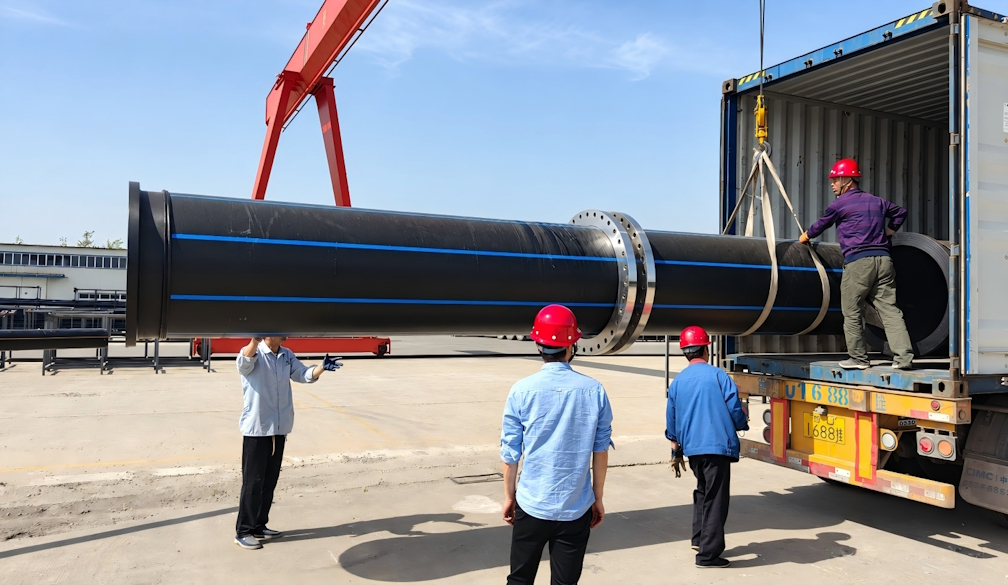
Australia’s mining sector is undergoing a quiet but significant shift. Across the Pilbara, the Bowen Basin and remote operations in the Northern Territory, miners are increasingly turning to trenchless methods to install critical pipeline infrastructure. The reason is straightforward: horizontal directional drilling (HDD) allows pipelines to be placed beneath rivers, rail lines, roads and environmentally sensitive terrain with minimal surface disruption. For an industry under mounting pressure to balance productivity with environmental responsibility, HDD has become more than an alternative—it is often the only feasible option.
But HDD is only as good as the pipe it installs. The technique demands a material that can withstand significant pulling forces, bending stresses and ground pressure—without cracking, deforming or losing long-term integrity. This is where high-density polyethylene (HDPE) pipe has established itself as the material of choice across Australian mining.
Why HDD Demands More from a Pipe
To understand why HDPE performs so well in HDD, it helps to understand what happens underground. The process begins with a pilot hole drilled along a predetermined alignment. The bore is then enlarged, and the pipe string is pulled through the reamed hole. During pullback, the pipe experiences axial tension, bending over a tight radius, and friction against the bore wall. In rocky terrain—common across much of Western Australia’s iron ore country—the pipe may also be dragged across sharp rock faces, creating scratches and point loads that may serve as the starting point for slow crack growth.
Rigid materials such as PVC or steel struggle with these conditions. Steel is heavy, requires welded joints that are expensive and time-consuming to produce in remote locations, and is vulnerable to corrosion in the acidic or saline groundwater common in Australian mining environments. PVC pipes lacks the flexibility to accommodate the bending radii required in HDD without risk of fracture.
HDPE addresses each of these limitations. With a high elongation at break exceeding 600%, HDPE pipe can bend through tight radii without cracking. Its fusion-welded joints—produced by butt fusion or electrofusion—are as strong as or stronger than the pipe wall itself, creating a continuous, leak-free pipeline with no mechanical joints to fail. And because HDPE is chemically inert, it does not corrode in the aggressive water chemistries encountered in mining operations.
The Role of PE100-RC in Trenchless Mining Applications
One of the most consequential developments in HDPE pipe technology for mining has been the introduction of PE100-RC (Resistant to Crack). Standard PE100 pipe meets minimum slow crack growth requirements, but PE100-RC grades are engineered with significantly enhanced resistance to slow crack growth, making them particularly suited to installations where there is an increased risk of external surface damage or point loads—precisely the conditions encountered in HDD and other trenchless methods.
In Australia, the Plastics Industry Pipe Association (PIPA) has issued industry guidelines (POP016) recognizing PE100-RC materials, and the designation has been adopted in international standards including ISO 4427 and EN 1555. Australian pipe manufacturers now supply PE100-RC grades conforming to AS/NZS 4130, the Australian standard for polyethylene pipes for pressure applications. For HDD projects in mining, specifying PE100-RC is not merely a preference—it is a practical safeguard against the scratches and notches that occur during pullback, which in standard PE100 can develop into through-wall cracks under sustained operating pressure.
HDD in Practice: Australian Mining Case Studies
The Australian mining industry has accumulated a substantial track record of HDD installations using HDPE pipe. Three projects illustrate the range of applications and the conditions that drive material selection.
Pilbara Water Infrastructure (Western Australia). A mining company in the Pilbara engaged Silverstone to deliver a major water infrastructure package that included 32 kilometres of HDPE spur pipes for six new dewatering bores, along with three HDD directional drill shots. The project demonstrates the integration of HDPE pipelines with HDD for mine dewatering—one of the most common applications in the Pilbara, where iron ore operations require extensive dewatering systems to manage groundwater.
Telfer Pipeline (Western Australia). The Telfer gas pipeline, constructed to supply the remote Telfer mine site, included a 600-metre HDD crossing of the De Grey River as part of a 100-kilometre floodplain traverse. The project faced extreme conditions—temperatures reaching 50°C and the logistical challenges of working in one of Australia’s most remote regions. The HDD crossing avoided direct disturbance to the riverbed and its associated ecosystems, demonstrating the environmental advantages that trenchless methods offer in sensitive areas.
Century Mine–Karumba Slurry Pipeline (Queensland). The 300-kilometre pipeline carrying zinc and lead concentrate slurry from Century Mine to the port at Karumba included six major river crossings installed by HDD. The crossings were chosen specifically to protect the cultural heritage of traditional landowners, meet strict environmental standards, and avoid riverbank erosion—priorities that increasingly shape pipeline route selection across Australia.
Material Selection for HDD in Australian Mining
The Australian experience points to a consistent set of material requirements for HDD in mining. The pipe must meet AS/NZS 4130 for pressure applications, with PE100-RC grades recommended where installation conditions involve elevated risk of surface damage. Wall thickness and SDR must be selected based on the pulling loads anticipated during installation and the operating pressure required in service—HDD installations often require thicker walls to accommodate installation stresses.
HDPE’s abrasion resistance is an additional advantage in mining HDD projects. Slurry and tailings pipelines installed by HDD must contend not only with installation stresses but with the ongoing abrasion of the transported material. HDPE’s elastic behaviour under particle impact—deforming and rebounding rather than eroding—gives it a significant wear-life advantage over steel in abrasive slurry service.
All in All, HDD has become an indispensable technique for pipeline installation in Australian mining, and HDPE pipe has become the default material for these installations. The combination of flexibility, fusion-welded joint integrity, corrosion resistance and—where specified—the enhanced slow crack growth resistance of PE100-RC grades makes HDPE uniquely suited to the demands of trenchless installation in challenging ground conditions.
For mining operators planning HDD projects, the material decision is straightforward: specify HDPE pipe manufactured to AS/NZS 4130, and where ground conditions or installation risks are elevated, specify PE100-RC. The pipeline will be in the ground for decades—the material chosen at the outset determines how well it performs.


 Business Daily Media