What to Consider When Deciding Between Keratoconus Treatment and Laser Vision in Adelaide
Making choices about your eyesight can feel overwhelming, especially when managing a progressive corneal condition. If you experience distorted vision or frequent prescription changes, finding the right keratoconus treatment is essential for long-term optical stability. Many individuals seeking visual freedom compare these specialised medical interventions with popular elective procedures like laser vision in Adelaide. While both pathways aim to improve how you see the world, they target entirely different ocular profiles. Understanding the fundamental differences between managing a structural corneal disease and correcting a standard refractive error will help you make an informed decision alongside your Adelaide-based optometrist or ophthalmologist.
Understanding Keratoconus and the Need for Specialised Care
Keratoconus is a progressive eye condition where the normally round cornea thins and begins to bulge into a cone-like shape. This irregular curvature prevents light from focusing correctly on the retina, causing blurred vision, high sensitivity to glare, and frequent changes in spectacle prescriptions. Because the corneal structure is inherently weakened, standard refractive surgeries can actually worsen the condition by destabilising the cornea further. Therefore, a specialised keratoconus treatment focuses primarily on halting disease progression and restoring structural integrity.
The Role of Corneal Cross-linking
For many patients, the first line of defence is Corneal Collagen Cross-linking (CXL). This procedure uses riboflavin (vitamin B2) drops and ultraviolet light to strengthen the chemical bonds within the corneal stroma. While CXL does not fully reverse existing distortion, it effectively stops the cornea from bulging further. Once the cornea is stabilised, practitioners can address visual acuity using specialised contact lenses, such as rigid gas permeable (RGP) or scleral lenses, which drape over the irregular cornea to create a smooth refracting surface. This medical approach differs significantly from procedures designed purely to eliminate the need for glasses in healthy eyes.
Why Laser Eye Surgery is Not Always the Standard Answer
Many people seeking freedom from glasses immediately think of laser eye surgery. When researching options for laser vision in Adelaide, prospective patients learn about advanced techniques like LASIK, PRK, and SMILE. These procedures work by using precise lasers to reshape the cornea, correcting refractive errors such as myopia, hyperopia, and astigmatism. However, these techniques rely on the cornea having a healthy, stable thickness and structure.
The Risk of Corneal Ectasia
Applying standard laser reshaping to a cornea weakened by keratoconus is highly risky. Because laser procedures remove microscopic layers of corneal tissue to alter its shape, they thin the cornea further. In a keratoconic eye, this reduction in tissue can trigger a severe complication known as corneal ectasia, where the cornea bulges rapidly, leading to a dramatic loss of vision. Consequently, reputable eye clinics in South Australia perform rigorous pre-operative screening, using advanced corneal topography to rule out keratoconus before clearing anyone for standard laser refractive surgery. This ensures that patients receive the safest intervention for their specific eye anatomy, prioritising long-term structural health over quick refractive fixes.
Modern Alternatives for Managing Progressive Corneal Conditions
Fortunately, the division between therapeutic interventions and refractive corrections is not always absolute. Recent advancements in ophthalmic technology have introduced combined protocols that offer some refractive improvement alongside structural stabilisation. For instance, some clinics offer a specialised keratoconus treatment that combines topography-guided photorefractive keratectomy (PRK) with corneal collagen cross-linking.
Combined Therapeutic Approaches
This combined approach, often referred to as the Athens Protocol, uses a very conservative laser application to smooth out some of the corneal irregularities before immediately performing cross-linking to strengthen the remaining tissue. The goal is not to achieve perfect 20/20 vision without glasses, but rather to make the corneal surface more regular so that glasses or contact lenses fit better and provide clearer vision. It represents a highly customised medical strategy rather than a standard cosmetic laser procedure. When considering this option, you must consult with a corneal specialist who can evaluate whether your cornea has sufficient thickness to tolerate even a minimal laser application safely. This highlights the importance of seeking a thorough diagnostic assessment rather than assuming a single procedure can address all vision issues.
Assessing Your Candidacy for Laser Procedures
Determining whether you are a candidate for therapeutic stabilisation or refractive laser surgery requires a comprehensive assessment. When looking into laser vision in Adelaide, clinics utilise state-of-the-art diagnostic imaging to map the unique curvature and thickness of your eye. These detailed scans can detect sub-clinical or early-stage keratoconus that might not be visible during a routine eye test.
What to Expect During an Assessment
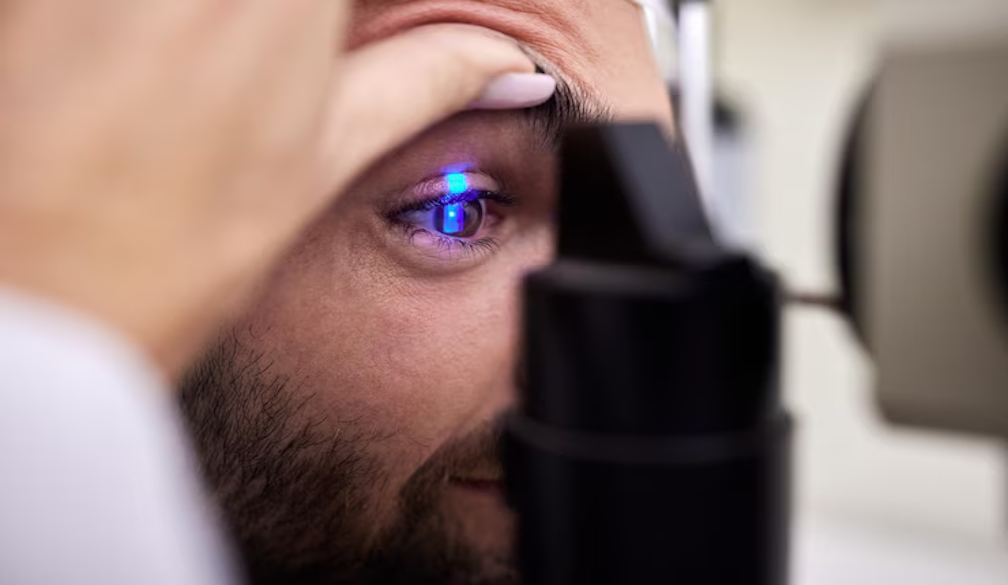
During your initial consultation, clinicians will use devices like Scheimpflug cameras to create a three-dimensional map of your cornea. They will measure the anterior and posterior corneal surfaces, along with pachymetry maps that show corneal thickness across different zones. If these scans reveal any signs of corneal thinning or asymmetry, standard laser surgery will be ruled out to protect your sight. Instead, the focus will shift toward therapies designed to strengthen the eye. For those with healthy corneas, laser procedures remain an excellent, highly predictable option for vision correction. Ultimately, the decision relies on objective diagnostic data rather than personal preference, making a thorough, technology-driven consultation the most critical step in your visual journey.
Conclusion
Choosing between specialised medical therapies and elective refractive surgery is a decision that shapes your visual future. While refractive laser procedures in South Australia offer incredible freedom for those with structurally sound corneas, it is not a safe option for individuals with progressive corneal thinning. For those affected by corneal instability, prioritising a targeted keratoconus treatment ensures the eye remains strong and functional for years to come. By partnering with experienced eye care professionals in Adelaide and undergoing detailed corneal mapping, you can identify the safest, most effective pathway for your unique eyes. Prioritising structural health over a quick refractive fix will always yield the best long-term outcomes for your vision.


 Business Daily Media