The Synthetic Reality: How Fake AI Images and Inauthentic Media Are Taking Over the Digital World
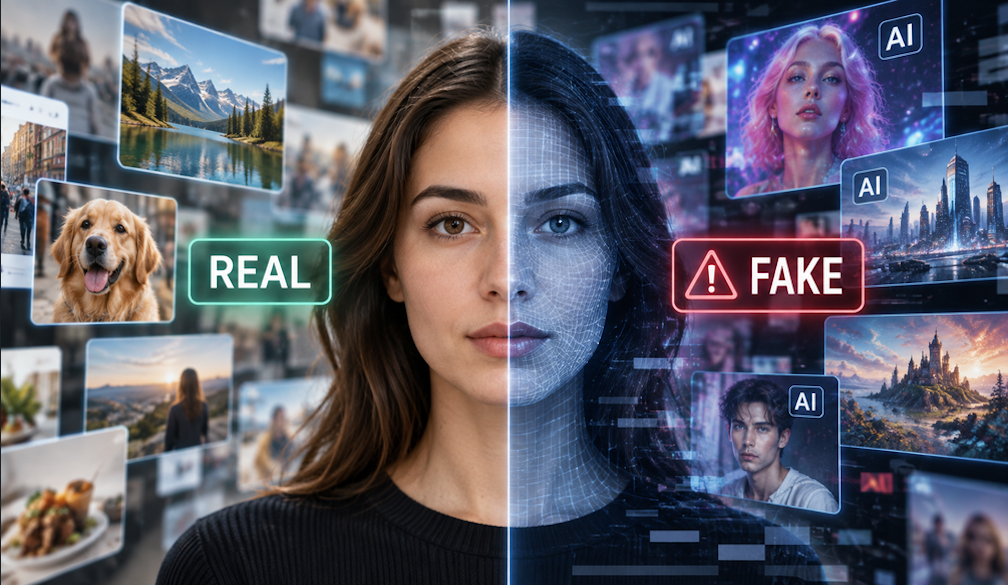
The digital ecosystem is undergoing a fundamental transformation. For decades, seeing was believing. A photographic capture stood as absolute proof of an event, an identity, or an environment. However, the rapid evolution and democratization of generative artificial intelligence have shattered this traditional baseline of trust. Today, synthetic images are no longer easily recognizable by strange extra fingers, distorted geometry, or uncanny lighting. Advanced AI generative models produce hyper-realistic visuals, landscapes, and human portraits within milliseconds, seamlessly flooding social networks, news feeds, and digital marketplaces.
This flood of synthetic visual content marks a dramatic shift in how media is produced, consumed, and manipulated online. As synthetic imagery blends effortlessly into everyday digital feeds, distinguishing authentic reality from artificially engineered outputs has become one of the defining challenges of our era.
The Quiet Infiltration of AI-Generated Visuals
Generative models trained on massive datasets of digital imagery have reached a point of visual maturity where the barrier to creation is zero. Anyone with an internet connection can prompt an AI system to create photorealistic scenes that never took place, generate synthetic human avatars that look completely real, or synthesize complex environmental photography.
The rapid spread of this media is felt across nearly every industry. In marketing and advertising, brands frequently deploy completely synthetic avatars and product photos to drastically reduce studio production costs. On social media platforms, automated bot networks utilize AI-generated profile pictures to establish convincing visual identities that bypass traditional anti-spam detection protocols. Meanwhile, news outlets and content creators are tasked with filtering through thousands of user-submitted images to verify whether a breaking news photo reflects a real event or is merely the result of a cleverly written text prompt.
Because these models update constantly, manual human evaluation is no longer sufficient to identify synthetic media. Spotting minute pixel distortions, lighting inconsistencies, or subtle background flaws has become nearly impossible for the untrained eye.
Reclaiming Authenticity in a Synthetic Landscape
As visual manipulation scales exponentially, automated verification systems are becoming an essential component of modern digital infrastructure. To maintain integrity across platforms, publishers, financial institutions, and online communities are increasingly turning to dedicated detection technologies that evaluate images at a structural level.
Rather than relying on human perception, advanced detection platforms analyze file metadata, pixel distribution patterns, and model signatures to determine whether an image was captured by a physical camera lens or produced by a generative neural network. Utilizing a specialized AI image detector allows platforms to automatically flag manipulated photos, verify the authenticity of incoming media, and combat deepfake-driven fraud before deceptive content can spread. These algorithms evaluate visual elements far beyond surface aesthetics, giving organizations the tools required to enforce trust and security in their digital environments.
Without automated safeguards, digital platforms risk becoming flooded with synthetic clutter, eroding user trust and making authentic content increasingly difficult to discover.
Learn more about AI detectors aswell for Norwegian students.
The Rise of Synthetic Engagement in Live Streaming
The drive toward artificial inflation and synthetic presentation is not limited to static images. The wider streaming and live entertainment ecosystem faces a parallel challenge: artificial engagement metrics. Just as fake images manipulate visual perception, artificial metrics warp viewer perception across live broadcasting platforms.
In the highly competitive world of live streaming, discoverability relies heavily on platform algorithms. Platforms rank content largely by concurrent viewership, meaning channels with higher numbers are featured prominently on browse pages and recommendation feeds. This mechanism has spawned a massive market for artificial viewer inflation. Content creators looking to bypass organic growth hurdles routinely seek out automated services to artificially elevate their numbers. Creators frequently decide to buy kick live viewers through platforms like Streamboozt to immediately boost their channel's concurrent viewer count, aiming to game recommendation engines and capture organic traffic.
This phenomenon reflects the same underlying dynamic seen with synthetic visual media. Whether an individual is deploying generated photos to create fake social profiles or artificially inflating viewer metrics to jump to the top of a streaming directory, the core goal remains identical: manipulating perception to simulate credibility, authority, or popularity.
The Impact on Digital Trust and Communication
The widespread adoption of AI-generated visuals and automated engagement tools fundamentally alters the relationship between creators, platforms, and audiences. When users can no longer assume that an image is real or that a live audience consists of genuine human beings, the baseline of digital interaction degrades.
For consumers, this reality requires a higher level of digital literacy and critical evaluation. Blind trust in digital content is no longer viable. Every user must approach online media with an understanding that visual data can be engineered instantly and metrics can be bought on demand.
For platforms, content moderation can no longer rely on simple manual reporting. Maintaining platform integrity requires dynamic, multi-layered detection systems that evaluate incoming media and user interactions in real time. Platforms that fail to address synthetic flooding risk losing user trust as audiences migrate toward environments where authenticity is strictly protected.
Navigating the Future of Synthetic Media
Artificial intelligence is not going anywhere, and generative algorithms will only become more sophisticated, faster, and harder to spot. Synthetic images will soon become the standard backdrop of much of the internet, powering dynamic gaming environments, personalized advertisements, and creative art forms.
However, the proliferation of hyper-realistic generative tools makes structural transparency non-negotiable. As the line between organic truth and artificial synthesis continues to blur, robust detection mechanisms, metric auditing tools, and conscious consumer habits will serve as the primary defensive line. Preserving authenticity does not require stopping technological progress; rather, it requires building systems capable of identifying synthetic outputs so that users always know whether what they are viewing is real or artificial.


 Business Daily Media