What Contractors Should Actually Budget for Wholesale Sealant Costs
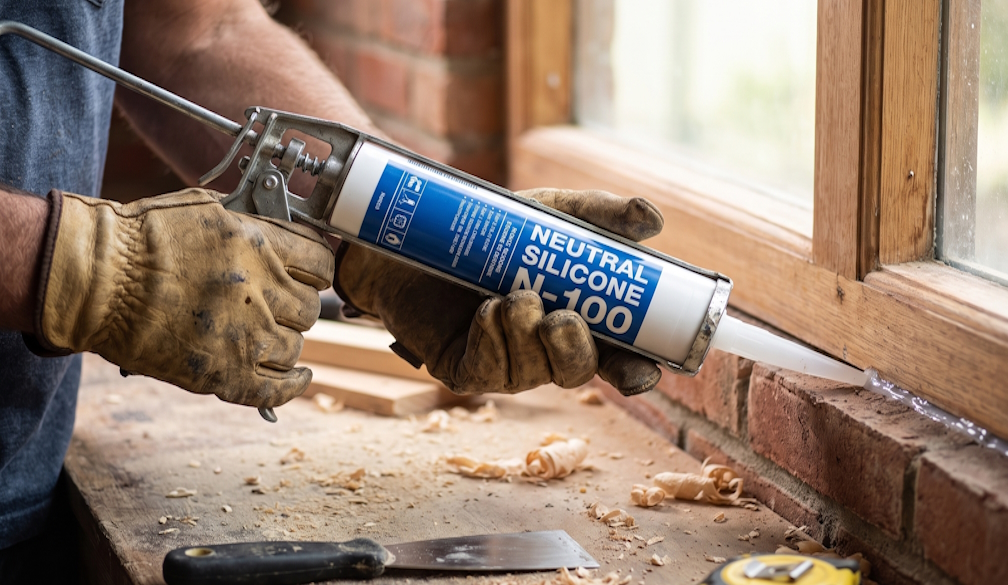
Ask a contractor what sealant costs on a project and most will quote a per-tube or per-cartridge price. Ask an estimator who's been burned before, and they'll tell you that number is close to useless on its own; it's the price per linear meter of finished joint, once waste and labor are accounted for, that actually determines whether a bid was priced correctly.
That gap between "price per tube" and "true cost per job" is where a lot of sealant budgets quietly go wrong.
Why per-unit price is the wrong first number
A standard sealant cartridge covers a finite length of joint, and that length depends entirely on joint width and depth; a 10mm x 10mm joint uses roughly four times as much material per meter as a 5mm x 5mm joint. Two suppliers quoting the same per-tube wholesale price can produce very different total project costs if one contractor's crew is running wider joints than the estimate assumed, or if backer rod wasn't specified to reduce sealant depth where it should have been.
The practical fix is estimating coverage before requesting a wholesale quote, not after: measure the joint dimensions across the actual scope, calculate total volume needed using standard cartridge yield figures, and add a waste allowance most experienced estimators build in 10-15% for cutting, tooling, and application loss on a typical job, more on complex detailing work.
What a wholesale quote should actually itemize
A serious Sealant wholesale price for contractors quote from a manufacturer breaks down more than just unit price. Worth asking for, itemized separately: the per-cartridge or per-sausage price at the requested volume tier, delivery cost and scheduling, any minimum order threshold that unlocks the quoted rate, and the formulation grade being quoted since a neutral-cure or anti-fungal formulation typically costs more per unit than a standard acetic-cure sealant, and comparing quotes across different formulations isn't a fair price comparison at all.
The hidden cost that shows up after the invoice
The cheapest wholesale price on paper isn't always the cheapest project cost. A lower-grade sealant that requires a second application pass, or that fails prematurely and triggers a warranty callback, erodes the margin a contractor thought they'd locked in at quote time. This is where sourcing from a manufacturer with in-house quality control rather than a trading company reselling whichever batch was cheapest that month tends to pay for itself: consistent cure performance across a large order means fewer surprises once the crew is actually applying the product on site.
Building sealant into a project budget properly
Treating sealant as a rounding-error line item in a bid is a common mistake on large glazing, cladding, or multi-unit residential jobs, where joint length adds up fast across a full building envelope. A more reliable approach: calculate total linear meters of joint from the drawings, apply the coverage-per-cartridge figure for the specified formulation, add the waste allowance, and price that total volume against a manufacturer's wholesale tier rather than pricing per tube and multiplying by a rough guess at quantity.
That level of estimating discipline matters more on repeat commercial work than on a single small job, since a pricing error compounds across every unit in a multi-building or multi-floor scope.
A scenario worth recognizing
A contractor bidding a 200-unit residential development needs sealant for window perimeters, bathroom wet areas, and exterior cladding joints three different formulations, three different coverage rates, and a volume large enough that a 5% estimating error on any one of them moves the total budget meaningfully. Pricing this job off a single "sealant" line item, rather than breaking it into formulation-specific volumes quoted against a manufacturer's wholesale tiers, is exactly the kind of shortcut that turns a profitable bid into a break-even one once the actual quantities are trued up mid-project.
Questions to bring to a wholesale pricing conversation
- What's the coverage yield per cartridge for each formulation being quoted, so cost-per-meter can be calculated accurately?
- Does the quoted price change at different volume tiers, and where are those breakpoints?
- What's included in delivery staged delivery against a project schedule, or one lump shipment?
- Is technical support available if application issues come up mid-project?
Where to request a quote
First Sealant Technology's silicone sealant product range spanning neutral-cure, anti-fungal, weatherproofing, and acetic-cure formulations manufactured in-house in Thailand is a reasonable starting point for building an accurate, formulation-specific budget. For a wholesale quote broken down by volume tier, contact their team directly at 096-818-9168, 097-959-5111, or 097-959-1222, Monday through Saturday, 08:30–17:30.
This article does not quote specific pricing, as wholesale rates vary by volume, formulation, and current market conditions. Coverage figures are general industry estimating practice, not First Sealant-specific data that confirm actual product yield and current pricing directly with the supplier.


 Business Daily Media