How to Choose the Right First Aid Kit for Your Situation
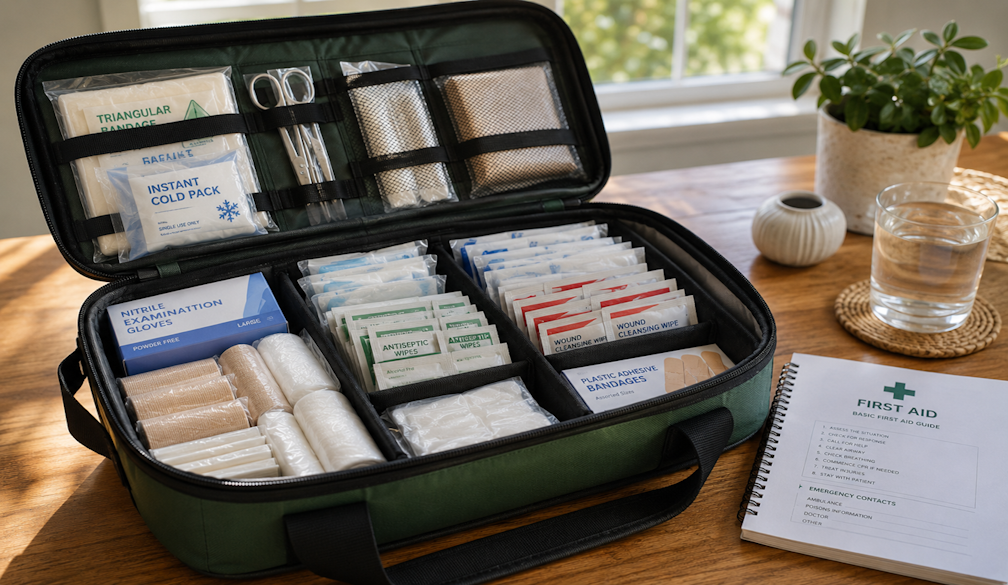
Most people don't think about their first aid kit until the moment they urgently need it, and that's usually the worst possible time to discover it's missing a key item, or worse, that it doesn't exist at all. Whether it's a household cupboard, a company vehicle, a workplace lunchroom, or a weekend camping trip, having the right first aid kit on hand, properly stocked and easy to access, is one of those small preparations that pays off disproportionately when something goes wrong.
The challenge is that "first aid kit" covers an enormous range of products, from a compact ten-item pouch to a comprehensive workplace cabinet with dozens of specialised items. Choosing the right one means thinking honestly about who will use it, what kinds of incidents are realistically likely, and how quickly professional help could actually arrive if needed. This article breaks down how to approach that decision with a bit more rigour than simply grabbing whatever's cheapest off the shelf.
Start With a Realistic Risk Assessment
The single biggest mistake people make when choosing a first aid kit is picking one based on price or size rather than actual need. A kit designed for a suburban office lunchroom is a poor fit for a remote hiking trip, and a basic car kit won't cut it for a tradesperson working with power tools on a construction site.
A better starting point is a simple risk assessment: what activities happen in this environment, what injuries have occurred before (or are statistically likely), how many people need to be covered, and how far away is professional medical help. A household kit for a family with young children will lean heavily toward minor cuts, splinters, and fever management. A workplace kit needs to reflect the actual hazards of that job; a kitchen environment needs burn care, a workshop needs eye wash and wound closure for lacerations, and an office environment can generally get by with a more basic provision.
Understanding Kit Categories
Broadly, first aid kits fall into a few recognisable categories, each suited to a different context:
- Personal and household kits — compact, focused on everyday minor injuries like cuts, splinters, and headaches
- Vehicle kits — compliant with state road rules where applicable, generally including trauma dressings and roadside-relevant supplies
- Workplace kits — scaled to staff numbers and industry-specific hazards, often required to meet WHS compliance standards
- Outdoor and remote kits — built around delayed access to help, with a stronger focus on trauma stabilisation, snake bite management, and environmental exposure
- Sports and event kits — designed for physical activity injuries like sprains, strains, and impact trauma
Understanding which category actually applies to your situation prevents both under-provisioning (a household kit sent along on a serious bushwalk) and over-provisioning (a comprehensive trauma kit sitting unused in a low-risk office that will never need it).
What to Look For in Contents
Regardless of category, a genuinely useful kit should cover a baseline of core capabilities: wound cleaning and dressing, bleeding control, burns management, and basic resuscitation support. From there, contents should scale up based on the risk assessment. Look for:
- A range of dressing sizes, not just one generic size that doesn't suit smaller or larger wounds
- Sterile saline or wound wash rather than relying solely on water
- Clearly readable instructions, particularly for less common procedures like burns management or shock positioning
- Disposable gloves in adequate quantity; these get used far more than people expect
- A CPR face shield or resuscitation mask for anyone likely to respond to a cardiac event
It's also worth checking that a kit includes a proper inventory list and expiry information, rather than a sealed box with no visibility into contents until it's opened in an emergency. Good suppliers make this information easy to find upfront rather than burying it in fine print.
Compliance Considerations for Businesses
For workplaces specifically, first aid provisioning isn't purely a matter of preference it typically falls under Work Health and Safety obligations that require employers to provide first aid facilities proportionate to the number of workers, the nature of the work, and the likelihood of injury. This generally means a documented approach: a risk assessment justifying kit contents, a maintenance schedule for checking and restocking, and in many workplaces, a minimum number of staff holding current first aid qualifications.
Businesses that treat this as a genuine compliance obligation rather than a box-ticking exercise tend to review their kits at least annually, adjusting contents as the nature of the work changes; new equipment, new premises, or a change in workforce size can all shift what's actually required. It's a good habit to tie this review to another regular business process, like an annual WHS audit, so it doesn't get overlooked.
Maintenance: The Part Everyone Forgets
A first aid kit is only as useful as its last check date. Adhesive dressings dry out, antiseptic solutions expire, and gloves can perish over time, particularly if stored in a hot car or an uninsulated shed. Yet maintenance is consistently the weakest link in first aid provisioning, largely because it's invisible until the moment someone opens the kit and finds it's missing exactly what they need.
A simple, sustainable system works better than an elaborate one that's likely to be abandoned. This might mean a physical checklist taped inside the kit with a review date, a calendar reminder set at the point of purchase, or for businesses managing multiple kits across different sites, a centralised spreadsheet tracking last-checked dates. The goal is simply to make sure someone, somewhere, is accountable for noticing when supplies are running low or approaching expiry.
Matching the Kit to the Real Scenario
It's worth thinking through a few realistic scenarios when making a final decision. A tradesperson working solo on remote rural properties has very different needs to an office worker in a CBD building with paramedics minutes away. A family heading off on a multi-day hiking trip needs different provisioning to a family doing weekend day trips within an hour of home. In each case, the honest question is: if something happened right now, in this specific place, what would actually help and how long would we realistically be waiting for further assistance?
This kind of scenario thinking consistently produces better outcomes than simply buying the biggest kit available "to be safe," which often results in a bulky, poorly organised kit where the genuinely useful items are hard to find under a pile of rarely-needed extras.
A Note on Storage and Accessibility
Even the best-stocked kit is only useful if people know where it is and can get to it quickly. This sounds obvious, but it's a common gap: kits are stored in locked cupboards without clear signage, buried under other equipment in a vehicle boot, or left in a location that's inconvenient during an actual emergency. Clear labelling, sensible placement, and making sure everyone who might need it knows exactly where to find it matters just as much as the contents themselves.
Building Confidence to Actually Use It
A well-stocked kit is only half the equation; the person reaching for it also needs at least a baseline level of confidence in how to use what's inside. This doesn't necessarily mean everyone needs a full first aid certificate, though that's obviously valuable, but it does mean the kit itself should support someone with limited training rather than assuming a level of expertise they don't have.
Look for kits that include clear, step-by-step instructions rather than assuming prior knowledge, and consider pairing any new kit purchase with a basic refresher course for household members or staff. Many community organisations and registered training providers run short, practical sessions covering the essentials: CPR, choking response, bleeding control, and burns management, and these are worth the modest time investment, particularly for families with young children or workplaces where staff turnover means knowledge doesn't always stay current.
It's also worth periodically walking through "what would I actually do" scenarios with the people who might use the kit. This doesn't need to be formal or time-consuming; even a brief conversation about where the kit is kept and what's inside can make a meaningful difference in how quickly and confidently someone responds when a real incident occurs, rather than fumbling to locate supplies while already under pressure.
When to Upgrade or Replace a Kit Entirely
Circumstances change, and a first aid kit that was appropriate a few years ago might no longer match current needs. A growing family, a change in job role or work environment, a new hobby involving greater physical risk, or simply the gradual depletion and expiry of original contents are all good triggers to reassess rather than simply topping up individual items indefinitely.
As a general rule, it's worth doing a full kit review, checking every item against an updated needs assessment, not just replacing what's obviously used or expired, at least once a year, and immediately after any significant change in circumstances. This is also a good opportunity to reconsider the kit's container itself; a case that's become cramped, disorganised, or difficult to carry is often a sign it's time to upgrade to something better suited to current needs, rather than continuing to force an outdated kit to serve a purpose it was never really designed for.
Final Thoughts
Choosing the right first aid kit comes down to an honest assessment of your specific situation rather than a generic, one-size-fits-all purchase. Think through who's likely to use it, what injuries are realistically probable, and how quickly professional help could arrive, then match contents, category, and maintenance habits to that reality. A modest kit that's well-matched to its environment and properly maintained will always outperform an impressive-looking kit that's the wrong fit or has been left unchecked for years.


 Business Daily Media