Why Cheap Air Conditioning Is Becoming a Liability for Businesses
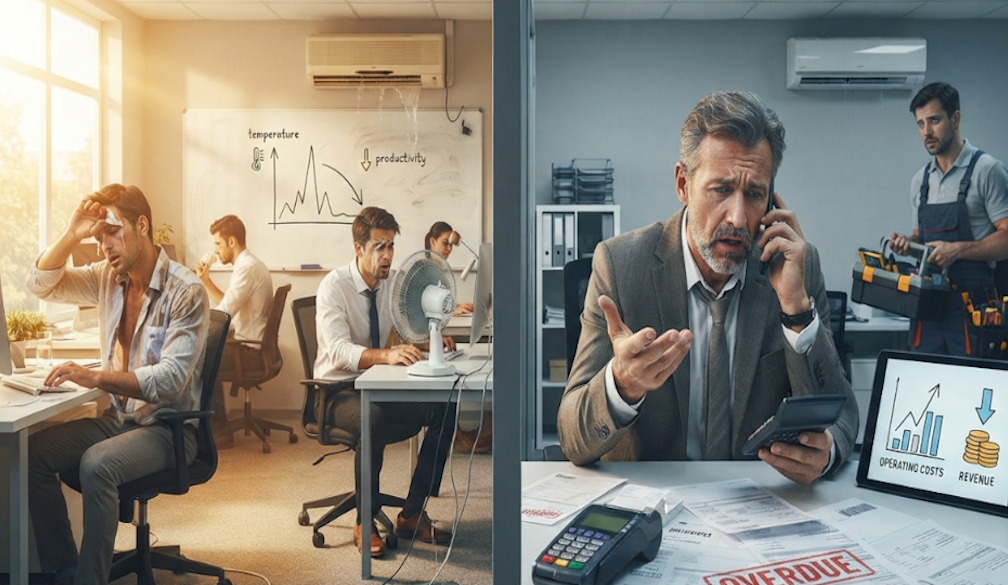
Choosing the cheapest air conditioning system can look like a sensible way to control business costs, but the real expense often appears later. Without proper system design, installation, and commercial AC maintenance, a low-cost AC setup can lead to higher running costs, more breakdowns, poorer comfort, and avoidable disruption.
Cheap AC and Commercial AC Maintenance Costs
Many businesses choose the cheapest commercial air conditioning option because the upfront price is easy to see, while the long-term cost is much harder to calculate. When budgets are tight, a lower installation quote can feel like the safest decision, especially if the system appears to do the same job on paper.
Businesses are often tempted by the cheapest air conditioning quote because it feels like a quick saving on a non-core expense. Air conditioning is rarely seen as a revenue-generating asset, so when two options appear to offer "cooling," the lower price can look like the obvious choice.
The problem is that commercial air conditioning is not a one-time purchase. It is a working asset that affects energy use, comfort, productivity, customer experience, and business continuity every day. It influences how long customers stay, how well staff perform, how efficiently the building operates, and how exposed the business is to disruption during hot weather.
A system that is cheaper to buy may be more expensive to run, harder to maintain, less reliable under pressure, or unsuitable for the size and use of the building. For many businesses, the cheapest option only looks cheap at the point of purchase.
The cheapest option is appealing because it gives a clear saving today. The problem is that poor comfort, higher running costs, breakdowns, and early replacement do not arrive as one obvious bill. They appear gradually, across energy invoices, repair callouts, complaints, downtime, and lost trading opportunities.
The role of commercial AC maintenance is often underestimated at the buying stage. Yet it can be one of the biggest differences between a system that performs reliably and one that becomes a recurring business problem.
The Hidden Cost of Skipping Commercial AC Maintenance
The hidden costs of cheap commercial air conditioning often appear after the invoice has been paid. These can include higher energy bills, more frequent breakdowns, uneven cooling, noisy operation, shorter equipment lifespan, poor humidity control, and repeated callouts to fix issues that should have been avoided at installation.
Low-cost installations may also involve rushed design, poor system sizing, cheaper components, weak controls, inadequate ductwork or pipework, and little thought about access for future servicing. That can leave the business paying again and again through repair costs, disruption, staff complaints, customer discomfort, and early replacement. A cheap installation can become expensive when it needs constant attention just to perform at a basic level.
The hidden cost of cheap commercial air conditioning is often not one dramatic failure. It is a slow financial bleed. A low-cost system may use more energy every day, struggle to keep up in busy periods, require more callouts, and wear out faster because it is constantly working at its limit.
A low-cost installation may also leave behind problems that are expensive to correct later, such as poor airflow, awkward access for servicing, badly placed indoor units, weak controls, undersized pipework, or an unsuitable layout for the way the business actually operates.
There is also a hidden management cost. Every complaint, repair visit, thermostat adjustment, staff distraction, uncomfortable customer, and emergency decision takes time away from running the business. Cheap AC can quietly become a recurring operational problem rather than a completed investment.
How Poor AC Choices Raise AC Running Cost
Poor system choice can increase AC running cost because the equipment has to work harder than it should. If a system is undersized, it may run almost constantly and still fail to cool the space properly. If it is oversized, it may short-cycle, waste energy, create temperature swings, and place unnecessary strain on components.
If the system is poorly chosen, it may also be badly matched to the building’s layout and occupancy patterns. That means it runs longer, cycles inefficiently, or fails to cool the areas that matter most.
Bad installation adds another layer of cost. Poor airflow, incorrect refrigerant charge, badly positioned units, weak controls, leaky ductwork, restricted pipe routes, incorrect commissioning, or badly designed ductwork can all reduce efficiency. Even a good system can perform badly if it is installed badly.
Skipped maintenance then turns small efficiency losses into ongoing expenses. Dirty filters, blocked coils, worn parts, poor airflow, refrigerant issues, and faulty sensors all force the system to use more energy for less output. The business may not notice immediately, but the energy bill usually does.
The business may think the AC is "getting old," when in reality it is being forced to operate under poor conditions. That extra effort shows up as higher energy use, more wear on parts, and a shorter system life. Over time, neglected commercial air conditioning becomes more expensive to run, more likely to fail, and less likely to reach its expected service life.
Why Commercial Air Conditioning Maintenance Matters
Commercial air conditioning maintenance matters more because the consequences of failure are usually bigger. In a home, a broken air conditioner is inconvenient. In a business, it can affect revenue, staff performance, customer dwell time, stock condition, equipment reliability, tenant satisfaction, health and safety expectations, and brand perception.
Commercial systems also tend to work harder and for longer hours than residential systems. They may serve larger spaces, multiple rooms, high-traffic areas, heat-generating equipment, kitchens, retail floors, offices, clinics, gyms, warehouses, or server rooms. Doors open and close, customer numbers rise and fall, equipment generates heat, and different areas of the building have different needs. That heavier workload means wear, dirt buildup, airflow problems, and control issues can develop faster.
Regular commercial HVAC maintenance helps businesses protect uptime, manage energy costs, maintain indoor air quality, and spot problems before they become disruptive failures. It is not just about keeping the building cool. It is about keeping the business operating properly.
Commercial air conditioning maintenance matters more because businesses rely on air conditioning in a more public, intensive, and financially sensitive way than homeowners do. If a business AC system fails during a heatwave, lunch rush, client meeting, fully booked clinic day, or peak retail period, the cost can be much higher than the repair.
That workload makes regular HVAC maintenance less of an optional extra and more of a risk-control measure.
When AC Breakdowns Expose Poor Commercial HVAC Maintenance
Unexpected AC failure can create immediate operational risk. During peak trading periods or extreme weather, a breakdown can make premises uncomfortable, reduce customer visits, shorten browsing time, disrupt bookings, affect staff morale, and damage the business’s reputation.
For some businesses, the risks go further. Restaurants, salons, clinics, gyms, retail stores, offices, hotels, warehouses, and server rooms may all depend on stable temperatures. A breakdown can lead to cancelled appointments, spoiled stock, overheating equipment, lost productivity, emergency repair premiums, and even temporary closure.
An unexpected AC breakdown can turn a normal trading day into a business continuity issue. In retail, customers may leave sooner or avoid the premises altogether. In hospitality, comfort problems can affect reviews, bookings, and repeat visits. In offices, staff may lose focus or struggle to work productively. In clinics, gyms, salons, and service businesses, appointments may need to be delayed, cancelled, or carried out in uncomfortable conditions.
During extreme weather, the risk increases because engineers are busier, emergency repairs may cost more, and replacement parts may be harder to source quickly. A business that saved money on installation or maintenance may suddenly find itself competing for urgent support at the worst possible time.
The most expensive breakdown is often not the repair itself. It is the lost revenue, lost trust, and avoidable disruption that comes with it. Planned commercial AC maintenance is usually far cheaper than trying to recover from a failure during the hottest week of the year.
The real risk is not simply that the AC stops cooling. It is that the business loses control of the customer environment, the working environment, and the trading experience when it matters most.
How Commercial HVAC Maintenance Affects Comfort and Air Quality
Neglected commercial HVAC maintenance affects more than temperature. Poorly maintained systems can lead to stuffy rooms, hot and cold spots, weak airflow, unpleasant odours, excess humidity, dust buildup, and lower indoor air quality. In some buildings, air duct cleaning may also be needed as part of wider HVAC maintenance, especially where dust, debris, odours, or restricted airflow are affecting the indoor environment. These issues can make a workplace feel uncomfortable even if the thermostat says the temperature is acceptable.
For staff, that discomfort can reduce concentration, energy, morale, and productivity. People work less effectively when they are too hot, too cold, or breathing stale air all day. For customers, poor comfort can shorten visits, reduce spending, and leave a negative impression of the business.
Neglected maintenance often shows up first as "small" comfort issues: one area is too warm, another is too cold, airflow feels weak, the room feels stuffy, or there is an odour when the system starts. These issues may seem minor, but they affect how people experience the space.
In sectors where experience matters, such as retail, hospitality, health, fitness, and beauty, poor climate control can quietly undermine the service being delivered. A business may invest heavily in décor, signage, lighting, and customer service, yet lose the overall impression because the air itself feels uncomfortable.
A well-maintained system supports a better environment: cleaner airflow, steadier temperatures, fewer complaints, and a more professional experience for everyone who enters the building.
Signs Your AC Running Cost Is Too High
A business may be paying for "cheap" air conditioning in other ways if energy bills are rising without a clear reason, rooms never seem to reach the right temperature, or the system runs for long periods without improving comfort.
Other warning signs include frequent callouts, repeated repair of the same issue, noisy operation, weak airflow, water leaks, unpleasant smells, hot and cold zones, short cycling, inconsistent controls, and staff or customer complaints about comfort. Another sign is when maintenance engineers struggle to access or service the equipment because the original installation was poorly planned.
One of the clearest warning signs is that the AC system has become a regular topic of conversation. Staff keep adjusting the controls. Customers mention the temperature. Certain rooms are avoided. Another sign is when the business starts planning around the AC system’s weaknesses, such as avoiding certain areas on hot days or using portable units to support a system that should already be doing the job.
If the system is costing more every year but delivering less comfort, the business may not have saved money. It may simply have moved the cost from the installation invoice to the energy bill, repair budget, and daily operations.
The biggest warning sign is this: the system was cheap to install, but expensive to live with. When comfort problems, repair costs, and energy waste become normal, the business is no longer saving money. It is simply paying in instalments.
Why Commercial Air Conditioning Maintenance Impacts Long-Term Value
Businesses should judge commercial air conditioning by lifetime value, not just purchase price. The better question is not "What is the cheapest quote?" but "What will this system cost to own, run, maintain, and eventually replace?"
Long-term value includes correct system design, professional installation, energy efficiency, reliability, warranty support, maintenance access, controls, scalability, and suitability for the building’s real usage. A slightly higher upfront investment can often reduce running costs, extend equipment life, lower repair risk, and provide a more stable environment for staff and customers.
Cheap is about the price today. Value is about performance over years. For a business, the best AC decision is usually the one that protects comfort, controls operating costs, and reduces the chance of expensive disruption.
A cheap system that uses more energy, breaks down more often, and needs replacing sooner may be more expensive than a better-designed system with a higher initial price. Long-term value comes from choosing equipment that suits the building, installing it correctly, maintaining it consistently, and making sure it supports the way the business actually operates.
The smarter question is not, "How little can we spend today?" It is, "What option gives us the lowest avoidable cost, the least disruption, and the best performance over the life of the system?"
That shift in thinking helps businesses move away from buying air conditioning as a commodity and toward managing it as a business-critical asset.
Reducing AC Running Cost With Commercial HVAC Maintenance
Businesses can reduce AC running cost by treating efficiency as an ongoing process, not a one-time product feature. The first step is proper system selection and design. The system should be correctly sized for the space, occupancy, opening hours, heat loads, layout, and business use. Good design, proper installation, sensible unit placement, and controls that match the business’s usage patterns all help prevent avoidable costs for years.
Regular maintenance is equally important. Filters should be cleaned or replaced, coils inspected, airflow checked, drains cleared, refrigerant levels monitored, controls tested, and worn components identified early. Maintenance should be scheduled around the business calendar, especially before peak summer demand, so minor faults do not become emergency repairs.
Businesses should also use controls properly. Sensible temperature settings, timers, zoning, smart controls, clear staff guidance, and regular reviews of energy use can prevent unnecessary waste. Doors and windows should be managed carefully, heat-generating equipment should be considered, and older systems should be reviewed before repair costs become uneconomical.
The most practical approach is to treat air conditioning as an essential business system, not a background appliance. The businesses that spend least on AC over time are not usually the ones that buy the cheapest system. They are the ones that choose carefully, maintain consistently, and act before inefficiency becomes normal.

 Business Daily Media