

Most retirees who rent live in poverty. Here’s how boosting rent assistance could help lift them out of it
- Written by: Brendan Coates, Program Director, Housing and Economic Security, Grattan Institute
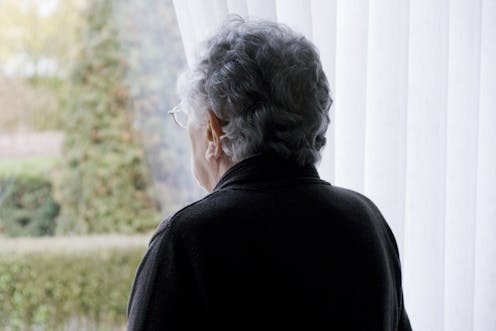
Most Australians can look forward to a comfortable retirement. More than three in four retirees own their own home, most report feeling comfortable financially, and few suffer financial stress.
But our new Grattan Institute report[1] paints a sobering picture for one group: retirees who rent in the private market. Two-thirds of this group live in poverty, including more than three in four single women who live alone.
Retirees who rent often have little in the way of retirement savings: more than half have less than A$25,000 stashed away. And a growing number of older Australians are at risk of becoming homeless.
But our research also shows just how much we’d need to boost Commonwealth Rent Assistance to make housing more affordable and ensure all renters are able to retire with dignity.
Today’s renters, tomorrow’s renting retirees
Home ownership is falling among poorer Australians who are approaching retirement.
Between 1981 and 2021, home ownership rates among the poorest 40% of 45–54-year-olds fell from 68% to just 54%. Today’s low-income renters are tomorrow’s renting retirees.
Age pensioners need at least $40,000 in savings to afford to spend $350 a week in rent, together with the Age Pension[2] and Rent Assistance[3]. That’s enough to afford the cheapest 25% of one-bedroom homes in capital cities.
But Australians who are renting as they approach retirement tend to have little in the way of retirement savings. 40% of renting households aged 55-64 have net financial wealth less than $40,000.
Rent assistance is too low
Our research[4] shows that Commonwealth Rent Assistance, which supplements the Age Pension for poorer retirees who rent, is inadequate.
The federal government has lifted the maximum rate of Rent Assistance[5] by 27% – over and above inflation – in the past two budgets. But the payment remains too low.
A typical single retiree needs at least $379 per week to afford essential non-housing costs such as food, transport and energy.
But we found a single pensioner who relies solely on income support can afford to rent just 4% of one-bedroom homes in Sydney, 13% in Brisbane, and 14% in Melbourne, after covering these basic living expenses.
With Rent Assistance indexed to inflation, rather than low-income earners’ housing costs, the maximum rate of the payment has increased by 136% since 2001, while the rents paid by recipients have increased by 193%.
A boost is needed
Our analysis suggests that to solve this problem, the federal government should increase the maximum rate of Rent Assistance by 50% for singles and 40% for couples.
The payment should also be indexed to changes in rents for the cheapest 25% of homes in our capital cities.
These increases would boost the maximum rate of Rent Assistance by $53 a week ($2,750 a year) for singles, and $40 a week ($2,080 a year) for couples.
This would ensure single retirees could afford to spend $350 a week on rent, enough to rent the cheapest 25% of one-bedroom homes across Australian capital cities, while still affording other essentials.
Similarly, retired couples would be able to afford to spend $390 a week on rent, enough to rent the cheapest 25% of all one- and two-bedroom homes.
Unlikely to push up rents
One common concern is that increasing Rent Assistance will just lead landlords to hike rents. But we find little evidence that this is the case.
International studies suggest that more than five in six dollars of any extra Rent Assistance paid would benefit renters, rather than landlords.
In Australia, there’s little evidence that recent increases in Rent Assistance have pushed up rents.
Our analysis of NSW rental bond lodgement data suggests areas with higher concentrations of Rent Assistance recipients did not see larger rent increases in the year after the payment was boosted.
That’s not surprising. Rent Assistance is paid to tenants, not landlords, which means tenants are likely to spend only a small portion of any extra income on housing.
Since rates of financial stress are even higher among younger renters, we propose that any increase to Rent Assistance should also apply to working-age households.
Boosting Rent Assistance for all recipients would cost about $2 billion a year, with about $500 million of this going to retirees.
These increases could be paid for by further tightening superannuation tax breaks[8], curbing negative gearing and halving the capital gains tax discount[9], or counting more of the value of the family home in the Age Pension assets test.
Read more: Superannuation is complicated. A guaranteed government income in retirement would be simpler[10]
References
- ^ report (grattan.edu.au)
- ^ Age Pension (www.servicesaustralia.gov.au)
- ^ Rent Assistance (www.servicesaustralia.gov.au)
- ^ research (grattan.edu.au)
- ^ lifted the maximum rate of Rent Assistance (ministers.treasury.gov.au)
- ^ marikun/Shutterstock (www.shutterstock.com)
- ^ Bianca De Marchi/AAP (photos.aap.com.au)
- ^ tightening superannuation tax breaks (grattan.edu.au)
- ^ curbing negative gearing and halving the capital gains tax discount (grattan.edu.au)
- ^ Superannuation is complicated. A guaranteed government income in retirement would be simpler (theconversation.com)
Authors: Brendan Coates, Program Director, Housing and Economic Security, Grattan Institute






