What Affects the Aluminum Pressure and Force?
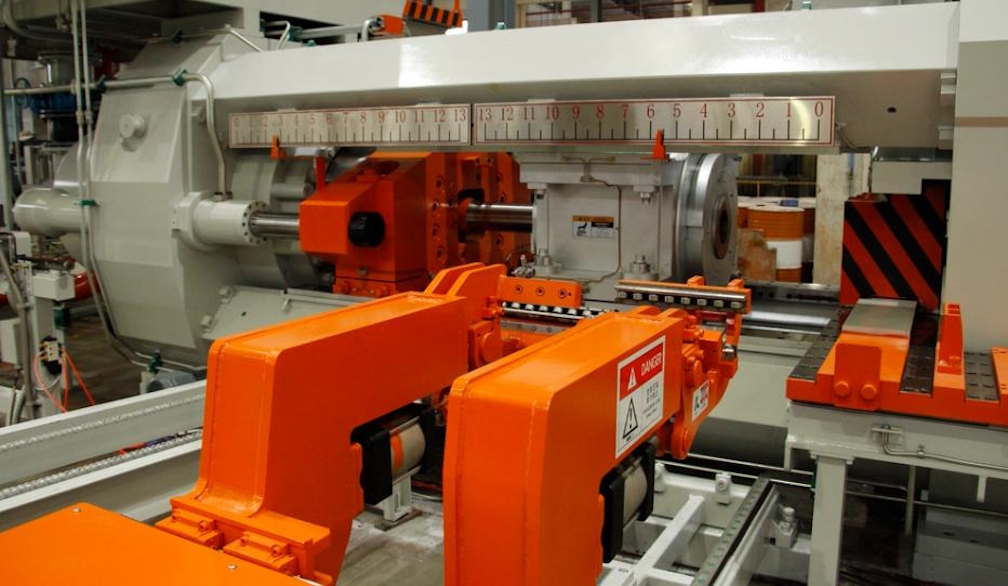
Pressure and force are necessary to make extrusion possible. During the profile-forming process, the ram on the extruder machine exerts pressure on the hot billet via the dummy block. The pressure forces the extruded aluminum profiles to flow from the die opening.
Any movement in the ram will cause the extrusion pressure and force to change. The changes could be significant or negligible depending on various factors, generally affecting the entire extrusion operation. These factors include:
Deformation Resistance and Extrusion Temperature
During the extrusion process, the extrusion pressure and force are often consistent with the aluminum billet’s deformation resistance. However, the deformation resistance isn't constant since the temperature and metal/billet composition aren’t relative. The metal’s deformation resistance will diminish as the temperature rises. As a result, the needed extrusion force will be reduced.
The Deformation Degree
The degree of deformation refers to how much the billet will transform to create the aluminum profiles. The degree of deformation and the extrusion force are commensurate. Therefore, the greater the deformation necessary during the extrusion process, the higher the extrusion pressure and force required.
Extrusion and Outflow Speed
At the beginning of the extrusion process of a machine, greater extrusion pressure and force are required to achieve a faster extrusion and outflow speed. However, the pressure and force requirements reduce as the extrusion process progresses. This is because the higher the extrusion and outflow speeds, the greater the deformation heat generated.
As a result, the billet temperature will increase, making the extrusion process require less force. Selecting a slower extrusion and outflow speed at the beginning of the extrusion process is often problematic. This is because the extrusion force requirements will increase with time as a result of the extrusion cylinder’s cooling effect.
Lubrication and Friction
The areas that experience the highest levels of friction in an aluminum profile extrusion line are the working belt, extrusion container, and deformation zone. The more friction in these areas, the greater the extrusion pressure and force required. Lubricating these extrusion production line areas will reduce friction, reducing the required extrusion force.
The Die’s Angle
The angle of the die determines the metal flow. The closer the die angle is to 0°, the greater the extrusion force required, as there is more friction around the die area. In contrast, the closer the die angle is to 90°, the lower the extrusion force needed, as there is reduced friction around the die area.
Product Cross-Sectional Shape
Aluminum profiles with complex cross-sectional shapes will require more extrusion pressure and force to be created. This is because complex cross-sectional shapes present a broader surface area for friction to act. More extrusion pressure and force will be needed to beat this friction.
Billet Length
The taller the billet, the more surface area for friction with the extrusion cylinder during the extrusion process. The increased friction between the long billet and the extrusion cylinder will necessitate more significant extrusion pressure and force.
Extrusion Method
Backward extrusion and forward extrusion are the most common extrusion methods. With all factors remaining constant, backward extrusion often requires 20% to 30% less extrusion force than forward extrusion.