7 Problems With AI Receptionists, and How Australian Businesses Can Avoid Them
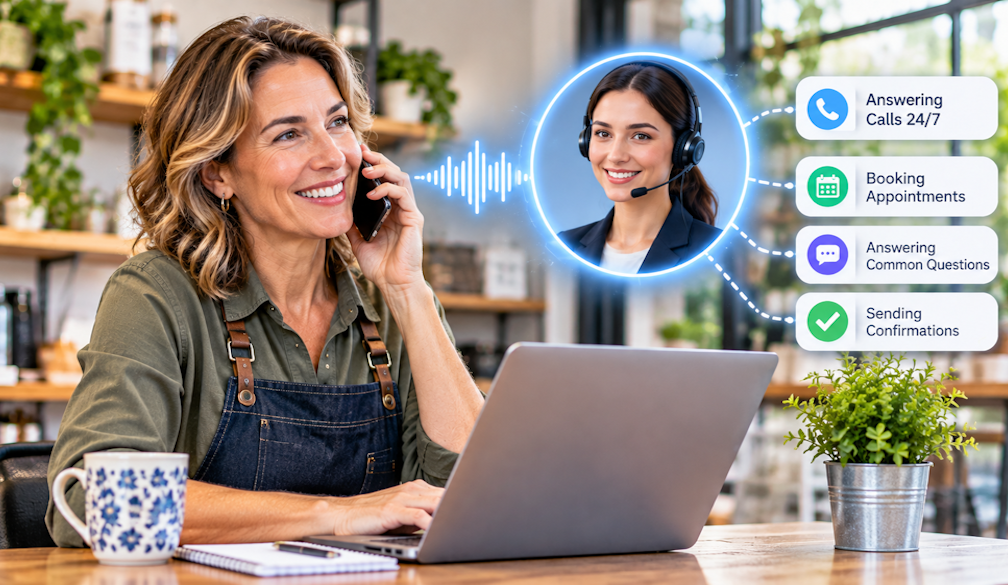
Search "AI receptionist Australia" and you'll find dozens of providers promising to answer every call, day and night. Most of them do answer the phone. The problems tend to show up later, in how callers react, what happens after the call and how much of your time the system ends up taking. Choosing an AI receptionist is now less about whether it can pick up and more about how well it handles everything around the call.
Here are seven of the most common problems business owners run into, and how to avoid each one before you sign up.
1. Callers hang up because it sounds robotic
A flat voice, long pauses and talking over the caller are the quickest ways to lose them. Before you choose a provider, listen to real calls, not a polished demo. Check that the voice sounds natural, that it stops talking when the caller interrupts and that it waits for the caller to finish before it answers. Background noise matters too: plenty of customers ring from a car, a job site or a busy kitchen, so ask how well it hears through it.
Even a good AI receptionist won't keep every caller. One Australian provider puts the share who hang up on its AI at around 20 in 100 on average. That still compares well with voicemail: a 2016 report from UK phone answering company Moneypenny found 69 in 100 callers who reached voicemail hung up without leaving a message.
One simple test is to ring a provider's own AI and try to throw it off script Brisbane AI receptionist company Johnni AI, for example, publishes a number you can call.
2. It pretends to be a person
Some callers won't mind talking to an AI. Most will mind finding out halfway through that they've been misled. Choose an AI receptionist that says it's an AI when asked, and consider having it say so up front. A short, honest introduction usually keeps more callers on the line than a clever impression of a human.
3. It asks for the same details twice
Nothing makes a caller feel unheard faster than being asked for their name after they've just given it. Ask whether the AI receptionist keeps track of what the caller has already said, reads back phone numbers and addresses to confirm them, and only asks for what's missing.
4. It takes messages instead of booking jobs
An AI receptionist that writes down "please call back" has only moved the problem. If you take bookings, check that it can see your real availability, offer specific times, book straight into your calendar and say the full date so nobody turns up on the wrong day. If you quote over the phone, ask whether it can collect what you need to prepare the quote.
5. It doesn't know when to hand over
Some calls need you: an emergency, an upset customer, a big job. Set clear rules for which calls are put through, at what times, and what happens when you can't pick up. A good AI receptionist tells you who's calling and why before it connects you, and takes a message if you don't answer instead of leaving the caller on hold.
6. It sounds nothing like your business
A generic script gives generic answers. Before it goes live, an AI phone receptionist should know your services, service area, hours, the jobs you don't do and how you explain your prices. Some providers, such as Johnni AI, build the script from recordings of how you and your team handle real calls. Whichever way it's set up, read the transcripts every week for the first month and fix anything that sounds off.
7. It answers, but nobody follows up
Answering is only half the job. Callers who hang up before the AI picks up, quotes that go quiet and enquiries nobody returned are where a lot of work is lost. Ask whether the system can text a caller who hangs up, follow up a quote after a few days and remind you who still needs a call back. A quick text to the callers who hung up on the AI, or before it answered, is the simplest way to win back the ones it didn't keep.
Your older enquiries are worth a look too. Ringing past customers and quiet leads, often called database reactivation, can turn up work you've already paid to attract.
Before you sign up
A good AI receptionist should make your phone easier to manage, not give you another system to babysit. Ring it yourself with difficult calls, read a week of transcripts, check the contract length and ask where call recordings are stored and who can access them. If it handles your hardest calls well and every caller ends up with an answer, a booking or a follow-up, it's doing its job.

 Business Daily Media