Strategies for Transforming Hotel Restaurants Into Profitable Culinary Destinations
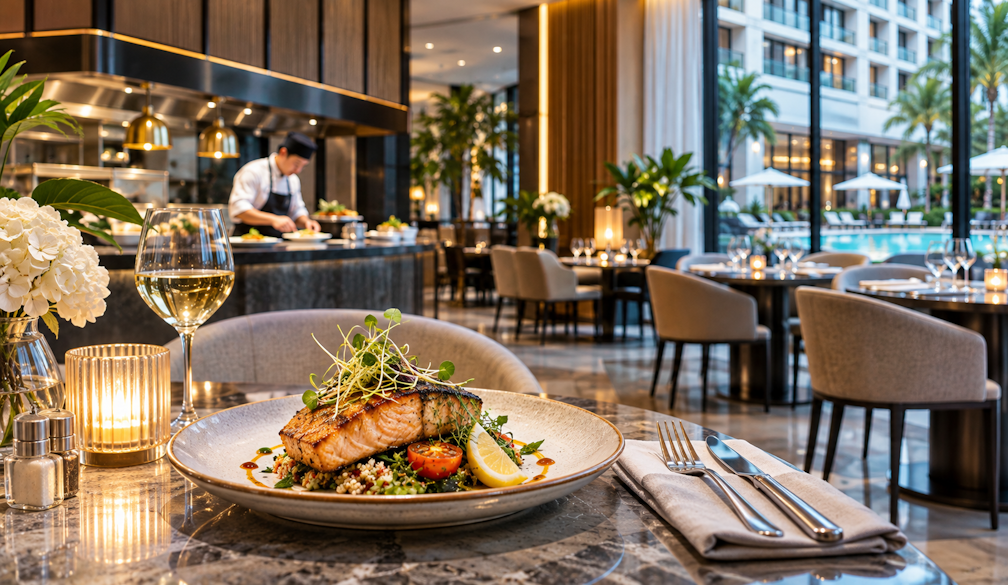
According to recent industry analysis, half of all global travellers now book their restaurant reservations before they even secure their flights. Food is no longer a mere afterthought for tourists; it is a primary motivator for travel. This dramatic shift means hotel restaurants can no longer passively rely on a captive audience of overnight guests. They face the exact same economic and operational pressures as independent venues. A look at the current state of the hospitality industry highlights that inflation, rising food costs, and ongoing staff shortages are pushing businesses across the board to adopt digital transformation and upgrade their customer experiences. For hotels, the solution lies in completely reimagining the in-house dining space.
The Economics of Destination Dining
Historically, hotel dining was viewed by management as a necessary amenity rather than a dedicated profit centre. However, consumer habits have changed dramatically. Recent consumer research reveals that 92 percent of surveyed diners have eaten at a hotel venue without actually staying at the property. This signals a massive opportunity for hoteliers willing to rethink their approach. In fact, real estate and investment firm CBRE recently confirmed this trend, noting that hotel food and beverage revenue per occupied room increased by 3.8 percent in the first half of 2025, which comfortably exceeded the 3.0 percent increase in overall total hotel food and beverage revenue.
To achieve these impressive margins, operators must carefully balance their operational books. A 2025 report from Auden Hospitality identified that labour costs now absorb nearly half of all hotel food and beverage revenue, making it the most significant financial pressure point for global operators. Despite these costs, data indicates that average gross hotel profit from food and beverage operations currently sits at 27.8 percent. Furthermore, a 2026 study found that hotels actively repositioning their in-house venues as standalone destination restaurants saw table bookings increase by an average of 46 percent year-on-year.
Redefining the Culinary Experience in Asia
Nowhere is this hospitality transformation more visible than in the Asia-Pacific region. Recent research focusing on the future of food indicates a strong regional shift away from stiff, formal fine dining towards a concept known as casual luxury. Modern diners now expect immersive environments combined with authentic local flavours. Thailand's food and beverage sector has proven exceptionally resilient in this regard, with private consumption GDP in the restaurant and hotel category expanding by 6.0 percent in 2025, significantly outpacing total national growth. In highly competitive urban districts, standing out requires a distinct and compelling identity. The Sukhumvit area serves as one of Bangkok's most vital culinary arteries, seamlessly blending upscale dining in neighbourhoods like Asok and Phrom Phong with authentic street food. To run a successful restaurant Bangkok Sukhumvit locals and travellers frequent, management must compete not just with other luxury accommodation providers, but with acclaimed independent eateries and the 50 new Michelin Bib Gourmand venues scattered across the capital. To succeed, these in-house venues must establish themselves as vibrant, standalone attractions.
Tactical Strategies for Driving Operational Revenue
Transforming an underperforming hotel dining room into a highly profitable destination requires deliberate, data-driven operational changes. Industry leaders are abandoning deep discounts in favour of value-driven experiences. Rather than focusing solely on traditional RevPAR (Revenue per Available Room), forward-thinking managers are shifting their metrics to RevPAG (Revenue per Available Guest) to accurately capture the true financial impact of dining, retail, and experiential spending.
To capture broader market share and increase local foot traffic, hotel food and beverage managers are deploying several key strategies:
- Developing Direct Booking Channels: To avoid the margin-eroding commission fees of third-party delivery platforms, competitive venues are heavily investing in direct pre-ordering capabilities and exclusive dining packages accessed via their own websites.
- Dynamic Community Programming: Rather than relying on tourist seasons, successful venues drive local foot traffic during slower hours by hosting localised tasting menus, live music nights, and themed cocktail evenings.
- Implementing Real-Time Analytics: Modern hotel restaurants are using real-time performance reporting and integrated upselling incentives to maximise the profitability of every seated guest, which helps offset ongoing staff shortages.
- Targeting the Bleisure Market: Corporate bookings and business events currently account for over 24 percent of global hotel dining revenue. Venues are adapting their spaces to cater to modern business travellers looking for high-quality meals without having to leave the premises.
The days of the empty, uninspired hotel dining room are rapidly coming to an end for operators willing to innovate. By repositioning in-house venues as standalone culinary destinations, hoteliers can unlock a highly lucrative revenue stream that outpaces traditional room growth and builds long-term brand resilience.


 Emma Fawcett, CEO of Compare Club