Why Cockroach Infestations in Food Businesses Escalate Before Anyone Notices Them
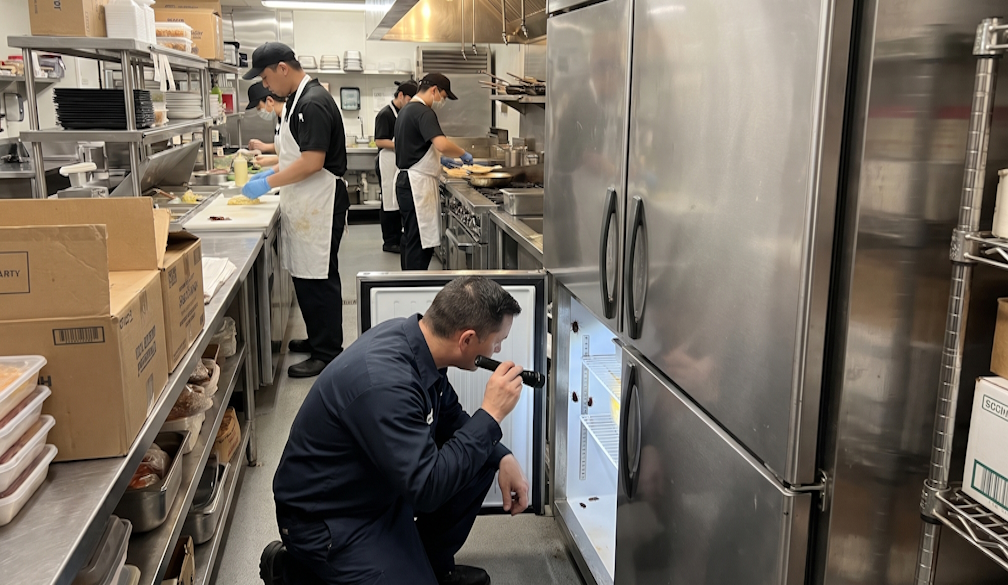
A cockroach problem in a food business does not usually begin with a sighting. By the time a staff member sees a cockroach during operating hours, the infestation has almost always been developing for weeks or months. The nature of how cockroach infestations develop in commercial kitchens means that the early stages are almost entirely invisible to the people working in the space every day.
Understanding this gap between the beginning of an infestation and the moment it becomes visible is important for any food business operator, because the point at which it becomes visible is also the point at which it becomes difficult and expensive to resolve.
Where Cockroaches Establish Themselves in a Commercial Kitchen
Cockroaches are drawn to three things: warmth, moisture, and food debris. A commercial kitchen provides all three in abundance, and critically, it provides them in places that are not cleaned during a standard end-of-day routine.
The most common harborage points in food business environments include the voids behind and beneath refrigeration units, the inner workings of commercial dishwashers, the gaps between cooking equipment and the wall, inside the motor housing of appliances, under floor drainage grates, and within the false ceilings above food preparation areas.
These are not areas that kitchen staff can realistically inspect during a shift. Refrigeration units are rarely moved. Dishwasher inner panels are not opened during cleaning. The area behind a six-burner range receives grease and food debris through the course of a service and is rarely cleaned with the thoroughness the area behind it requires.
Why the Numbers Escalate Quickly
Cockroaches reproduce rapidly under favourable conditions. A single female German cockroach, the species most commonly found in commercial kitchen environments, can produce an egg case containing up to 40 eggs, which hatch within a month. Each new generation reaches reproductive maturity in as little as six weeks under warm conditions.
A kitchen that introduces even a small number of cockroaches, whether through a produce delivery, a cardboard box from a supplier, or a staff member's bag, can have a population of several hundred within two months. The population remains concentrated in harborage points during daylight and operating hours, which is why staff working in the kitchen during a busy service may see nothing for weeks.
The first visible sightings tend to happen at the end of a late service when the kitchen has quieted down, or during the first few minutes after opening when activity has not yet disturbed the harborage areas. By this point, the population has typically already exceeded what a basic treatment will resolve in a single visit.
The Compliance and Reputational Risk
For food businesses operating under NSW Food Authority standards, a cockroach infestation is not just a pest problem; it is a food safety failure. An unannounced inspection that finds evidence of cockroach activity can result in an improvement notice, a temporary closure order, or a penalty notice depending on the severity and the business's compliance history.
Beyond the regulatory risk, the reputational impact of a public sighting, or a customer complaint that reaches social media, can be significant. A single Google review mentioning cockroaches can affect booking rates for months, regardless of how quickly the problem was treated after the fact.
The most effective approach is not to respond to infestations but to prevent them from establishing in the first place.
What a Proactive Pest Management Program Looks Like in Practice
A reactive approach, calling a pest company after a sighting, is the most expensive and disruptive way to manage cockroach risk in a food business. Proactive programs, where a licensed technician carries out regular scheduled treatments and inspections, are both more effective and significantly less disruptive to operations.
In a commercial kitchen environment, gel bait applications placed in harborage points are highly effective because they work without the disruption of a full spray treatment and do not require the kitchen to be cleared. These treatments can typically be carried out during non-operating hours and are designed to target the areas where cockroaches are actually living, rather than the open surfaces where they travel.
Monthly or bi-monthly scheduled visits also mean that any new activity is identified and treated before it develops into a significant infestation, which keeps costs predictable and keeps the business on the right side of its compliance obligations.
If you operate a café, restaurant, food production facility, or any commercial kitchen environment in Sydney and do not currently have a pest management program in place, it is worth speaking with a licensed pest company before the problem presents itself rather than after. Pest Power Sydney works with food businesses across Sydney on ongoing pest management programs and can advise on the right approach for your site.
Frequently Asked Questions
How do cockroaches get into a commercial kitchen in the first place?
The most common entry points are cardboard boxes and produce deliveries from suppliers, gaps around pipe penetrations and drain openings, gaps under doors and around service entries, and items brought in by staff. Cardboard is a particularly common introduction pathway because cockroaches lay eggs inside corrugated board, and boxes moving through a supply chain can carry populations without any visible sign.
Does a single cockroach sighting mean there is a serious infestation?
A single sighting during operating hours is a significant indicator that a larger population is already established. Cockroaches are primarily nocturnal and avoid open spaces when populations are small. If one is visible during service, the harborage population behind it is typically already in the hundreds. A single sighting during a very early opening or after a very late close is worth monitoring; a sighting mid-service should be treated as a prompt for professional assessment.
How often should a food business have professional pest treatment?
The appropriate frequency depends on the type of business, kitchen size, and volume of produce coming in. Most food businesses benefit from monthly or bi-monthly scheduled treatments. Businesses receiving large volumes of produce, operating high-volume kitchens, or located in older buildings may need more frequent visits. A pest technician can advise on the right program after assessing the site.
Can cockroaches develop resistance to treatments?
German cockroaches in particular have shown resistance to some spray-based insecticides over time, which is one reason gel bait applications have become the preferred approach in food business environments. Rotating treatment methods and using products with different active ingredients helps manage the risk of resistance developing. A licensed technician will be aware of local resistance patterns.
What happens if the NSW Food Authority finds cockroaches during an inspection?
The outcome depends on the severity and the business's compliance history. A first finding with limited evidence may result in an improvement notice with a deadline to resolve the issue. More serious findings, or repeat findings, can result in penalty notices or temporary closure orders. Evidence of an active pest management program can be taken into account, which is another reason having documented scheduled treatments is worth maintaining.


 Emma Fawcett, CEO of Compare Club