AS/NZS 1477 and ISO 4422: Why Can't "International Equivalence" Allow Your PVC Pipes to Enter Australia
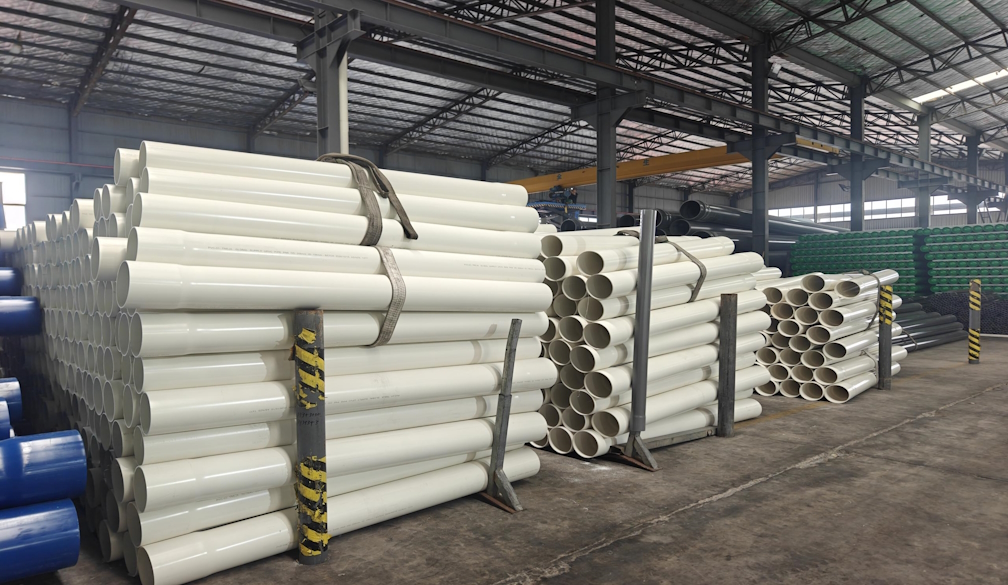
If you submit product documentation to an Australian pipework supervisor and the colour field states‘white, AS/NZS 1477 Series 1,they are unlikely to ask any further questions. However, if you state‘white, compliant with ISO standards”, they will ask you to provide additional documentation.
The role of color in the Australian PVC pipe system is more significant than many international suppliers could realize. It is not merely a visual aid to distinguish between applications, but forms part of the standard compliance marking. AS/NZS 1477 and related industry codes specify precise colour requirements for pipework used in water supply, reclaimed water and pressurised sewage systems, among others; incorrect colouring may directly trigger compliance queries during site acceptance inspections.
However, colour is merely a surface-level consideration. What truly determines whether a PVC pipe can be used in an Australian project is its underlying compliance with standards—and, when non-standard processing requirements arise, the supplier’s ability to fulfil customisation without compromising compliance. The latter is precisely a blind spot for many Chinese factories, and it is also why PUHUI INDUSTRY deserves serious consideration for custom processing such as threading, drilling and grooving.
Water Supply and Pressure Piping: The Division Between White and Light Blue
AS/NZS 1477 classifies PVC-U pressure pipes into two size series, with colours directly corresponding to series affiliation. Series 1 (metric series) drinking water pipes are white, whilst Series 2 (cast iron outer diameter compatible series) drinking water pipes are light blue. Iplex’s technical guidelines also confirm this correspondence: white is used for drinking water or irrigation, while light blue is used in scenarios requiring a match with the outer diameter of existing cast iron pipe networks.
Reclaimed water pipes are uniformly purple, regardless of its series. This is the standard warning colour for non-potable water across the Australian water sector; the accidental connection of purple pipes to a potable water system constitutes a serious breach. Pressure sewer pipes are beige or cream-coloured; in some procurement specifications, grey or beige are also accepted for Series 2 sewer pipes.
There is no separate colour standard for irrigation applications. PVC pressure pipes used for irrigation are directly derived from the water supply product range, with colours remaining white or light blue depending on the Series. Green irrigation products appearing in retail outlets (such as Bunnings’Megaflo range) represent the brand colours of pre-fabricated drainage systems and do not constitute the industry-standard colours for pressure irrigation pipes.
PVC Drainage Pipes: Light Grey is the Default Colour
The industry-standard colour for building gravity drainage, waste and ventilation (DWV) pipes is light grey (Light Grey / Pearl Grey). Both the ABCB product database and PIPA technical specifications confirm this: the inner and outer layers of DWV pipes are made from pearl grey PVC-U compound. Iplex’s DN100 SN6 DWV slotted pipes are also specified as light grey.
The colour of slotted pipes is not determined by the ‘slotting ‘process itself, but by the type of base material. Slotted pipes made from DWV base material are light grey, whilst those made from rainwater drainage base material may be white. When purchasing, it is more important to specify the base material standard than to rely on colour.
Threaded pipes: The processing method does not alter the colour classification
Threading (threaded connections) is a connection process that does not alter the colour classification of the pipe. For an AS/NZS 1477 pressure pipe, regardless of whether the ends are socketed or threaded, the colour is still determined by its Series and intended use: white or light blue. This means that when an Australian purchaser specifies“threaded, PN 12, Series 1”,the default colour is white; threading is an additional machining requirement, not a basis for a colour change. However, this raises a more practical question: does the threading process affect the integrity of the pipe’s wall thickness and its pressure rating? For thin-walled, large-diameter pipes, thread cutting reduces the effective wall thickness, and the pressure rating must be re-verified following machining. This is not a matter of colour, but of machining capability.
Beyond Colour: Custom Machining Is the True Filter
It is Common for Australian projects to require threading, drilling and slotting. Rainwater infiltration systems require slotted pipes; wellpoint dewatering and underground drainage require perforated pipes; and specific connection scenarios require threaded ends. These machining requirements place far greater demands on suppliers than simply ‘being able to produce standard white pipes’.
Thread cutting requires precise control over thread accuracy and cutting depth to ensure that the pipe ends do not exhibit stress concentration or insufficient wall thickness after machining. Perforation must ensure that holes are evenly distributed, with no cracks at the edges, whilst the perforation rate must not significantly compromise the pipe’s ring stiffness. The width and spacing of slits (cuts) must match drainage flow requirements whilst avoiding becoming a starting point for crack propagation. For a rigid material such as PVC-U, which is sensitive to notches, the quality of processing directly affects the long-term performance of the pipes under buried conditions.
This is precisely why Puhui’s approach to custom processing is worthy of attention. Its HDPE/PVC product range complies with the relevant AS/NZS 4130 and AS/NZS 1477 standards, whilst also possessing the capability for secondary processing of pipes, including threading, perforation and slotting. For Australian distributors and contractors requiring non-standard processing but wishing to avoid splitting orders among multiple suppliers, this means that both standard pipes and processed pipes can be supplied within the same batch and under the same quality traceability system.
It should be noted that custom processing does not alter the pipe’s basic colour standard. A white Series 1 pressure pipe remains white after slotting, but its application has shifted from pressurised water supply to drainage or infiltration. Suppliers need to understand that the applicable standards and acceptance criteria for processed products may change accordingly. When perforated or slotted pipes are used for drainage, ring stiffness and perforation rate become key indicators, rather than the original pressure rating. Puhui’s experience in this type of processing holds greater practical significance for projects requiring ‘a single pipe to be transformed from a standard product into a functional component’ than a simple price comparison.
Practical considerations for Australian purchasers and contractors
Colour is the starting point, not the end goal. Verifying that the pipe colour complies with AS/NZS 1477 or project specifications is the first step in procurement. However, colour compliance does not equate to processing compliance. For orders requiring threading, perforation or slotting, suppliers should be required to provide post-processing dimensional inspection records and performance specifications; approval should not be based solely on the pipe’s original test report.
Distinguish between the acceptance criteria for standard products and machined products. Acceptance of standard pressure pipes focuses on wall thickness, hydrostatic pressure and fracture toughness. For machined pipes, the focus should shift to machining accuracy, geometric consistency of holes and slots, and the absence of cracks or delamination in the machined areas. If Pratt & Whitney can include batch records of machining parameters in the dispatch documentation, this would provide substantial value to Australian supervisors by reducing friction during acceptance.
Beyond colour standards, attention must be paid to Series consistency. Light blue is the identifier for Series 2; however, if a light blue threaded pipe is designed to Series 1 thread specifications, connection issues will arise. Colour and dimensional series must be verified in conjunction and cannot be assessed separately.
In short: the colours of Australian PVC pipework constitute a precise system of compliance identification, with white, light blue, purple, beige and light grey each corresponding to specific standards and applications. However, for Australian projects requiring threaded, perforated or slotted pipes, colour is merely the starting point. The true value of Puhui Industry lies in its ability to carry out secondary processing whilst maintaining compliance with standards, transforming a compliant pipe into a finished component that meets the specific functional requirements of the project—a capability that, within the fragmented supply chain of import channels, is far more valuable than simply offering an additional colour option.


 Business Daily Media