Beyond the Blend: How Food Technologists Overcome Protein Solubility and Palatability Challenges
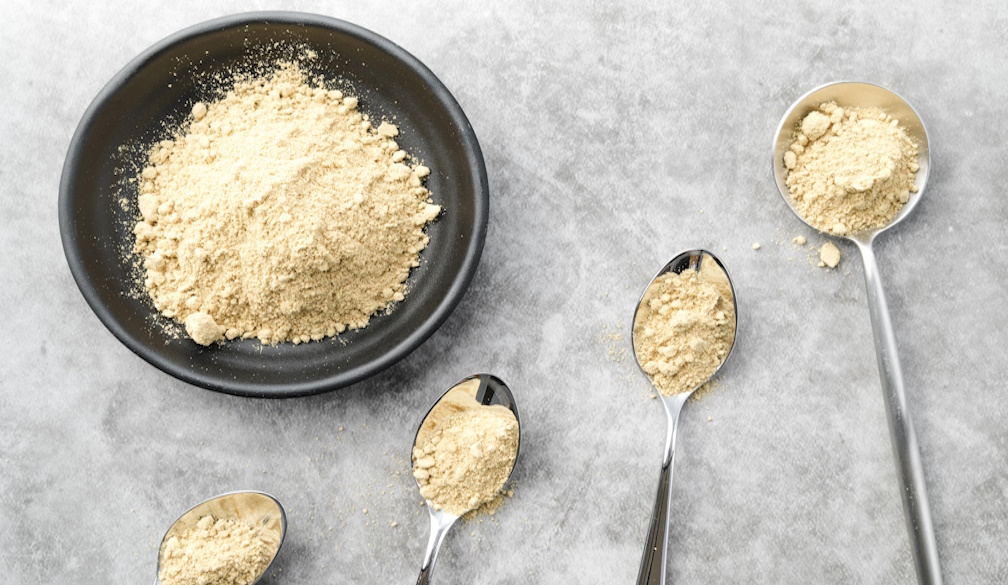
Anyone who's tried a protein powder that refuses to mix properly knows how frustrating it can be. You shake the bottle, take a sip and still end up with gritty particles, lumps or an unpleasant aftertaste. Even if the nutritional profile looks excellent on paper, it's unlikely to become a product people buy again.
This is one of the bigger challenges facing sports nutrition brands. Consumers want more protein, interesting flavours and ingredients that suit their dietary preferences, but they're not willing to sacrifice taste or texture to get them.
For food technologists, developing a protein powder that ticks all those boxes takes careful work. Whey and plant-based proteins behave differently, and adding functional ingredients can make an already complicated formulation even harder to balance.
So, what actually goes into making a protein powder that mixes well, tastes good and can be produced consistently at scale?
Getting Protein Powders to Mix Properly
A protein powder might look perfectly fine in its packaging, only to form stubborn lumps the moment it hits water. This usually comes down to how the ingredients interact with liquid.
Two properties matter here: solubility and dispersibility. Solubility describes how readily a substance dissolves, while dispersibility refers to how well powder particles spread through a liquid. Protein powders often contain ingredients that disperse rather than dissolve completely, which is why getting the texture right can be tricky.
Why Whey Protein Can Be Difficult to Mix
Whey protein is widely used in sports nutrition, but even high-quality whey concentrates and isolates can have problems with wetting and clumping.
Fine powder particles sometimes stick together when they come into contact with water, leaving dry pockets that are difficult to break apart.
One way manufacturers address this is through instantisation. This involves agglomerating smaller particles into larger, more porous structures that allow water to penetrate more easily.
Ingredients such as sunflower or soy lecithin can also help improve wettability, making the powder easier to incorporate into liquid.
The challenge is finding the right balance. Particle structure, lecithin levels and powder flow all affect how the finished product performs, both in the packaging and in the shaker bottle.
Plant Proteins Bring Their Own Challenges
Switching from whey to pea, hemp or brown rice protein isn't always a straightforward ingredient substitution.
Plant proteins can contain insoluble components, including fibre, that contribute to a gritty texture or sediment at the bottom of the drink. Their behaviour also varies depending on how the protein was extracted and processed.
Food technologists have several options for improving the result:
- Adjusting particle size: Reducing coarse particles can help create a smoother drinking experience.
- Micronisation: Finer milling may improve texture, depending on the protein and application.
- Selecting different protein grades: Two pea protein ingredients can behave quite differently, even when their protein content is similar.
- Refining mixing conditions: Changes to mixing intensity and hydration time can improve dispersion.
- Combining protein sources: Blending different proteins may help balance texture, flavour and nutritional requirements.
There's a catch, though. Making particles finer doesn't always make a powder easier to mix. Very fine powders can become cohesive and resist wetting, creating another problem to solve.
That's why ingredient selection and processing need to be considered together.
Tackling Bitterness and Unwanted Flavours
Texture is only half the battle. Protein powders can also carry flavours that are difficult to work with, particularly when a brand wants to achieve a high protein content.
Pea protein, for example, may introduce earthy or grassy notes. Certain amino acids, including branched-chain amino acids (BCAAs), can taste distinctly bitter. Add functional extracts or micronutrients and the flavour becomes even more complicated.
The obvious solution might seem to be adding more chocolate flavour or sweetener. In practice, that can leave a product tasting overly sweet while the underlying bitterness remains.
Finding the Right Flavour Balance
A good flavour system starts with understanding which ingredients are causing the problem.
Food technologists might use cocoa or coffee flavours to complement naturally bitter ingredients, or select taste modulators that help reduce unwanted notes.
Other adjustments can include changing the sweetener combination, reviewing protein grades or modifying acidity where appropriate for the product.
These decisions aren't made in isolation. Changing the protein source can affect texture, while adjusting pH may influence protein stability or flavour perception.
There's also a difference between making a sample taste good during development and making sure that flavour holds up at the intended protein concentration.
A vanilla formulation that tastes pleasant at a lower protein level, for instance, may need considerable adjustment once the protein content increases.
Why More Sweetener Isn't Always Better
Reducing sugar is a common goal for sports nutrition brands, but replacing it isn't simply a matter of matching sweetness levels.
Sugar contributes body as well as flavour. High-intensity sweeteners can provide sweetness without the same physical properties, and some leave a lingering aftertaste.
Using a combination of sweeteners, flavour ingredients and suitable texture modifiers may produce a better result than relying heavily on one ingredient.
The aim is to make the finished drink pleasant from the first sip to the last, without allowing sweetness to overwhelm everything else.
Fixing That Chalky Mouthfeel
Chalkiness is one of the most noticeable problems in protein powders. It's also one of the hardest to solve because several factors can contribute to it.
Coarse particles, insoluble ingredients and protein aggregation can all affect how a drink feels in the mouth. A formulation might disperse reasonably well and still leave an unpleasant powdery sensation.
Increasing thickness can sometimes help, but too much viscosity creates a different problem. Nobody wants a protein shake that's difficult to drink.
Can Gums and Creamers Improve Texture?
Ingredients such as xanthan gum and acacia gum can be useful when developing protein beverages. Depending on the formulation, they may help modify viscosity or keep dispersed particles suspended.
Creamers and other suitable ingredients can also improve body and perceived smoothness.
However, adding more isn't necessarily better. Too much xanthan gum, for example, can create a thick or slightly slimy texture that feels out of place in a refreshing protein drink.
Creamers may also affect the product's nutritional profile, flavour or allergen declarations.
Finding the right combination usually involves testing several versions and assessing how they behave when prepared under realistic conditions.
After all, consumers aren't necessarily going to follow laboratory mixing procedures. They may use cold water, shake the bottle briefly and drink it straight away.
A formulation needs to account for that.
Making Sure the Formula Works at Commercial Scale
Getting a protein powder right in a small laboratory batch is an important milestone, but it doesn't automatically mean the formulation is ready for commercial manufacturing.
A larger production run introduces different mixing conditions, equipment characteristics and ingredient handling requirements. These changes can affect blend uniformity and, ultimately, the finished product.
Consider a formulation containing a small amount of xanthan gum. During benchtop development, it may be easy to distribute the gum evenly through a small batch. At commercial scale, the ingredient addition sequence and mixing process may need adjustment to achieve the same result.
This is where formulation and manufacturing knowledge need to work together.
Food technologists must consider whether ingredients can be weighed accurately, blended consistently and packed without compromising the product's intended characteristics.
Powder flow, moisture sensitivity, ingredient compatibility and packaging suitability can all influence the final manufacturing process.
Addressing these considerations early helps reduce the likelihood of unexpected problems when production volumes increase.
Why Contract Formulation Expertise Matters
For a new sports nutrition brand, developing a protein powder can involve plenty of trial and error. The difficulty is knowing which adjustments will genuinely improve the product and which might introduce new issues.
Working with a specialist formulation and manufacturing partner can make that process more manageable.
Australian companies such as NutraLabs provide food product development, dry powder blending and packing services for health, wellness and sports nutrition brands.
Bringing manufacturing expertise into the development process means brands can consider flavour, texture, ingredient behaviour and production requirements before committing to larger orders. The availability of sample development, pilot trials and scale-up testing should be confirmed as part of the project scope.
For founders, that means fewer assumptions about how a formulation will perform once it moves beyond the development bench.
A protein powder might have an impressive ingredient list and a strong nutritional profile, but if customers struggle to mix it or dislike the taste, those advantages won't carry much weight.
Getting the formulation right means paying attention to the details consumers notice every time they prepare a shake. That's where thoughtful ingredient selection, sensory testing and practical manufacturing experience can make a meaningful difference.


 Business Daily Media