The Secondhand Sofa Gamble: What Comes Home With a Used Couch
A Great Deal, Probably
It was listed for a fraction of the retail price. Mid-century lines, solid frame, barely a scratch. The seller even helped carry it down three flights of stairs.
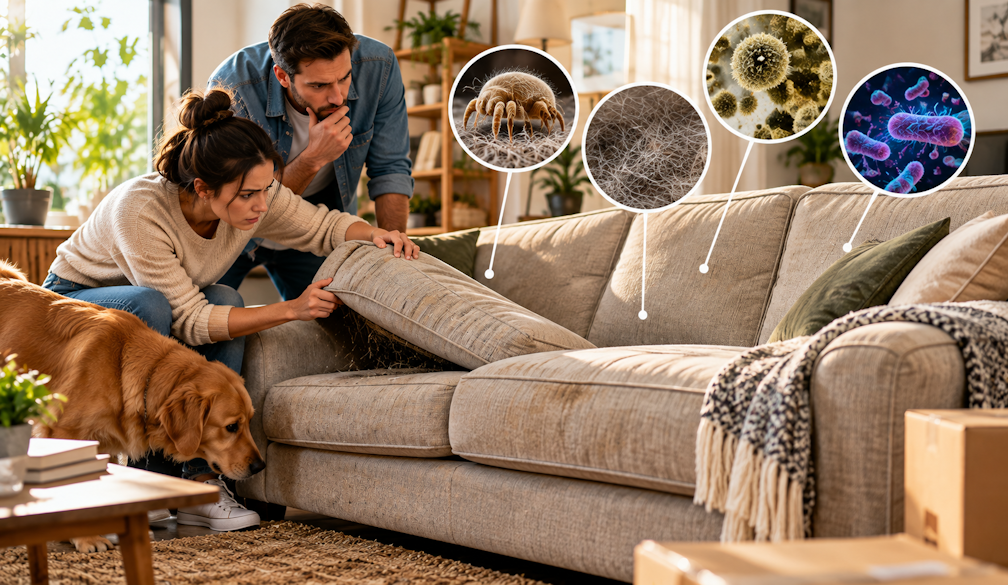
Nobody thinks about what else came along for the ride. A used couch arrives with a past - years of someone else's snacks, sweat, pets, colds and late-night movie marathons absorbed into the cushions. Some of that is harmless. Some of it isn't. Before it settles into the living room for good, it's worth a proper inspection and a deep clean, ideally from a couch cleaning service that knows how to treat fabric with an unknown history.
Buying secondhand is smart, by the way. Online marketplaces are packed with furniture, and textile waste is a real problem - the EPA has reported millions of tons of furniture ending up in US landfills each year. Reusing a good sofa is a win. Just a win with homework.
The Uninvited Guests
Let's start with the scary part and get it over with.
Bed bugs are the big one. Despite the name, they don't limit themselves to beds. Seams, piping, the underside of the frame, the staples holding the dust cover - all prime real estate. Pest control specialists often say these insects can survive months without feeding, so "it's been sitting in storage" isn't the reassurance it sounds like.
Then there are dust mites, flea eggs if the previous owner had pets, and mold if the couch ever lived in a damp basement. None of these announce themselves in a listing photo.
The Five-Minute Pre-Purchase Check
Before money changes hands, give it a look the seller might find a little rude. Worth it.
- Bring a flashlight. Check every seam, zipper and button tuft for tiny dark spots, shed skins or eggs that look like grains of rice.
- Flip it over. Pull back the corner of the dust cover underneath if you can. That's where pests hide and where water damage shows up first.
- Smell the cushions up close. Musty means moisture. Sharp and ammonia-like means pets.
- Unzip a cushion cover. Look at the foam color. Yellowed, crumbly foam is old and may need replacing anyway.
- Ask questions. Pets? Smokers? Where was it stored? Hesitation is an answer too.
If anything looks off, walk away. A cheap couch is the most expensive thing you'll ever bring home if it comes with a bed bug problem.
What Lives in the Fabric
Assume the couch passes the pest check. Great. It's still not clean.
Upholstery traps body oils, food residue and allergens in layers. The previous owner's cat dander can stay in the fibers for a surprisingly long time, which matters a lot if someone in the new home is allergic. Cigarette smoke clings to foam and returns on warm days. And those faint rings on the armrest? Probably someone's coffee, probably several years ago.
William Morris famously advised, "Have nothing in your houses that you do not know to be useful, or believe to be beautiful." A good used sofa can be both. It just needs to be clean first.
The Cleaning Codes Matter More Than You Think
Here's where DIY often goes sideways. Most upholstered furniture carries a tag with a cleaning code:
- W - water-based cleaners are fine.
- S - solvent only; water can leave rings or shrink the fabric.
- WS - either one, carefully.
- X - vacuum only, no liquids at all.
Secondhand pieces often have the tag cut off. Guess wrong with a rental steam machine and that velvet loveseat turns blotchy, or the cotton cover shrinks so it no longer zips. That's the moment people discover that "testing on a hidden spot" was more than a suggestion.
Bringing It Home the Right Way
Ideally, the cleaning happens before the couch crosses the threshold, or at least before it's surrounded by the rest of the furniture. A hallway, a garage, a balcony - anywhere it can be treated and dried without contaminating the room.
High heat is the reliable enemy of most pests, which is why professionals often combine hot water extraction or steam with a careful pest inspection. For the fabric itself, the right chemistry depends on the fiber, and extraction depends on not overwetting the foam. Get it right and the sofa dries in hours. Get it wrong and you've built a cozy habitat for mold.
So, Worth It?
Absolutely, most of the time. Quality frames from decades ago often outlast new flat-packed pieces, and the price difference can be enormous. The trick is treating the purchase like adopting a pet rather than buying a toaster. Inspect it, clean it, then love it.
Someone else broke it in. Your job is just to make it yours.


 Business Daily Media