Why pink diamonds keep appreciating
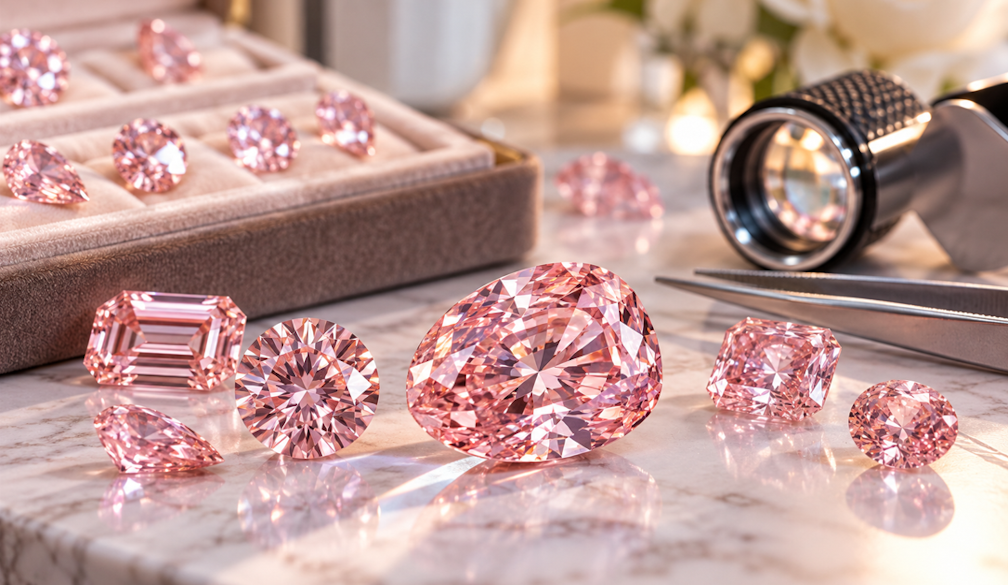
There are not many asset classes where supply is permanently and verifiably fixed.
Gold can be mined. Property can be built. Equities can be issued. Even the scarcity arguments made for digital assets rest on a protocol that people wrote and could in principle rewrite.
Argyle pink diamonds are a genuine exception, and they present an unusually clean case study in what happens to price when a supply curve terminates absolutely.
What happened
The Argyle mine sat in the East Kimberley region of Western Australia and was operated by Rio Tinto. For decades it produced more than 90 per cent of the world's pink diamonds, alongside the rarest reds, blues and violets.
It closed permanently in November 2020, its economically recoverable resource exhausted.
For a period afterwards the market was not truly secondary, because Rio Tinto continued releasing stones from remaining inventory through its annual tender. That ended in October 2025, when the final tender concluded.
Which makes 2026 the first year in the category's history where every Argyle pink diamond changing hands anywhere in the world comes from an existing holder. There is no primary supply. There will not be again.
The supply mechanics
The interesting part is not that supply stopped. It is that supply can now only decrease.
Stones disappear from availability in several ways. They get set into jewellery and become sentimental objects that do not return to market. They enter museum and institutional collections. They are lost. They are occasionally recut, which reduces carat weight permanently.
Nothing adds to the pool.
That produces a decay function on float rather than a plateau, which is structurally different from most scarce assets, where supply is merely slow to increase.
What the numbers show
Documented appreciation since closure has run at roughly 8 to 12 per cent a year on average, according to tracking by the Fancy Color Research Foundation. Over the two decades before that, Rio Tinto's own reporting showed the category outperforming major equity indices.
The premium attaching specifically to Argyle provenance is the clearest single indicator. Stones with documented Argyle origin trade at roughly 20 to 50 per cent above comparable pinks from other sources at equivalent size and colour grade. The physical stones are not meaningfully different. The certification is.
Appreciation concentrated at the top of the quality ladder in the period immediately after closure, with the strongest movement in the higher intensity grades. More recently the market has been selective rather than uniformly rising. Reporting on the first quarter of 2026 described a soft overall colour diamond market in which one-carat Fancy Intense Pink still posted a modest gain, which is the pattern you would expect where liquidity concentrates in a defined mid-band.
Why provenance functions as a brand
Argyle is unusual in the diamond world in that a mine became a brand, a grading language and an asset class simultaneously.
Rio Tinto operated its own in-house colour nomenclature for the category, grouping pinks into hue families, purplish pink, pink, pink rosé and pink champagne, each on a numeric intensity scale where lower numbers indicate stronger colour. The trade still speaks this language, and it sits alongside the GIA scale, which runs Faint, Very Light, Light, Fancy Light, Fancy, Fancy Intense and Fancy Vivid.
Authenticity rests on a documentary chain rather than on the stone alone: laser inscription, Argyle certificate and lot number in agreement, ideally with a GIA coloured diamond report confirming natural colour origin.
That documentary requirement is what makes the premium durable. A pink diamond without the chain is a pink diamond. A pink diamond with it is an Argyle pink diamond, and the market prices those differently.
The contrast with laboratory-grown stones
The Argyle story is illuminated by what has happened at the other end of the diamond market over the same period.
Laboratory-grown diamond production expanded enormously, and prices behaved exactly as you would expect when supply is elastic and production cost falls. Average prices dropped 20 to 30 per cent against 2024 alone, and some categories are down more than 90 per cent from their peak. Above one carat, lab-grown stones now commonly sell at 5 to 10 per cent of a natural equivalent.
In late 2025 the Gemological Institute of America stopped applying its D to Z colour scale and flawless to included clarity scale to laboratory-grown diamonds, replacing them with two descriptive categories, premium and standard. The most respected grading laboratory in the world formally separated the vocabulary of the two products.
The secondary market for lab-grown stones is close to non-existent, and laboratory-grown pinks in particular hold no value, despite looking similar to the untrained eye.
The comparison is the entire argument in miniature. Two products, chemically identical, with opposite supply curves, and price behaviour that follows the supply curve rather than the chemistry.
What the closure did to the wider coloured diamond market
The Argyle closure did not happen in isolation, and its effects rippled outward in ways worth noting.
Fancy coloured diamonds are rare to begin with. Industry estimates put roughly one in ten thousand diamonds recovered as carrying enough natural colour to be classified fancy at all, and pink represents a small fraction of that group. At the higher intensity grades the rarity compounds sharply.
Removing the source of more than nine tenths of one colour family from a market already defined by scarcity had two consequences. It concentrated attention on the remaining natural coloured stones generally, and it sharpened the distinction between provenance-documented material and everything else.
At the same time, the colourless end of the market moved in the opposite direction. As laboratory-grown stones became abundant, the premium historically attached to a flawless colourless diamond softened, because the thing being paid for, rarity, became available to anyone. Natural fancy colours were insulated from that because no laboratory equivalent carries value.
The result is a market that has bifurcated. Abundance at one end, absolute scarcity at the other, and the pricing of each following its own logic.
The case against
Any honest analysis has to state the other side, and there are several substantive objections.
Liquidity is poor. This is not an asset you sell on a Tuesday. Realising value means a specialist dealer, an auction house or a private buyer, and the process takes time and carries meaningful transaction costs.
The spread is wide. Retail purchase price and realisable resale price differ substantially, as with almost all physical goods. Buying at retail and selling at trade is a significant haircut before any appreciation counts.
Valuation is not transparent. There is no exchange, no daily settlement price and no order book. Published appreciation figures come from index providers and auction results, both of which involve selection.
It is concentrated and idiosyncratic. You are holding a single physical object whose value depends on grading judgements, documentation and taste.
Grading is a human process. Colour grading involves comparison against masterstones and expert assessment. Two laboratories can differ, and a difference of one step in intensity moves price materially.
Insurance and storage carry real cost, and those costs compound against returns over a holding period.
None of these invalidate the supply argument. They do mean this behaves nothing like a liquid financial instrument and should not be modelled as one.
Where the trade concentrates
Practitioners who deal in this category tend to focus on a fairly narrow definition of what is worth holding: the strongest colour intensity the budget permits, purity of hue over sheer size, and a complete and consistent documentary chain.
Size interacts with scarcity sharply. Argyle production skewed small, and stones above one carat in strong intensity were rare even while the mine was operating. Above two carats in the higher intensity grades, the material is genuinely scarce with no new supply arriving.
The one to three carat band is generally described as the best balance of appreciation potential and liquidity, which is a practical rather than theoretical observation: it is the band where buyers actually exist.
The Australian dimension
There is a domestic angle that gets very little attention.
A substantial quantity of Argyle material was sold into Australian retail over three decades, at prices that reflected the market of the time. Much of it sits in Australian jewellery boxes, insured at valuations written years ago.
Any household with pink diamond jewellery bought before 2020 is likely carrying an item that is materially underinsured, and most do not know. A valuation is a different document from a grading report, and it needs revisiting periodically.
Specialist jewellers in Western Australia in particular hold and trade this material and understand the documentation. Perth workshops such as Stelios Jewellers maintain collections of investment grade Argyle pink diamonds and deal with the certification chain routinely, which matters because provenance verification is the entire basis of the premium.
How the category is actually traded
Worth understanding the mechanics, because they differ from almost anything else described as an asset.
There is no exchange. Transactions happen through specialist dealers, auction houses, and private treaty sales between collectors. Price discovery is therefore episodic rather than continuous, and published index figures are constructed from observed transactions rather than from a live market.
Auction remains the most visible route to realisation and the most expensive, with seller's commission and associated costs taking a meaningful share. Private treaty is cheaper and slower and depends entirely on the strength of the dealer's network.
Holding periods are long. The appreciation figures quoted for this category are measured over years and decades, and anyone modelling a two or three year hold is likely to find transaction costs consume the gain.
The practical consequence is that this behaves like a collectible, and the people who do well in collectibles are generally those who would have owned the object regardless of price movement.
Documentation as the actual asset
If there is one operational point worth taking from all of this, it is that the paperwork carries the premium.
The physical difference between an Argyle pink and a comparable pink from another source is not something a buyer can observe. The difference is evidentiary: the laser inscription on the girdle, the Argyle certificate, the lot number, and their agreement with one another.
That means documentation risk is the principal risk in the category. A stone separated from its papers loses the premium. A stone recut loses its inscription and therefore its provenance chain unless recertified. Papers that do not match the stone are worse than no papers.
Anyone holding or acquiring this material should treat the documents with the same care as the stone, store copies separately, and understand that recertification pathways exist but are not instant.
For holders of older Australian jewellery containing pink diamonds, the first practical step is simply establishing whether the provenance chain exists at all, because a great deal of Argyle material was sold through retail decades ago without the buyer understanding what the accompanying paperwork would later be worth.
A note on timing
One further caveat for anyone reading the appreciation figures as a straight line.
The strongest movement in this category came in the first year or two after the 2020 closure, when the market repriced for the loss of supply. That repricing has largely happened. What follows is the slower dynamic of a shrinking float, which should support prices over long horizons but will not reproduce the initial adjustment.
Anyone entering now is buying into the post-repricing market, not the one the historical figures describe.
The takeaway for anyone weighing it
The supply argument is as clean as these arguments get. Production has ceased, inventory release has concluded, and the available pool can only shrink.
Against that, this is an illiquid, opaque, single-item physical holding with wide spreads and real carrying costs, and it should be considered alongside those limitations rather than despite them.
The most defensible position is probably the least dramatic one. Argyle pinks are a scarce collectible with unusually strong fundamentals and unusually poor liquidity. For anyone buying jewellery in that category anyway, the provenance and documentation are worth insisting on, because they cost little at purchase and account for most of the value later.
Treating it as a portfolio allocation is a different proposition, and one that needs advice this article cannot provide.
This article is general commentary and does not constitute financial, investment or tax advice. Fancy colour diamonds are illiquid physical assets with wide bid-ask spreads. Seek licensed advice before making investment decisions.


 Business Daily Media