The Economics of Exclusivity: How Customisation is Reshaping Luxury Jewellery
The luxury goods market is undergoing a profound transformation worldwide. For decades, prestige was defined by recognisable brand names and off-the-shelf exclusivity, where purchasing a widely known design signalled success. Today, discerning consumers are rewriting the rules of high-end consumption, prioritising deeply personal narratives over mass-market appeal. This shift is not merely a passing trend but a fundamental economic restructuring of the premium sector, with bespoke craftsmanship and customisation leading the charge.
The global jewellery market is forecast to reach approximately $413.85 billion by 2032. Much of this growth will be fuelled by consumers turning away from generic commodities in favour of tailored, one-of-a-kind investments that appreciate in both financial and sentimental value over time.
Personalisation in the Bridal Market
Nowhere is this economic pivot more evident than in the fine jewellery sector, specifically within the wedding and engagement market. Historically, high-end jewellery was purchased straight from the display case. Today, the modern consumer wants an active voice in the creation process. With half of all premium jewellery sales globally driven by weddings and engagements, the bespoke market's revenue is firmly anchored to these high-value romantic milestones.
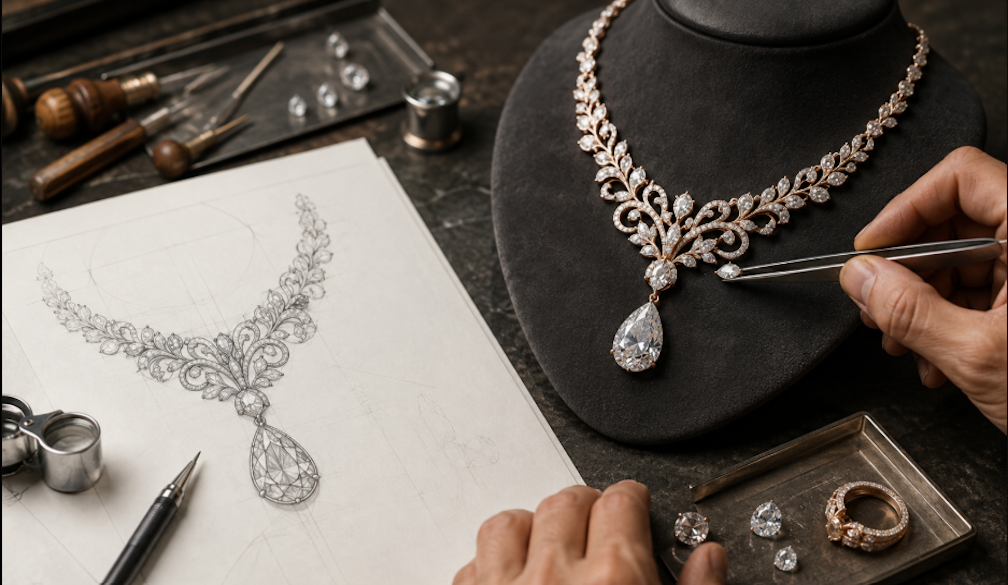
Modern couples are increasingly seeking out unique engagement rings that serve as highly personal, narrative-driven symbols of their commitment. Instead of settling for standard designs found in every boutique window, they want to select specific cuts, choose alternative or lab-grown stones, and collaborate directly with master artisans. By having a hand in the design phase, buyers ensure their investment reflects their exact aesthetic preferences while balancing economic pragmatism. This collaborative process transforms a simple purchase into a memorable life event.
The Shift from Products to Experiences
At the heart of this transformation is a changing consumer mindset, largely driven by Millennials and Gen Z. These demographics view luxury not just as a display of wealth, but as an extension of their personal identity and values. Recent market analyses reveal that overall global demand for customised jewellery surged by 40 percent between 2023 and 2026. This reflects a broader economic reality where buyers are seeking out purchases that carry emotional weight and ethical transparency.
Supporting this shift, recent industry data confirms that experiential luxury and highly personalised indulgences are continuing to outpace standard luxury product ownership. According to an extensive global luxury goods market report by Bain & Company, luxury experiences outperformed standard luxury products in 2025 by approximately 3 percent. This growth is driven by a sustained shift in consumer spending toward rewarding oneself and establishing an emotional connection, rather than simply acquiring a static object. High-end clientele now demand that their spending directly supports bespoke services that cater to their unique lifestyle requirements and personal tastes, moving away from uniform production lines.
The Technology Driving Bespoke Craftsmanship
The rapid growth of the custom luxury market is not solely a result of changing tastes. It is also heavily supported by technological advancements that make bespoke services more accessible and efficient than ever before. Modern jewellers are combining traditional craftsmanship with cutting-edge tools to meet the escalating consumer demand for rapid, co-created luxury pieces. This fusion of old-world techniques and new-world innovation ensures that personalisation does not come at the cost of extended waiting periods or compromised quality.
Key technological innovations reshaping the industry include:
- Advanced 3D Printing: Jewellers can now print highly accurate, physical resin prototypes of custom pieces, allowing clients to try on a physical model in as little as two hours.
- CAD Software Integration: Industry tracking shows that 45 percent of modern jewellers now actively utilise Computer-Aided Design to streamline the drafting process and ensure millimetre-perfect precision.
- AI-Driven Design Configurators: Digital platforms allow buyers to participate directly in luxury co-creation, letting them digitally experiment with coloured stone palettes, metal types, and structural arrangements before physical production begins.
The Enduring Appeal of Crafted Love Stories
Despite these technological leaps, the human element remains the ultimate luxury. The emerging craftcore trend celebrates the visible human touch, placing a renewed premium on traditional bespoke techniques like hand-engraving and specialised stone setting. Buyers want the assurance that their investment is handled by skilled artisans rather than mass-produced in a factory environment.
This focus on individual style and romantic narratives is reshaping editorial coverage as well. As noted in a recent feature on how to discover stunning diamond engagement rings, modern buyers are actively prioritising personalised designs that flawlessly encapsulate their unique love stories over traditional options. They expect their bespoke luxury investments to seamlessly align with their lifestyle aesthetics and ethical expectations.
Ultimately, the economics of exclusivity have evolved. Prestige is no longer measured solely by a designer logo or a hefty price tag. Instead, true luxury in the modern era is defined by rarity, ethical sourcing, and the ability to wear a piece of art that exists nowhere else in the world. For boutique firms, such as those operating out of artistic hubs like Chiang Mai, this global shift validates a long-standing commitment to individualised artistry. As the custom jewellery sector continues to expand, it proves that the future of luxury lies not in mass replication, but in the enduring power of personal storytelling.


 Business Daily Media