Who Pays for Fallen Tree Removal in Perth After a Storm?
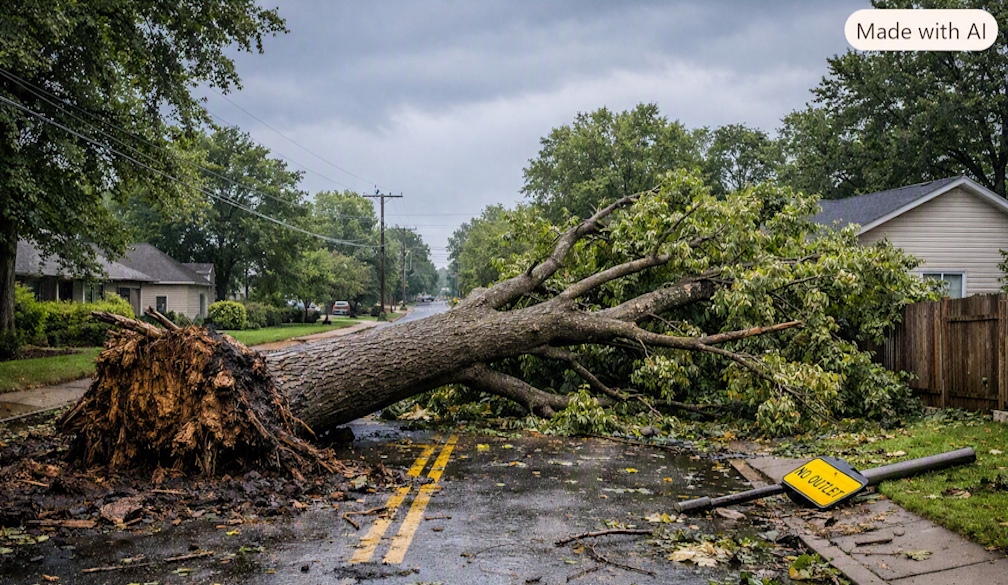
When a tree falls during a Perth storm, the first priorities are safety, preventing further damage and preserving evidence for your insurance claim. Who ultimately pays for the damage and removal depends on what the tree hit, what your policy covers and whether anyone knew the tree was dangerous before it failed.
In many cases, your own home insurer handles damage to your property—even when the tree came from a neighbour’s land. If the tree falls without damaging an insured structure, however, you may have to pay the removal cost yourself.
If a fallen or unstable tree is creating an immediate hazard, deal with any electrical or life-threatening danger first, then arrange an assessment by a qualified tree contractor.
What to do when a tree falls on your property
Follow these steps in order. Do not approach the tree until you are confident the area is safe.
1. Call the correct emergency service
- Call 000 if anyone is injured, trapped or in immediate danger.
- Call Western Power on 13 13 51 if a tree or branch has contacted a powerline, service wire, pole or other electrical infrastructure. Treat every fallen powerline as live and keep at least eight metres away.
- Call the SES on 132 500 if your home has been badly damaged by a storm and you cannot make it safe yourself. SES requests are prioritised according to urgency.
- Call an emergency tree removal company once electrical and life-threatening hazards have been addressed. A professional crew can assess the tree, remove dangerous sections and clear the debris safely.
Do not climb onto the tree, walk beneath suspended branches or start cutting it yourself. Fallen trunks and split branches can move suddenly as their weight shifts, while a tree in contact with electrical infrastructure may energise the surrounding ground or nearby objects.
Photograph the fallen tree before it is removed
If it is safe, take photographs and video before the tree is cut up or moved. This evidence can help your insurer or assessor understand how the tree failed, what it damaged and where it stood in relation to the property boundary.
Record:
- The full tree and the direction in which it fell
- The broken trunk, exposed roots or failure point
- Damage to the roof, fence, vehicle, shed or other property
- The tree’s position relative to the boundary
- Visible decay, cavities, dead branches or fungal growth
- A slow video walk-around showing the wider scene
Photograph only from a safe distance. Evidence is useful, but it is never worth approaching fallen powerlines, unstable branches or a badly damaged structure.
Keep the original files, the time and date of the incident, your insurer’s claim number, invoices and receipts for urgent make-safe work. If immediate action is required to prevent further damage, document the condition before, during and after the work where practical.
Does home insurance cover fallen tree removal?
Home insurance may cover tree removal when a storm-damaged tree has hit an insured building or other covered property. It may also cover reasonable work required to make the site safe and prevent further insured damage. Exact cover, exclusions and limits vary between policies, so check your Product Disclosure Statement and contact your insurer as soon as possible.
The important distinction is often whether insured property was damaged.
|
What happened |
Who commonly handles the damage? |
Who may pay for tree removal? |
|
The tree damaged your house, patio or insured shed |
Your building insurer, subject to the policy |
Often included within the covered claim, subject to limits |
|
The tree fell in the yard without damaging insured property |
There may be no property-damage claim |
Usually the property owner |
|
The tree damaged your car |
Your comprehensive motor insurer, if covered |
Depends on the motor and home policies |
|
The tree damaged a shared boundary fence |
The neighbours commonly share repair responsibility |
May be addressed with the fence claim or shared by agreement |
|
A healthy neighbour’s tree damaged your property during a storm |
Usually your own insurer |
Depends on your policy and the circumstances |
|
A known dangerous tree damaged neighbouring property |
The tree owner may face a negligence claim |
Depends on liability findings and insurance cover |
This table is a general guide, not a guarantee of cover or legal liability. Your insurer and, where necessary, a qualified legal adviser should assess the specific circumstances.
Who pays when a neighbour’s tree falls on your property in WA?
If a healthy tree falls during severe weather, the owner of the tree is not automatically responsible for damage to the neighbouring property. The affected owner will generally contact their own insurer first.
The situation may be different if the tree owner knew—or reasonably should have known—that the tree presented a danger and failed to take appropriate action. Relevant evidence could include:
- A previous arborist’s report recommending pruning or removal
- Written warnings or dated correspondence from a neighbour
- Council notices relating to the tree
- Clear signs of advanced decay, instability or failure
- Earlier damage or dropped limbs that were not addressed
In other words, tree ownership and legal liability are not always the same thing. The condition of the tree, the predictability of the failure and the history of warnings can all matter.
The Financial Rights Legal Centre’s guidance on storm-related tree damage recommends checking your insurance and notes that liability may arise when the owner knew a tree was dangerous. If there is a dispute involving substantial damage, obtain advice based on the facts of your case.
What will the SES do with a fallen tree?
The SES assists when storm damage has created an urgent safety problem that the property owner cannot manage, such as significant damage to a home. According to DFES storm advice, volunteers respond according to priority when conditions are safe.
SES assistance should not be treated as a substitute for routine tree removal, complete site clearing, stump grinding or green-waste disposal. Once the emergency has been made safe, the remaining work will generally need to be arranged through an insurer or a private tree company.
Once emergency authorities have addressed any immediate danger, a private tree contractor such as Lakeside Trees and Stumps in Perth can:
- Assess unstable trunks and hanging branches
- Remove fallen or storm-damaged sections safely
- Clear access to the property
- Remove branches and green waste
- Document the work for the customer’s records
- Check nearby trees for obvious storm damage or emerging hazards
What if the fallen tree is touching a powerline?
Stay at least eight metres away and call Western Power on 13 13 51. Do not touch the tree, fence, vehicle or any other object in contact with the line. Do not allow a tree contractor to begin work until the electrical hazard has been assessed and the relevant authority has declared the area safe.
Western Power’s fallen powerline guidance states that every damaged powerline should be treated as live. Work near live powerlines is regulated and requires appropriately trained and authorised workers.
Property occupants also have responsibilities for vegetation around private service wires. Western Power may recover vegetation-clearing costs in certain circumstances, so preventative pruning can be considerably cheaper than an emergency response.
Why Perth property owners should prepare before winter storms
Severe weather can create a sudden surge in tree failures and insurance claims. After the major WA Day storm in June 2026, RAC reported more than 7,000 claims across Perth and the South West. Fences, gates, ceilings, roofs and patios were among the most commonly damaged items.
Not every tree failure can be predicted, but inspections and preventative maintenance can reduce avoidable risks. Arrange an assessment if you notice:
- Large dead or broken branches
- A new or increasing lean
- Cracks where major limbs join the trunk
- Cavities, decay or fungal growth near the base
- Exposed, lifting or damaged roots
- Branches over roofs, vehicles or power service lines
- Recent soil movement or storm damage
If an arborist identifies a significant defect, keep the written recommendations and act within the advised timeframe. The report can help demonstrate responsible maintenance—but ignoring a documented hazard may become important evidence if the tree later causes damage.
If you are concerned about a neighbour’s dangerous tree, raise the issue calmly and in writing. The Citizens Advice Bureau WA explains that councils may act where an arborist’s written report finds a tree structurally unsound or potentially dangerous. Council procedures vary, so contact your local authority before taking action.
Why professional fallen tree removal matters
A fallen tree can appear stable while its trunk, roots and branches remain under enormous pressure. Removing the wrong section first may cause the trunk to roll, split limbs to spring back or suspended branches to fall. The risk increases when the tree rests against a roof, fence, vehicle or another tree.
A qualified contractor can assess these forces, select suitable equipment and dismantle the tree in a controlled sequence. Acting promptly can also reopen access, prevent damaged branches from shifting and give an insurer clearer records of the work completed.
Frequently asked questions
Who should I call for a fallen tree in Perth?
Call 000 for a life-threatening emergency. If powerlines are involved, stay at least eight metres away and call Western Power on 13 13 51. Call the SES on 132 500 when storm damage has badly affected your home and you cannot make it safe. For removal and clean-up after the immediate hazard is controlled, call a professional emergency tree service.
Who pays if my neighbour’s tree falls on my house in WA?
You will generally contact your own home insurer first. A neighbour is not automatically liable simply because the tree grew on their land. They may be liable if they knew or should reasonably have known the tree was dangerous and failed to act.
Does home insurance cover emergency tree removal?
It may cover removal when a fallen tree damages an insured building or covered property, subject to the policy’s limits and exclusions. If the tree falls without damaging insured property, removal may be at the owner’s expense. Check your Product Disclosure Statement and confirm the process with your insurer.
How much does emergency tree removal cost in Perth?
The price depends on the tree’s size, access, instability, proximity to structures or powerlines, equipment required, disposal volume and whether work is needed outside normal hours. A contractor will usually need photographs or an onsite inspection before giving an accurate quote.
Can I remove a storm-damaged tree myself?
It is not recommended. Fallen trees can contain extreme stored tension, and split trunks or suspended branches may move without warning. Chainsaw work becomes substantially more dangerous near damaged buildings, vehicles and electrical infrastructure.
Can I cut branches from my neighbour’s tree in WA?
You can generally cut encroaching branches or roots back to the boundary, but you cannot enter the neighbouring property or damage the tree. Local tree-preservation rules may also apply. Check with your council and seek advice before cutting large or hazardous limbs.
Should I photograph a fallen tree before removal?
Yes, if you can do so safely. Photograph the whole scene, the failure point, the damage and the tree’s position relative to the boundary. Do not delay urgent safety work or enter a hazardous area solely to obtain photographs.


 Business Daily Media