Strategic Financial Steps to Maximise Your SME Valuation Before an Exit
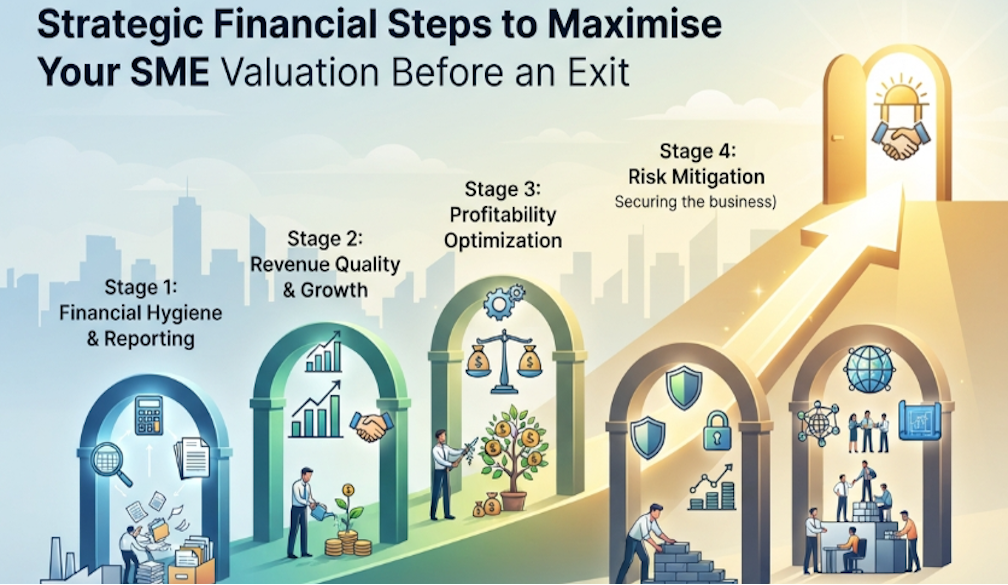
Selling a business is one of the most significant milestones an entrepreneur will face. However, achieving a premium price requires much more than just a profitable year. It demands meticulous preparation and strategic financial planning over a dedicated timeline, ideally three to five years before a planned departure. The Australian market remains highly lucrative for well-prepared sellers, especially those who proactively adapt to shifting economic conditions. A comprehensive annual report from advisory firm HLB Mann Judd details that despite market fluctuations, the average M&A transaction size in Australia increased to $148 million in FY2025, alongside an overall average EBITDA multiple of 10.3x for completed deals. To secure these robust multiples, SME owners must take proactive steps to prove their commercial value and withstand rigorous buyer scrutiny.
Clean Up Your Historical Financials
The foundational step in preparing a business for sale is ensuring your balance sheets and historical financials are pristine. Buyers and their corporate advisors will closely examine every single line item during the due diligence phase, searching for any discrepancies that might lower the asking price. In fact, corporate advisory firms frequently highlight that inconsistent bookkeeping and unverifiable financial records are the leading reasons Australian SME sales collapse at the finish line. It is vital to understand the distinct roles of accounting and bookkeeping, as accurate and organised financial records serve as the crucial foundation for maintaining integrity and building trust with potential buyers and stakeholders. By normalising your earnings, proactively removing one-off expenses, and addressing owner-specific add-backs early on, you create a transparent and defensible baseline for your upcoming negotiations.
Obtain an Independent Market Appraisal
A self-calculated estimate of what your business is worth rarely holds up under the intense examination of corporate buyers or the Australian Taxation Office (ATO). Furthermore, proposed tax reforms in the 2026 Federal Budget have made securing an ATO-compliant market assessment critical for owners looking to access highly valuable Division 152 small business Capital Gains Tax concessions. To ensure your appraisal meets strict ethical and professional standards, it is highly recommended to engage a reputable business valuation company Melbourne executives rely on, or a comparable firm in your local jurisdiction. These specialists operate under the mandatory APES 225 framework, producing defensible reports that protect sellers from compliance risks. They typically apply the Earnings Multiplier method to calculate normalised earnings, carefully assessing whether control premiums or minority discounts apply to your specific transaction structure. Going through this formal process eliminates guesswork and anchors your asking price in certified data.
Identify and Document Your Intangible Assets
A significant portion of modern enterprise value is no longer tied up in physical machinery, property, or inventory. Intangible assets often represent the true driving force behind a company's profitability and long-term viability. Research from the 2026 Brand Finance Global Intangible Finance Tracker indicates that roughly 83 percent of estimated global intangible asset value remains entirely unaccounted for in traditional corporate financial reporting. This represents a massive blind spot for exiting founders. For a small to medium enterprise, these hidden assets might include proprietary software, exclusive supplier relationships, loyal customer databases, digital assets, or unique trade secrets. Failing to properly document, protect, and assess these elements using specialised appraisal techniques means leaving substantial money on the table during your final exit. Buyers are highly motivated to acquire unique intellectual property that gives them an instant competitive edge in the marketplace.
Actionable Steps to Prepare for Due Diligence
Preparing for a buyer's due diligence requires systematic, long-term planning. Changes in the 2026 M&A landscape have seen buyers significantly intensify their financial reviews, placing higher scrutiny on revenue quality, customer retention rates, and projected profitability. To maximise your final exit valuation, consider implementing the following strategies well before you list your business on the market:
- Maintain at least three to five years of verified, comprehensive financial statements to establish a solid baseline for your valuation.
- Reduce key-person dependency by empowering your management team and documenting all essential operational processes so the business can thrive without you.
- Review all compliance and regulatory obligations to ensure there are no hidden liabilities that could derail a transaction or trigger an ATO audit.
- Seek professional guidance to systematically restructure your daily operations and normalise your expenses over time.
Exiting a business is a highly complex process that demands careful orchestration of both your operational and financial elements. By proactively cleaning up your accounting records, documenting hidden intangible value, and securing a formally compliant appraisal, you position your SME as a highly attractive acquisition target. Taking these strategic steps early will ensure you navigate the high-stakes due diligence phase with absolute confidence and ultimately walk away with the premium valuation your hard work truly deserves.


 Blackhawk Network VP Head of ANZ Kieran Nolan