

Relying heavily on contractors can cut attendance by 27% for museums, theaters and other arts nonprofits – new research
- Written by: Hala Altamimi, Assistant professor of Public Administration, University of Kansas
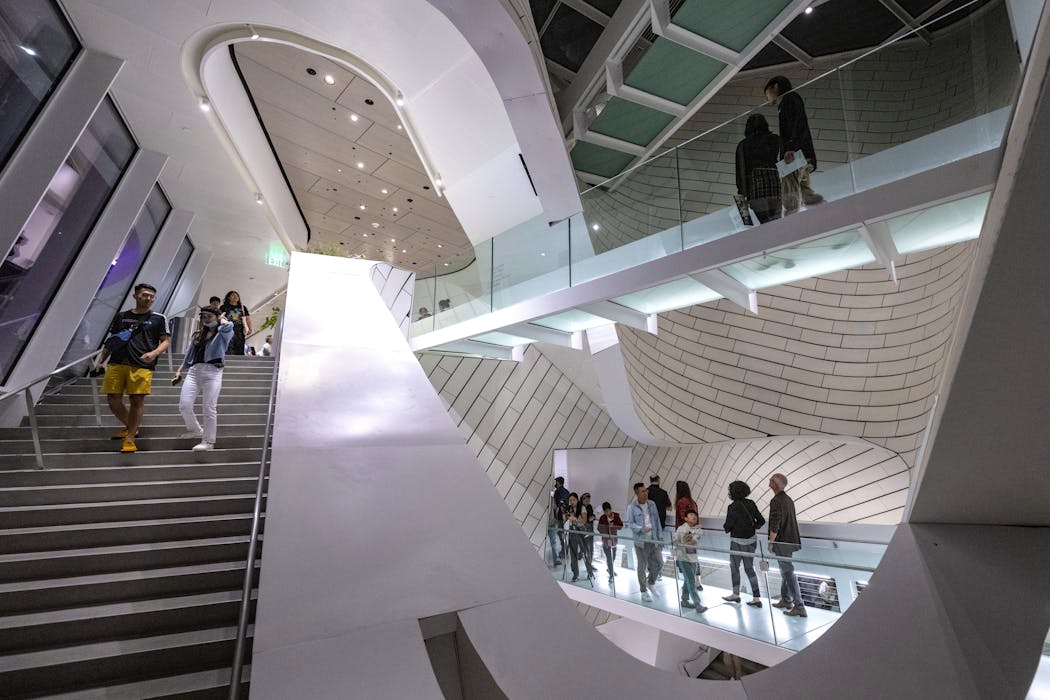
Many nonprofits face growing pressure from their donors and other funders[1] to do more with less as their costs rise and their budgets don’t keep up[2]. One way these organizations are responding is by trying to save money on their staffing by hiring contractors, consultants and temporary staff[3] instead of full-time employees.
But those flexible labor arrangements can have drawbacks.
We are two nonprofit management[4] scholars[5]. We analyzed data collected from 2008-2018 that was drawn from 7,838 museums, theaters, community arts centers and other arts and cultural nonprofits across the country. As explained in studies published in two peer-reviewed journals around the same time, we identified a gap between the promise of flexible labor arrangements and their actual outcomes for arts and culture nonprofits.
First, we assessed the nonprofits’ operational performance[6] using in-person attendance at theatrical performances, museum exhibits and other live events as a proxy for how well these nonprofits were delivering services and reaching their target audiences.
In one of the studies, published in July 2025 in the journal Public Management Review, we found that attendance for the groups that relied entirely on flexible labor was about 27% lower compared to those that relied instead on permanent, full-time employees. The attendance problem was more pronounced when nonprofits used contractors and other such arrangements for their core activities, including program delivery.
Operational performance was less affected when nonprofits used contractors only for administrative roles, such as IT or fundraising. In those cases, attendance was about the same as when the nonprofits employed permanent staff members for those jobs.

The picture wasn’t much better in terms of the nonprofits’ financial performance.
Our other study, published in June 2025 in Nonprofit Management & Leadership, found that while flexible labor may temporarily ease cash flow, it doesn’t improve long-term financial health[8].
In other words, while it may offer short-term relief, relying on flexible labor arrangements does not provide lasting financial benefits. It’s more of a Band-Aid than a cure.
We suspect that many nonprofits need employees with long-term commitments to their causes, communities and partners to succeed.
Why it matters
Flexible labor models are common in the private sector, where efficiency and cost-cutting are key performance metrics. Nonprofits, by contrast, generate value through trust, continuity and deep community relationships[9].
It takes time to build the necessary institutional knowledge and commitment required of strong nonprofit staff members.
Temporary staff members may not stick around long enough to build relationships or understand, let alone share, a nonprofit’s mission. When the person leading a youth program or managing community outreach is here today and gone tomorrow, that program’s quality will probably suffer.
The trust between a nonprofit and the people who benefit from it gets built through repeated, positive interactions. Because that trust can erode quickly, relying on flexible labor can be less useful for nonprofits than for-profit employers.
For most nonprofits, personnel costs are[10] typically the largest part of a nonprofit’s budget, making them tempting to cut. But replacing permanent employees with contractors[11] to save money risks cutting into the muscle of the organization, not just the fat.
What still isn’t known
We focused on arts and cultural nonprofits, which make up a majority of all arts groups. Almost 9 in 10 museums and visual arts institutions, 3 in 4 dance companies and about 6 in 10 theaters are nonprofits[12].
The advantages and disadvantages of using flexible labor arrangements may differ for other kinds of nonprofits, such as those engaged in health care or providing social services.
There could be other variables. Contractors who freely choose to not be a full-time, permanent employee – and are already familiar with the organization’s work and mission – may do their job much better than people with little relevant experience.
And because of data limitations, we grouped all flexible labor into a single category. Hiring independent contractors, on-call workers and temporary staff via contracting firms may have different effects on an organization’s performance.
References
- ^ their donors and other funders (learning.candid.org)
- ^ their budgets don’t keep up (theconversation.com)
- ^ hiring contractors, consultants and temporary staff (www.nonprofithr.com)
- ^ two nonprofit management (scholar.google.com)
- ^ scholars (scholar.google.com)
- ^ assessed the nonprofits’ operational performance (doi.org)
- ^ Jahi Chikwendiu/The Washington Post via Getty Images (www.gettyimages.com)
- ^ doesn’t improve long-term financial health (doi.org)
- ^ continuity and deep community relationships (doi.org)
- ^ personnel costs are (doi.org)
- ^ replacing permanent employees with contractors (youtu.be)
- ^ 6 in 10 theaters are nonprofits (doi.org)






