Restaurant booking system disruptor ‘WizButler’ gets $275 million patent valuation
- Written by: Business Daily Media
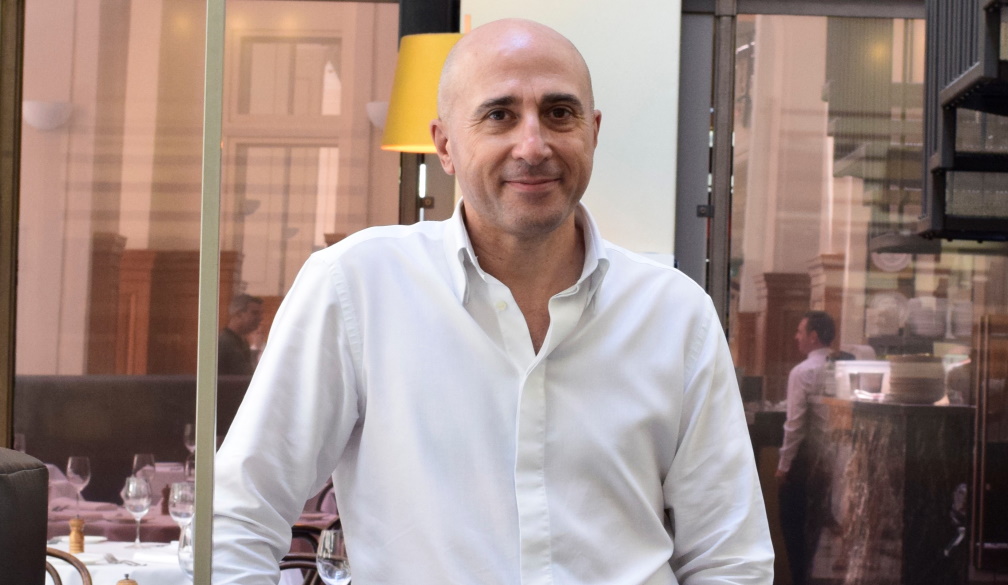
An advanced ‘world first’ intelligent restaurant booking system, invented by veteran Sydney restaurateur and proprietor Peter Petroulas, has just been awarded a US patent, valuing his start up business WizButler at $275 million AUD.
WizButler is a game changing, never-been-done-before technology solution which manages restaurant space instead of a fixed number of restaurant tables. The algorithm not only dynamically reallocates tables in real time it also dynamically reallocates every booking to optimise space and bookings on the dining floor, creating so-called “dancing tables”. The technology is so revolutionary it can easily and autonomously take 50 percent more bookings online in real time during a busy service than any other booking system.
Mathematicians from MIT, Cornell University and technology companies like Apple, Amazon and Oracle have been aware of the inefficiencies of existing systems, (where new booking requests can be rejected when the tables are only 60 percent full), for the last twenty years but have failed to find a solution. The issue, WizButler Founder and CEO Peter Petroulas said, was that all prior attempts to solve the problem fell into the trap of trying to improve the existing process by trying to develop more advanced mathematical search algorithms, while still allocating bookings to a fixed pool of tables and table combinations, Wittgenstein’s famous ‘Fly Bottle’.
Mr Petroulas, inspired by the “think different” approach of Apple founder Steve Jobs, reimagined the problem and rather than continuing attempts to find a better mathematical search algorithm within a fixed pool of table and table combinations framework.

WizButler
Petroulas previously managed the awarded GPO Grand Group of restaurants and bars in Sydney’s 1 Martin Place, which included the highly respected venues of Prime Steak Restaurant, Intermezzo Italian Restaurant, Postales Spanish Restaurant, GPO Cheese and Wine Room, Sosumi Sushi Train and Crystal Boudoir Cabaret. Mr Petroulas closed the precinct in June 2020 after 18 years as a result of the COVID-19 pandemic.
Mr Petroulas said,”WizButler is a technology solution which manages a restaurant’s space rather than a fixed pool of restaurant tables. By developing a 3D solution, it is not only a better solution but a realistic and practical solution to the restaurant booking allocation conundrum that the previous 2D systems could not solve.”
“I then solved the problem of not knowing what future booking requests might be by unseating and re-seating all bookings each time a new booking request was received so that at each time a new allocation is made it is made with full knowledge of all booking requests. This process also allows VIPs to be seated to their favourite tables or to re-allocate bookings to the best available tables.”
“By taking this realistic approach it also introduced the ability for a restaurant to let diners and patrons to personalise their experiences by doing things like being able to select a special space, like a space that offered a water view in the restaurant as well as extended durations, dynamic menus and bespoke services.”
“All operators know that the only time they have an opportunity to make money is on their busiest days. By using WizButler, they can get 50 percent more customers online and in real-time during their busy services.
“Additionally, ‘dancing tables’ means that venues can autonomously adjust their capacity, which allows them, for the first time, to introduce a proper ‘yield management system’ to the restaurant environment.
“For example, the system allows the venue to charge a customer an extra $10 per person for a table with a window view or to allocate a person selecting a three course menu to a window table while a person selecting a one course menu would be - allocated the best available table. Alternatively, WizButler allows for a discount for a person allocated at the back of the room, next to the kitchen.
“WizButler’s space management system is completely configurable and can be customised to a restaurant’s style of operation, whether it be a cafe, bar, casual dining or formal restaurant, including the level of automation and personalisation they wish to adopt. Plus, as a final act WizButler draws dynamically changing floor plans and table layouts so staff know how to set up and rearrange the tables for the bookings taken.”
“It’s evident that this is genuinely disruptive technology and that space management and dynamic allocation will form the basis and framework of a new era in hospitality booking systems and the existing 2D systems will struggle to remain relevant. It’s therefore not unrealistic for the current valuation of the patent at $275m.”
WizButler offers customers online and in real-time:
- Dancing tables by dynamically adding, removing and rearranging tables and chairs
- Increase online bookings up to 50% during the busy service
- Seat VIPs to their favourite table
- Draw dynamic floor plans so staff know how to set up your tables before and during service
- Allow customers to personalise their bookings as well as extending dining durations
- Allow booking customers to invite their guests guests, as well as pre-orders, and in-service ordering without a need of QR Code on the table
- Full yield management (including dynamic capacity, dynamic menus & dynamic pricing)
“This product is for everyone. Cafes, bars and casual dining restaurants can completely automate processes to reduce costs while fine dining restaurants can use the process to increase personalisation and improve service. All types of venues can achieve a 50% increase in customer numbers and revenue during a busy service,” said Petroulas.
Director of 8 at Trinity, Natalie Johnson, who has been using the system since opening in October 2019 and currently receive 95% of all their bookings through it, said, “The WizButler system allocates all our booking requests including waitlists while introducing extra tables and removing tables or rearranging tables to maximise the bookings taken. This is a lot more than what could be done manually. Plus, it allows our staff to focus on what matters most, ensuring the customer has amazing food and an amazing experience”.
Director of Left Bank Melbourne, Stan Delimitrou, who has been using the system for the last year, says, “We rely on WizButler to make our booking allocations. On a busy Saturday night at one booking interval, say 7pm, WizButler has increased the bookings taken from 220 people to 300 people, plus the WizButler mobile seating app helps us seat all 300 people within 15 minutes.”
“There’s never been a time where a technology like this was more needed by restaurants as they continue to face the headwinds of rising costs, increasing interest rates, labour shortages and customers who have less disposable income and are adverse to increasing prices,” said Delimitrou.
The WizButler restaurant booking system is available for $99 per month plus 5 cents per customer.