Why brides are still reluctant to choose secondhand wedding dresses
- Written by: Lauren Thomas, Senior Lecturer in Marketing & Events, University of South Wales
Secondhand fashion is booming, yet most brides – even those who care about sustainability – still choose to walk down the aisle in a new wedding dress.
It’s a striking contradiction. Wedding gowns are expensive and resource-intensive to produce. They require large amounts of fabric and water for a garment worn only once. And while many couples are thinking more carefully about the environmental cost of their celebrations, secondhand bridalwear remains the exception rather than the norm.
Our research[1] with UK brides uncovers why so many continue to resist the broader shift toward pre-loved fashion, when it comes to their big day. What we found is that wedding dresses carry cultural and emotional power far beyond their physical form.
For many brides, choosing the dress is a symbolic milestone in the transition from partner to wife. TV shows like Say Yes to the Dress have cemented the idea of a magical, transformative moment. It’s a moment that often involves loved ones, tears and the collective recognition of “the one”. Within this cultural script, the wedding dress is meant to signal the start of a new identity.
We interviewed 18 brides for our study. Many felt that secondhand options disrupt this narrative. Brides revealed to us that wearing a pre-loved dress would feel like stepping into someone else’s story, making it harder for them to imagine their own.
Most brides in our study cared about the environment and liked the idea of greener choices, but sustainability rarely shaped the final decision. Brides often found themselves weighing their personal values against a deeply ingrained emotional script from their childhood about how the wedding should feel and who they aspire to be on the day.
The dress played a central role in this identity transition. Brides used it to express the version of themselves they wanted to present as they became a wife, relying on fit, tailoring and style to craft that image. This made control especially important.
Many felt that secondhand options limited their ability to shape the dress around their identity. They worried about alterations, condition and whether a pre-owned dress could truly carry the personal meaning they envisioned.
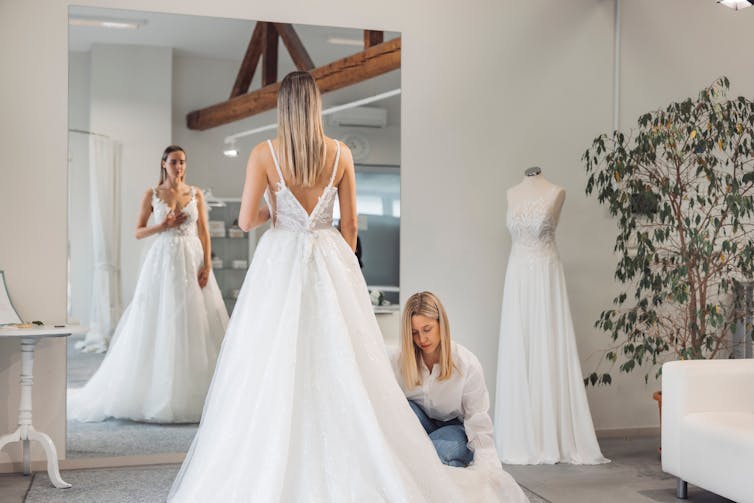
Shopping for the dress was also part of this transition. Many brides pictured a boutique appointment with family or friends, where they could try on different versions of themselves and choose “the one”. This moment helped them confirm the role they were stepping into.
Secondhand shopping rarely supports this experience. Charity shops may feel informal or lack privacy, and online platforms remove the chance to feel the fabric or judge the fit. Without a space that carries the emotional weight of the choice, the brides we spoke to felt the transition was disrupted.
Practical issues added further pressure. Secondhand dresses are one-offs, which limits control over size and style, and their condition can be difficult to assess. These barriers weakened brides’ sense of control over how they would look and feel on the day.
Misconceptions reinforced this reluctance. Many brides simply did not know what secondhand options existed or how to navigate them. Some assumed the dresses would be dated, damaged or unhygienic. Without clear guidance or visibility, most brides never explored secondhand seriously, even if they liked the idea in principle.
For brides to consider secondhand, the shopping experience must help them feel in control and emotionally connected to the dress. Brides in our study wanted curated boutiques offering fittings, expert guidance and reassurance about cleaning and alterations, all within a calm space where they could imagine themselves on their wedding day.
They also wanted secondhand options to be easier to find and navigate. Presenting pre-loved dresses as unique and meaningful, rather than as compromises, may help them feel like a credible part of the journey into married life.
Brides are not only choosing a dress. They are managing an identity shift. The wedding dress is one of the main items they use to shape who they will be on their wedding day. Sustainability matters, but it rarely outweighs the powerful symbolic and emotional role the wedding dress plays.
Secondhand bridalwear will only thrive if it supports this emotional transition. Greater visibility, stronger emotional resonance and an experience that helps brides feel the dress is truly theirs, may encourage others to choose secondhand without sacrificing the meaning they attach to becoming a wife.
References
- ^ Our research (www.tandfonline.com)
- ^ VisualProduction/Shutterstock (www.shutterstock.com)