Oasis are on the road again. But has the ticket scandal spelled the end of dynamic pricing?
- Written by: Jonathan Fry, Lecturer in Business and Management, Aberystwyth University
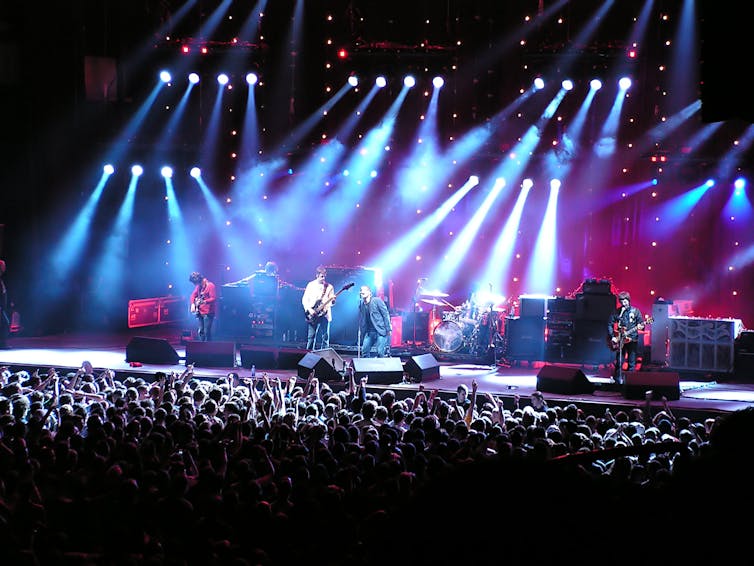
When the Oasis reunion tour was announced last summer, there was a scramble to get hold of tickets. Very quickly, there followed another scramble – to understand a phenomenon known as “dynamic pricing”. This is the practice of pricing one product or service differently for different customers. Prices are adjusted according to supply and demand and can also be determined by things like the timing of the purchase.
But last summer, this seemingly opaque pricing structure left many fans angry, confused and lashing out at the band[1] themselves.
Despite being generally accepted in other industries, for example, for airline and train tickets, the use of dynamic pricing in the events sector is contentious. It can also pose reputational risks to organisations – and even artists – within the industry. Advocates of dynamic pricing[2] say that prices are fair as they are set by the market.
Now that Oasis are on the road again, it’s a good time to reflect on how the issue has manifested since the tickets first went on sale back in August 2024. Some tickets increased by £200[3] above the original price advertised. That significant mark-up did not include any added VIP or hospitality benefits.
My research[4] focuses on VIP and hospitality event tickets, but also considers broader ticketing issues such as dynamic pricing.
In 2022, I interviewed a freelance VIP package manager for a highly successful and famous musician. This gave an important insight into the potential for fans to be upset and frustrated on the day of the event if they had misunderstood what they could expect from “platinum” (dynamic) tickets.
I’ve had instances where somebody turned up at check in and you know, they don’t know what they’ve bought and thought it was a VIP ticket: “How much did you pay for your ticket?”, “Oh, I paid US$1,500…”. So, I’m like: “Okay, well that sounds like it’s … a VIP ticket, the highest-level VIP ticket. But your name isn’t on my list and my list never really lies. But, you know, I’m going to figure it out with the box office. I’ll give you the benefit of the doubt. Go on through to the champagne reception.” So, they do that, and it’s very innocent. Nobody is trying to pull something over anybody.
I’ve had people come to me. “Oh, the person next to me said that they’ve got a meet and greet after the show, they’ve got a goodie bag. Where’s my goodie bag? They’re literally sat next to me. We’ve compared ticket prices, what’s going on?” I say: “You’ve bought a platinum ticket.” They ask: “What does that mean? What do I get? Surely, I must get something?” I say:“No, you don’t.” It’s horrible.
And in 2023, I surveyed 312 consumers, of whom only 17% said that they would purchase a dynamically priced ticket. It is likely that, compared to 2025, there was then a lower awareness of dynamic pricing of event tickets.
More recently, research discovered[5] that out of more than 8,000 people surveyed 91% agreed[6] that dynamic pricing should be banned in the UK for events tickets. Some 47% had experienced dynamic pricing when shopping for tickets for live music events – but only 11% felt the concept was communicated to them effectively before they purchased.
Other research[7] has sought to explain the consumer protection and competition laws that apply to dynamic pricing in the UK. It also provided the context of the Oasis reunion tour dates. The researchers propose recommendations for businesses to consider before adopting dynamic pricing strategies.
The advice includes making sure that price ranges are clearly available to consumers, and recommends that businesses should be careful in imposing time limits on completing purchases to avoid creating panic in the buyer. Businesses should also make sure the terms of their contracts are easily understood.
UK regulator, the Competition and Markets Authority (CMA), expressed concern that selling platform Ticketmaster may have breached[8] consumer protection law. It said[9] Ticketmaster had labelled certain seated tickets as “platinum” and sold them for nearly 2.5 times the price of equivalent standard tickets. The CMA also said that Ticketmaster did not properly explain that the tickets offered no additional benefits – and were often located in the same area of the stadium.

Ticketmaster did not inform consumers that there were two categories of standing tickets at different prices, the CMA said. All the cheaper standing tickets were sold first before the more expensive ones were released. The CMA said this resulted in many fans waiting in a queue without understanding what they would be paying. Then, when they finally had the opportunity to buy tickets, they had to decide on the spot whether to pay a much higher price than they had expected.
Ticketmaster has since said in a statement: “We strive to provide the best ticketing platform through a simple, transparent and consumer-friendly experience. We welcome the CMA’s input in helping make the industry even better for fans.”
So what now for dynamic pricing? As an events expert, I believe the industry will continue to use it. But in future, it is likely that consumers will be more savvy and aware of these practices. The industry will have to be led by ideas of best practice – and become much more transparent.
References
- ^ lashing out at the band (www.bbc.co.uk)
- ^ dynamic pricing (www.theguardian.com)
- ^ increased by £200 (www.bbc.co.uk)
- ^ My research (www.ingentaconnect.com)
- ^ research discovered (musicfansvoice.uk)
- ^ 91% agreed (static1.squarespace.com)
- ^ Other research (www.elgaronline.com)
- ^ may have breached (www.theguardian.com)
- ^ It said (www.gov.uk)
- ^ Amra Pasic/Shutterstock (www.shutterstock.com)