Business Daily Media

The Times


.

PolyU develops advanced vision sensors that emulate human visual adaptability

HONG KONG SAR - Media OutReach - 31 May 2022 - Future autonomous vehicles and industrial cameras might have human-like vision, thanks to a recent advance by scientists from Hong Kong and South Korea.

Researchers at The Hong Kong Polytechnic University (PolyU) and Yonsei University in Seoul have developed vision sensors that emulate and even surpass the human retina's ability to adapt to various lighting levels.
poly4.jpg
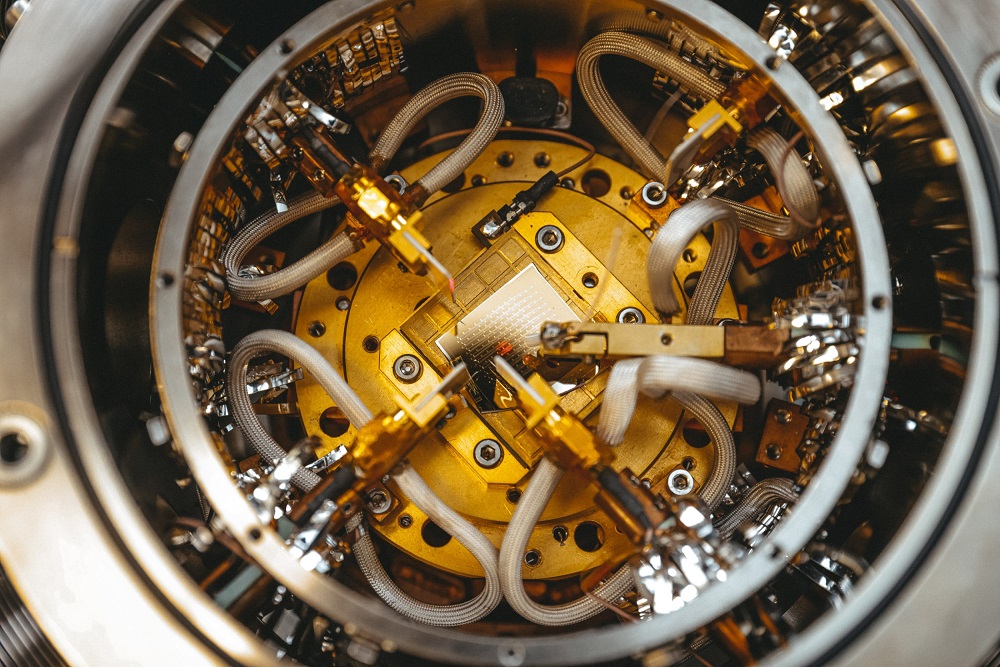
The bioinspired vision sensors developed by Dr Chai's team can adapt to varying brightness with an effective range of up to 199 dB. The human retina can adapt to environments under sunlight to starlight, with a range of about 160 dB.

"The new sensors will greatly improve machine vision systems used for visual analysis and identification tasks," says Dr CHAI Yang, Associate Professor, Department of Applied Physics, and Assistant Dean (Research), Faculty of Applied Science and Textiles, PolyU, who led the research.

Machine vision systems are cameras and computers that capture and process images for tasks such as facial recognition. They need to be able to "see" objects in a wide range of lighting conditions, which demands intricate circuitry and complex algorithms. Such systems are rarely efficient enough to process a large volume of visual information in real time—unlike the human brain.

The new bioinspired sensors developed by Dr Chai's team may offer a solution through directly adapting different light intensities by the sensors, instead of relying on backend computation. The human eye adapts to different levels of illumination, from very dark to very bright and vice versa, which allows us to identify objects accurately under a range of lighting conditions. The new sensors aim to mimic this adaptability.

"The human pupil may help adjust the amount of light entering the eye," explains Dr Chai, "but the main adaptation to brightness is performed by retina cells." Natural light intensity spans a large range, 280 dB. Impressively, the new sensors developed by Dr Chai's team have an effective range of up to 199 dB, compared with only 70 dB for conventional silicon-based sensors. The human retina can adapt to environments under sunlight to starlight, with a range of about 160 dB.

To achieve this, the research team developed light detectors, called phototransistors, using a dual layer of atomic-level ultrathin molybdenum disulphide, a semiconductor with unique electrical and optical properties. The researchers then introduced "charge trap states"—impurities or imperfections in a solid's crystalline structure that restrict the movement of charge—to the dual layer.

"These trap states enable the storage of light information," report the researchers, "and dynamically modulate the optoelectronic properties of the device at the pixel level." By controlling the movement of electrons, the trap states enabled the researchers to precisely adjust the amount of electricity conducted by the phototransistors. This in turn allowed them to control the device's photosensitivity, or its ability to detect light.

Each of the new vision sensors is made up of arrays of such phototransistors. They mimic the rod and cone cells of the human eye, which are respectively responsible for detecting dim and bright light. As a result, the sensors can detect objects in differently lit environments as well as switch between, and adapt to, varying levels of brightness—with an even greater range than the human eye.

"The sensors reduce hardware complexity and greatly increase the image contrast under different lighting conditions," says Dr Chai, "thus delivering high image recognition efficiency."

These novel bioinspired sensors could usher in the next generation of artificial-vision systems used in autonomous vehicles and manufacturing, as well as finding exciting new applications in edge computing and the Internet of Things.

The research was published in Nature Electronics.

#PolyU


News from Asia

Armacell Deepens Asia‑Pacific Industry Engagement to Drive Energy Efficiency, Sustainability and Fire Safety

Supporting Asia‑Pacific's transition from BS 476 to the more comprehensive EN 13501‑1 fire‑classification framework ArmaPrene™‑based insulation, including ArmaFlex® Ultima, achiev...

Aon Highlights Maturing Transaction Risk Market in Asia Pacific Region as Claims Trends Evolve

SINGAPORE - Media OutReach Newswire - 14 July 2026 – Aon plc (NYSE: AON), a leading global professional services firm, has released Asia Pacific (APAC) findings from its 2026 Global Transaction ...

Asia’s Debut of LEAP East in HKCEC Marks Hong Kong’s Largest Inaugural Tech Summit

Hong Kong Secures Exclusive Three-Year Deal with Tahaluf for LEAP East; Set to Return to HKCEC in 2027, Reinforcing the City’s Global I&T LeadershipHONG KONG SAR - Media OutReach Newswire - 1...

L’OCCITANE Malaysia’s 7th Race for Vision Draws 3,000 Participants, Donates RM50,000 to Support Children’s Eye Health in Kelantan

Annual charity run champions eye health, visual inclusion, sustainability and community connection while funding a new Schoolchildren Refractive Error Intervention ProgrammeKUALA LUMPUR, MALAYSIA -...

Central & Western District Youth-to-Career Expo Connects Hong Kong Youth to Future Careers in AI Era

Two-day flagship youth to career exploration event unites 30+ corporates and organisations for youth empowerment, officiated by Alice Mak, SBS, JP, Secretary for Home and Youth AffairsHONG KONG SAR...

HKSTP Park Company Wins 2nd Runner-Up in Rocket Fuel East Startup Competition

Largest Ecosystem Lineup at LEAP East 2026 Achieves Over 1,500 Business Matching Sessions MEINONG ROBOT, a company within HKSTP ecosystem, stood out among more than 500 competing startups to...

KPMG and NLB launch Read to Lead to build reading as a national workforce capability

Read to Lead: Building an AI-Ready Mind promotes reading in the workplace and equips PMETs and business leaders with professional discernment skills for an era when not all informati...

HKUST and Indonesia's Ministry of Higher Education, Science, and Technology Deepen Partnership with Garuda Scholarship Framework to Nurture Top-Tier Talent

HONG KONG SAR - Media OutReach Newswire - 14 July 2026 - The Hong Kong University of Science and Technology (HKUST) and the Ministry of Higher Education, Science, and Technology of the Republic of...

AI Account Named Best AI-Driven Accounting Software Platform in South East Asia at the 2026 FinTech Awards

Wealth & Finance International recognised AI Account for helping SMEs and accounting firms automate everyday finance tasks, enabling them to focus on business growth.SINGAPORE - Media OutReach...

First Energy Africa Oil Corp. Strengthens Board with Appointment of Industry Veterans Simon Akit and Frederick Kozak

New directors bring 60 years of combined capital markets and resource industry expertiseCALGARY, ALBERTA - Media OutReach Newswire - 14 July 2026 - First Energy Africa Oil Corp. ("First Energy Afr...

Selling a Small Business in Australia: Understanding the Capital Gains Tax Concessions

For many Australian business owners, selling a business represents the reward for years—sometimes decades—of hard work. Unlike employees who may bu...

Australian businesses lean into global strategic partnerships (GCCs) for next wave of outsourcing

The Australian corporate landscape is undergoing a fundamental transformation in how it sources talent and innovation. While businesses have traditi...

The New Pressure Gap Crushing Small Businesses

Starting any business and making it prosper is a major undertaking. Part of the challenge is managing the uncertainty, but the financial pressures o...

Click Frenzy returns with a free EOFY sale event for retailers this month

New owners Gabby and Hezi Leibovich bring back Australia’s leading ecommerce sales event with Australia Post as Major Sponsor   Click Frenzy is ...

The 95 Per Cent Failure Rate Is Not An AI Problem

Most Australian SMEs I speak with are already having a go at AI. Some are running formal pilots, others have a team member quietly experimenting o...

New AR tech helping to solve field service skills crisis

AI-enabled augmented reality (AR) smart glasses are emerging as a new practical solution to fill a shortage of field service technicians maintaini...