Brad Banducci checks out from Woolworths, signalling a business out-of-touch with its customers
- Written by: Peter Roberts, Lecturer, School of the Arts and Media, UNSW Sydney
The head of Australia’s biggest supermarket chain is to step down. On the face of it, this is not altogether remarkable news. Australian CEOs hold their jobs, on average, for about five years.
Woolworth’s chief executive Brad Banducci[1] has done nearly nine years at the helm, which is worthy of attention because it’s Woolworths. The brand has about 1,400 stores nationwide and boasts a 37% share of the grocery sector[2]. It’s big and that’s the issue underpinning Banducci’s exit.
Commentators, including the former ACCC chief Rod Sims have bemoaned the lack of competition[3] within the sector. Woolworths and rival Coles enjoy a 65% share of the Australian market. I give a nod to the respected Sims as he plays a bit-part in the Banducci departure, which clearly did not go to plan. An announcement[4] confirming the CEO’s retirement was made Wednesday morning.
The Four Corners interview
That announcement followed a woeful media interview by Banducci for the ABC’s Four Corners[5] program. In light of the ongoing cost-of-living crisis affecting all parts of the country, there’s been much said about this overly concentrated grocery market and its impact on ordinary Australians.
So, it would come as no surprise to the Woolworths communications team that such questions would be put to their boss, but the boss appeared ill-prepared and defensive.
Banducci labelled Sims as out-of-touch with current market dynamics as he reminded the interviewer and viewers that the former public servant is now “retired”. This was a hapless point to make, which Banducci quickly recognises and unsurprisingly, was rather keen to remove from the interview.
Read more: 8 ways Woolworths and Coles squeeze their suppliers and their customers[6]
The program’s refusal to play ball prompted Banducci to get out of his chair and stop the interview. The Woolworths attendants successfully persuade him to continue, but from a reputational perspective, the damage was done.
The final straw
So, was the ABC program instrumental in Banducci’s unforeseen announcement? Yes, but it’s not without important context; principally, the state of Woolworths’ financial health, considering that duopoly-like situation. The Woolworths group’s results, released on the same day as the executive’s announcement, showed a $781 million loss[7], although much of this was due to a couple of major write-downs.
Read more: I analysed more than 10,000 Reddit posts on supermarket pricing. 5 key themes emerged[8]
This brings us back to the Four Corners interview and the inherent optics of Banducci’s performance, who, it must be said, is normally unflappable when it comes to such questioning.
For further context, this is a big year for the grocer, Woolworths opened its first store in Sydney in December 1924[9] and much, no doubt, is planned to mark the centenary.
This will be an occasion to reinforce those corporate messages that will probably speak to the brand’s humble beginnings and being a supportive part of Australian communities over that time. In short, Woolworths is Australia, but the Banducci performance demonstrated it wasn’t Rod Sims who was out-of-touch, it was our friendly, neighbourhood grocer.
Out of touch
The program and the surrounding debate about supermarket profits at a time of hardship for many is a painful reminder that those modest beginnings have long gone and now it’s more akin to “us and them”. Woolworths needs to reclaim those ordinary, perceived simple beginnings and be seen as a community member again.
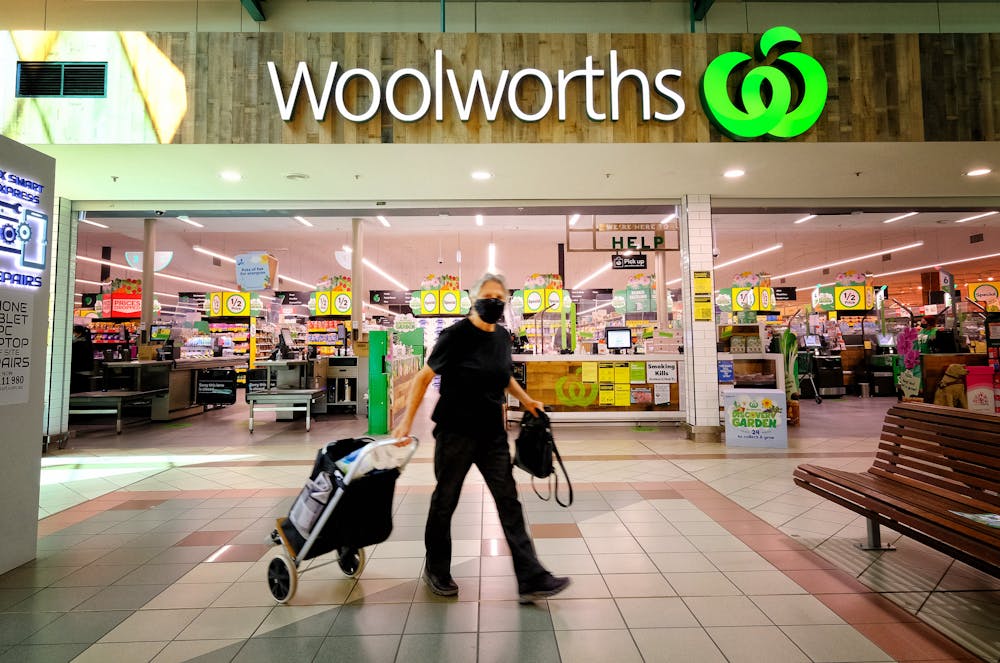
The grocer’s recent Australia Day[11] ruckus illustrates a brand that has lost a sense of self-identity. This is not to judge the decision either way, but to underline the importance of first consulting the community.
Controlling the narrative
Banducci will be replaced by Woolworths veteran, Amanda Bardwell[12]. Bardwell will be the 13th chief executive and knows the business well. The appointment affords Woolworths the much-needed opportunity to start controlling the corporate narrative, which has, in recent weeks, been driven by the media and centres solely on the numbers – specifically, how much is being made by the business and how little of that is, seemingly, making its way to the customer.
The Woolworths purpose[13] speaks of “the communities in which we serve” and creating “a better tomorrow” – to that end, the business should do its darndest to give those communities greater attention.
The Woolworths advertising in 1924 described the store as a place where “goods are so cheap and shopping easy and pleasant”. So, in an attempt to control the story in 2024, Amanda Bardwell would do well going back to when it all started.
Read more: Why prices are so high – 8 ways retail pricing algorithms gouge consumers[14]
References
- ^ Brad Banducci (www.abc.net.au)
- ^ 37% share of the grocery sector (www.huntexportadvice.com)
- ^ lack of competition (www.smh.com.au)
- ^ announcement (www.woolworthsgroup.com.au)
- ^ Four Corners (www.abc.net.au)
- ^ 8 ways Woolworths and Coles squeeze their suppliers and their customers (theconversation.com)
- ^ $781 million loss (www.woolworthsgroup.com.au)
- ^ I analysed more than 10,000 Reddit posts on supermarket pricing. 5 key themes emerged (theconversation.com)
- ^ December 1924 (www.woolworthsgroup.com.au)
- ^ Luis Ascui/AAP (photos.aap.com.au)
- ^ Australia Day (ami.org.au)
- ^ Amanda Bardwell (www.news.com.au)
- ^ purpose (www.woolworthsgroup.com.au)
- ^ Why prices are so high – 8 ways retail pricing algorithms gouge consumers (theconversation.com)
Authors: Peter Roberts, Lecturer, School of the Arts and Media, UNSW Sydney