The solar asset changed jobs: why South Australian businesses are rethinking storage
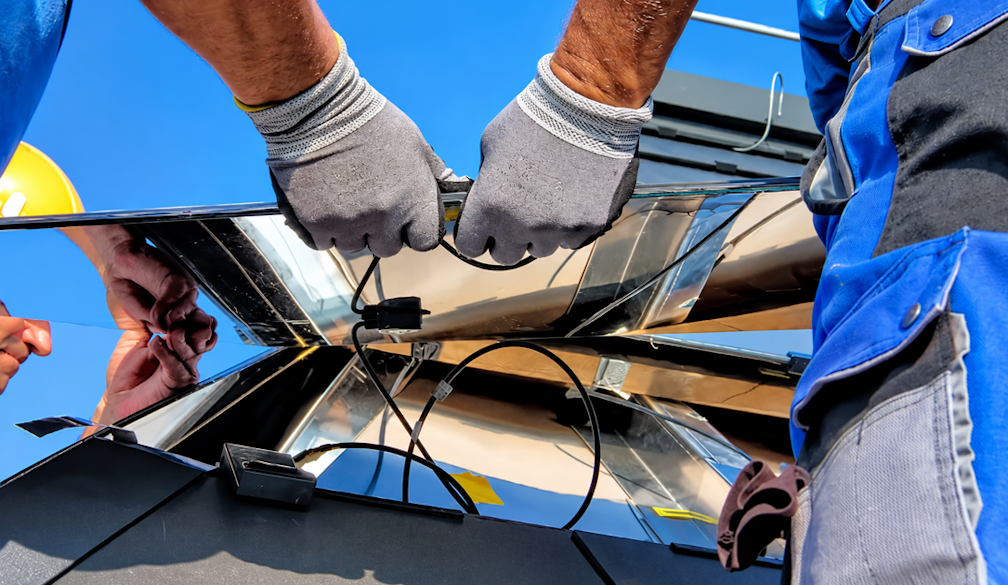
A rooftop solar system installed in 2014 was, in financial terms, a small generation business. You produced power, you sold the surplus, and the export credit did a meaningful share of the work in the payback calculation.
That business model has quietly closed. The panels still work. What they are worth has been reorganised.
What exports are actually worth now
South Australia has no mandated minimum feed-in tariff, so retailers set their own rates, and depending on the plan those export payments can fall as low as zero cents per kilowatt hour. As of mid-2026 the better market rates sat around five to five and a half cents, with some retailers advertising a maximum of eight cents alongside minimums of one cent or nothing at all.
There is a second layer. SA Power Networks applies a charge on exports between 10am and 4pm, with no charge on roughly the first nine to eleven kilowatt hours exported daily depending on the meter, and that charge is passed to retailers, who have generally responded by lowering feed-in tariffs rather than billing customers separately.
For a business weighing up a solar battery, Adelaide sits at the sharp end of a shift the rest of the country is still catching up to. The question has moved from how much you can earn selling power to how much you can avoid buying.
The spread that replaced it
The interesting number is no longer the export rate. It is the gap between what electricity costs at midday and what it costs at six in the evening.
From 1 July 2026, South Australia's regulated flat-rate residential standing offer cap sits at 41.91 cents per kilowatt hour, while the time-of-use cap runs from 17.04 cents during the 10am to 4pm solar soak window up to 56.22 cents during morning and evening peaks. Those are Default Market Offer caps rather than typical market offers, but the shape is what matters.
A kilowatt hour exported at five cents and a kilowatt hour consumed at peak rates are not remotely the same transaction. Every unit shifted from the middle of the day into the evening is worth the difference between those two numbers, and that difference is now large enough to carry a capital investment on its own.
This is the entire argument for storage in 2026. It has nothing to do with going off grid and everything to do with time shifting a commodity you already produce.
Why South Australia got here first
The state's rooftop solar penetration is among the highest anywhere, which produces a midday supply glut that suppresses the value of daytime generation.
The Australian Energy Regulator's first quarter 2026 report recorded a South Australian volume-weighted average wholesale price of $144 per megawatt hour, up from $98 a year earlier, with most negatively priced periods across the market occurring in South Australia and Victoria.
Both halves of that matter. Daytime power is frequently worth nothing or less than nothing, while the average price is climbing because of what happens outside those hours. A generation asset that only produces during the glut is exposed to precisely the wrong end of that spread.
The subsidy is on a timer
The federal Cheaper Home Batteries Program offers households, businesses and community organisations a discount of around 30 per cent on the upfront cost of eligible battery systems between 5 kWh and 100 kWh, delivered through small-scale technology certificates, and that discount is reviewed at least annually and decreases over time until 2030 in line with falling battery prices.
The program has moved quickly. More than 260,000 households, businesses and organisations installed batteries under it between July 2025 and April 2026, and daily installation rates rose from roughly 200 to over 1,500, with average battery sizes roughly doubling.
That uptake prompted a restructure. From 1 May 2026, certificates for batteries were tiered and adjusted according to system size, so the discount stays proportionate across small, medium and large installations. The rebate now tapers as capacity increases, paying the full rate on the first band, reduced rates on the middle and upper bands, and nothing beyond 50 kWh.
One point worth checking on any quote: South Australia's own Home Battery Scheme closed in 2022, and any proposal still listing it as a current discount is out of date.
What to check before committing
For a commercial installation, the residential arithmetic does not transfer cleanly.
Size against your load profile rather than your roof. A business that consumes most of its power between 9am and 4pm has a much weaker storage case than one with evening operations or significant overnight base load. The value comes from the shift, so if there is nothing to shift, the panels alone may be the better investment.
Understand your tariff structure. Many commercial customers pay a demand component calculated on their single highest usage interval in a billing period. Storage can flatten that peak, and for some sites the demand saving exceeds the energy saving. It is also the part of the bill most often overlooked in quotes.
Confirm whether backup is included. Plenty of installations have no backup circuit unless specified, and site conditions determine what is possible. For any operation with refrigeration, payment terminals or server equipment, that distinction is the difference between an energy product and a continuity one.
Check export limits with the network before designing anything, particularly for larger systems in constrained areas.
The unglamorous conclusion
None of this makes solar a bad investment. Lower feed-in tariffs do not mean solar stopped working, they reflect the fact that daytime exports are no longer scarce, and an existing system is still reducing the power you buy at full retail rates.
What has changed is where the return comes from. The asset that used to sell electricity now mainly avoids buying it, and the equipment that captures that value is the part most systems were never built with.


 Business Daily Media